
The best headset with a microphone for recording depends on whether you need a single integrated setup, a broadcast-style mic, or a dedicated USB recording microphone with monitoring headphones. The talomen is designed for studio monitoring and content creation, while the Audio-Technica BPHS1 suits broadcast-style voice work. The MAONO kit is a useful alternative when a standalone USB condenser microphone matters more than an attached headset mic. These picks cover recording, streaming, gaming commentary, and everyday voice calls, with different connection styles and microphone designs.
| Product | Best For | Microphone Setup |
|---|---|---|
| talomen Studio Monitor Headphones | Recording and audio monitoring | Detachable cardioid boom mic |
| Audio-Technica BPHS1 | Broadcast and spoken-word work | Dynamic cardioid boom mic |
| MAONO AU-A04H Kit | USB voice recording and monitoring | Separate USB condenser microphone |
| EKSA E900 Pro | Gaming commentary and versatile wired use | Detachable noise-canceling mic |
| Logitech H390 | Simple computer calls and basic recording | Rotating noise-canceling boom mic |
talomen Studio Monitor Headphones
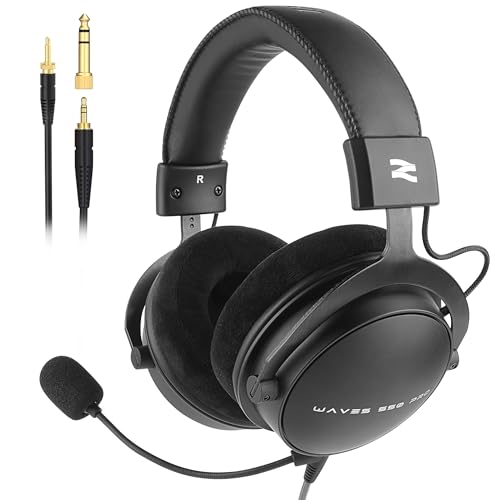
The talomen combines over-ear studio headphones with a detachable dynamic cardioid boom microphone. Its product description identifies it for recording, podcasting, broadcasting, streaming, audio editing, gaming commentary, and mixing. The headphones are tuned for clear mids, balanced bass, and detailed highs, which are useful when listening closely to a voice or audio track.
Best for: Creators who want one wired headset for monitoring and spoken communication. The detachable boom mic provides a headset-style voice option, while the stated monitoring profile supports listening during recording and editing. It is the most directly aligned pick for buyers looking for a recording headset with a mic.
- Choose this if you want a removable microphone rather than a permanently attached boom.
- Its listed use cases include podcasting, streaming, broadcast, and mixing.
- Consider a separate microphone if your workflow requires a standalone mic positioned independently of the headphones.
The supplied details do not specify the connection type or microphone frequency response, so confirm those requirements before choosing it for a particular recording setup.
Audio-Technica BPHS1 Broadcast Headset

The Audio-Technica BPHS1 is a broadcast stereo headset with a dynamic cardioid boom microphone. Its microphone polar pattern and frequency response are described as tailored for intelligible vocal reproduction. Closed-back circumaural ear cups help seal out crowd noise and other background distractions, while neodymium magnets are listed for both the microphone and headphones.
Best for: Buyers prioritizing intelligible speech and a broadcast-oriented headset design. It is a strong fit for voice recording, live presentation, and production settings where surrounding sound may be distracting. The closed-back ear cups are a practical distinction from open listening designs.
- Choose this if clear voice reproduction and reduced environmental distraction are priorities.
- The boom microphone is integrated into the broadcast headset rather than described as detachable.
- Consider whether the headset’s connection requirements match your recording equipment; the supplied product details do not list connector specifications.
The available features do not state a USB connection, so buyers planning direct computer recording should check the required connection and any needed audio interface before purchase.
MAONO AU-A04H USB Microphone Kit
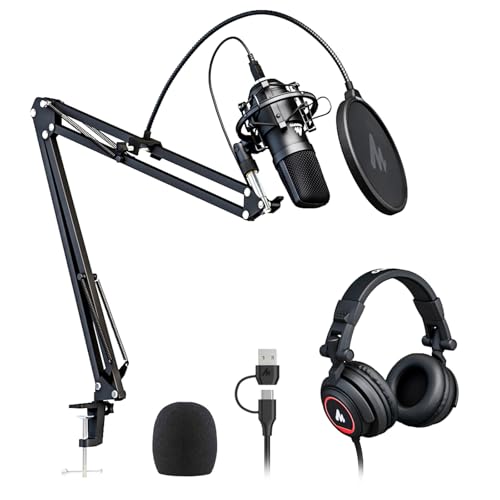
The MAONO AU-A04H is a USB microphone kit with headphones, rather than a conventional headset with a boom mic. Its 16mm electret condenser microphone is described with a 192kHz/24-bit sampling rate and a 30Hz–16kHz frequency response. The microphone connects through USB 2.0 and is described as plug-and-play with computers and Linux systems, without requiring extra driver software or an external sound card.
Best for: Podcasters, voice-over creators, singers, and streamers who want a dedicated microphone and included headphones for monitoring. It is selected because its supplied features focus directly on recording and it offers a different microphone arrangement from the boom-mic headsets.
- Choose this if you prefer a separate USB condenser microphone over a headset-mounted mic.
- The double-shielded USB cable and magnet ring are described as reducing interference.
- A separate microphone takes more desk space and is less compact than an all-in-one headset.
Although the product name includes headphones, the provided specifications do not describe an integrated headset microphone. Buyers who need hands-free voice pickup should compare it with the boom-mic options above.
EKSA E900 Pro Gaming Headset

The EKSA E900 Pro is a wired headset with a detachable unidirectional noise-canceling microphone. It includes USB and 3.5mm audio interfaces with removable cords. Its listed features include a 50mm driver, one-key microphone mute, volume adjustment, and virtual 7.1 surround sound. The 7.1 feature is specified for PC use with the USB cable.
Best for: Gaming creators and commentators who want a headset for game audio and voice chat, with a microphone that can be removed when not needed. The dual connection options make it a versatile wired choice across the listed device types, including PC, PS4, PS5, Xbox One, and mobile devices.
- Choose this if you need a removable mic and both USB and 3.5mm connection options.
- The product description identifies the mic as noise-canceling and unidirectional.
- Do not assume 7.1 surround sound works through every connection; the listed feature is limited to PC with USB.
For voice recording, its feature set emphasizes gaming and communication rather than detailed studio monitoring. Buyers focused on editing or mixing may prefer a model described specifically for studio monitoring.
Logitech H390 Wired Headset

The Logitech H390 is a wired PC and laptop headset with digital stereo sound, a rotating noise-canceling microphone, and inline volume and mute controls. The boom arm can be moved out of the way when it is not in use. Its listed features cover calls, meetings, music, and general computer audio.
Best for: Buyers who need a straightforward computer headset for calls, meetings, and occasional spoken recordings. Inline controls make it easy to adjust volume or mute without reaching for computer settings. The rotating mic also provides a simple way to move the boom aside between uses.
- Choose this for convenient everyday computer use and basic voice capture.
- The listed microphone is noise-canceling, but the product details do not provide studio microphone specifications.
- Consider another option if your priority is broadcast-style vocal reproduction or detailed audio monitoring.
The supplied features do not specify a detachable microphone or multiple connection types. Check the headset’s connection requirements against your computer before buying.
Buying Guide: How To Choose A Recording Headset
Do you need an integrated headset microphone?
A headset microphone stays close to your mouth and moves with you, which is convenient for calls, commentary, and spoken recording. Models such as the talomen, Audio-Technica BPHS1, EKSA E900 Pro, and Logitech H390 use boom-mic designs. A separate USB microphone, such as the one in the MAONO kit, sits independently and may better suit a desk-based recording setup. Decide whether convenience or microphone placement flexibility matters more.
Which microphone type fits your recording?
The product descriptions identify the talomen microphone as dynamic and cardioid, the Audio-Technica BPHS1 as dynamic and cardioid, and the MAONO microphone as a 16mm electret condenser. These descriptions alone do not establish which will sound best in your room. Consider the intended workflow: a boom mic is convenient for headset use, while a standalone USB mic can be positioned separately from the headphones.
For recording speech in a room with other sounds, microphone direction and placement matter. The EKSA’s microphone is described as unidirectional and noise-canceling, and the JIAMQISHI—though not included among the five top picks—is described as having a unidirectional, 270-degree boom mic. Such terms indicate a focus on voice pickup, but do not guarantee that all background noise will disappear.
Should you choose USB, 3.5mm, or a broadcast connection?
Check the connection before buying. The MAONO connects through USB 2.0 and is described as plug-and-play with computers and Linux. The EKSA includes USB and 3.5mm audio interfaces, with its 7.1 virtual surround feature specified only for PC over USB. The supplied details for the Audio-Technica and talomen do not identify their connectors, so verify the exact connection requirements if your computer or recording equipment has limited ports.
A USB headset or microphone can be convenient for direct computer use, while a 3.5mm connection may suit equipment with a compatible audio jack. Do not assume a headset will work with every computer, console, or recording interface simply because it is wired; confirm the connector and device support.
How much monitoring detail do you need?
Monitoring helps you hear your voice and other audio while recording. The talomen is specifically described as having a studio-monitoring tuning with clear mids, balanced bass, and detailed highs. The Audio-Technica BPHS1 is described as providing detailed sound reproduction, and its closed-back ear cups help reduce surrounding distractions. The MAONO package includes headphones, but the supplied details do not describe their monitoring response.
For casual calls or basic voice recordings, everyday stereo sound may be sufficient. For editing, mixing, or checking vocal takes, prioritize products explicitly described for monitoring and listen for whether the headset’s sound profile suits your work.
What comfort and control features matter?
For long sessions, consider fit, ear-cup design, adjustability, and whether the microphone can move out of the way. The Audio-Technica lists closed-back circumaural ear cups; the Logitech has a rotating boom arm; and the EKSA microphone detaches. The supplied details do not provide comfort measurements for every product, so avoid assuming that a particular headset will fit everyone equally well.
Inline mute and volume controls can help during live calls and recordings. The Logitech includes inline controls, and the EKSA lists one-key mute and volume adjustment. These functions are useful for quick changes, but they do not replace checking your recording software’s input and mute settings.
Frequently Asked Questions
What is the best type of headset microphone for recording?
A boom microphone is a practical choice when you want hands-free recording and consistent placement near your mouth. A separate USB condenser microphone may suit desk-based recording when you want to position the mic independently. The right option depends on your recording space, connection needs, and workflow.
Is the MAONO AU-A04H a headset with a microphone?
It is a USB microphone kit that includes headphones, but its listed features describe a separate condenser microphone rather than an integrated headset boom mic. Choose it if a standalone USB mic and monitoring headphones fit your setup.
Which pick is designed for broadcast-style voice work?
The Audio-Technica BPHS1 is identified as a broadcast stereo headset. Its cardioid dynamic boom microphone is described as tailored for intelligible vocal reproduction, and the closed-back ear cups help seal out background distractions.
Does the EKSA E900 Pro support 7.1 surround sound on every device?
No. Its listed 7.1 virtual surround sound is available on PC when using the USB cable. The headset also includes a 3.5mm interface, but the supplied details do not extend the 7.1 feature to that connection.
Can I use a recording headset for calls and gaming?
Many can serve multiple purposes, but check the listed features and connection requirements. The EKSA is described for gaming and communication, while the Logitech is aimed at computer audio and calls. A headset intended for recording may still require compatible software or connections for a particular device.