
For heavy metal bass, choose strings that suit your tuning, instrument, and preferred feel. Ernie Ball Beefy Slinky is the heaviest listed four-string option at 63–130; D’Addario XL Nickel 55–110 offers a heavy-gauge alternative with a bright tone; and Elixir’s 45–130 set is a five-string choice with a coated construction. The D’Addario 45–100 set suits players who prefer lighter tension, while Chromes flatwounds are a warmer, smoother alternative rather than a typical metal-string choice.
| Product | Best suited for | Gauge or format |
|---|---|---|
| Ernie Ball Beefy Slinky | Players seeking the heaviest listed set | 63–130 |
| D’Addario XL Nickel 55–110 | Players wanting a heavier nickel-wound set | 55–110 |
| Elixir NANOWEB | Five-string players who want coated strings | 45–130, five strings |
| D’Addario XL Nickel 45–100 | Players preferring a lighter set | 45–100, four strings |
| D’Addario ECB81 Chromes | Players who prioritize smooth feel and warm tone | 45–100, flatwound |
Ernie Ball Beefy Slinky 63–130
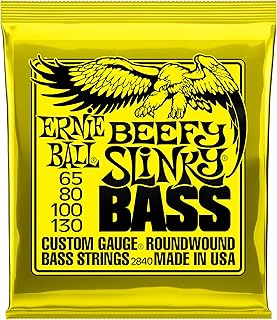
Ernie Ball Beefy Slinky is the strongest match in this group for players looking for a distinctly heavy four-string set. Its listed 63–130 gauge makes it heavier than the other four-string options here, which are 55–110 and 45–100. That makes it a candidate for bassists who want more string mass and tension than a standard lighter set provides.
Best for: Bassists seeking a very heavy gauge for a forceful playing feel or lower-tuned parts. Why it was selected: Its 63–130 specification is the heaviest listed gauge in this selection and directly suits the “heavy” part of the search.
Consideration: A large gauge change can affect feel and may require checking setup, including neck relief and intonation. Confirm that the gauge and string length suit your bass before buying; the provided product information does not specify scale length.
D’Addario XL Nickel 55–110

This D’Addario XL Nickel set is a heavy-gauge option for players who want more substantial strings than the listed 45–100 set, without moving up to 63–130. Its nickel-plated steel wrap wire is described as producing a tight, bright tone. The listed Hex-Core construction is intended to support consistent feel, intonation, and durability.
Best for: Metal and rock players who want a heavier nickel-wound set with a bright, tight tonal character. Why it was selected: Its 55–110 gauge sits between the light and very heavy options, making it a useful middle ground for comparison.
Consideration: The product listing does not state a string count or scale length in the supplied details. Verify those specifications and the fit for your bass before ordering, especially if you need a specific configuration.
Elixir NANOWEB Five-String 45–130

This Elixir set is listed for five-string basses and combines a 45–130 gauge range with nickel-plated steel and NANOWEB technology. Its product description highlights a comfortable feel and a warm tone intended to last. Those features may appeal to players who want a coated string set rather than choosing solely by gauge.
Best for: Five-string players who need a set spanning 45–130 and prefer NANOWEB-coated strings. Why it was selected: It is the only listed five-string product and includes a low string gauge that may suit players seeking a substantial low end.
Consideration: The 45–130 range does not mean every string is heavy; the high strings are listed as light. Confirm the five-string configuration and long-scale specification match your instrument before purchase.
D’Addario XL Nickel 45–100

The D’Addario XL Nickel 45–100 is the lighter-gauge four-string option in this group. It uses nickel-plated steel wrap wire, which the product description associates with a bright, tight sound. Its Hex-Core construction is described as supporting intonation, consistent feel, and durability.
Best for: Players who prefer a lighter feel, or who do not want the added tension of a heavier set. Why it was selected: It offers a useful baseline for comparing how the 55–110 and 63–130 sets differ in gauge.
Consideration: It is not the heaviest choice here. Players specifically seeking a heavy gauge should compare it with the 55–110 or 63–130 sets and account for their tuning and preferred playing feel.
D’Addario ECB81 Chromes Flatwounds

Chromes are flatwound bass strings with a listed 45–100 gauge and long-scale specification. D’Addario describes them as smooth-feeling strings with a warm tone and reduced finger noise. Those traits set them apart from the brighter nickel-wound options in this article.
Best for: Bassists who value a smooth feel, warm tone, and reduced finger noise, including players seeking a less bright alternative. Why it was selected: It gives buyers a contrasting construction and sound profile to weigh against conventional nickel-wound sets.
Consideration: Flatwounds are not the most direct match for players prioritizing a bright, aggressive string sound. Choose them for their stated feel and tonal character, not simply because the set is labeled for bass.
Buying Guide: How To Choose Heavy Metal Bass Strings
What string gauge suits your tuning?
Gauge refers to string thickness, usually expressed as a thousandth of an inch. In this selection, the 45–100 set is the lightest listed four-string option, 55–110 is heavier, and 63–130 is the heaviest. The Elixir set runs 45–130 and is listed for five-string bass. These ranges are not interchangeable: compare the individual string gauges and set configuration with what your instrument requires.
Lower tunings can make strings feel looser, so some players consider heavier gauges to maintain a firmer response. However, there is no single ideal gauge for every bass or tuning. Your playing approach, preferred tension, and instrument setup also matter. Check how the set is packaged and confirm the gauges meet your specific tuning needs.
Should you choose nickel-wound or flatwound strings?
The D’Addario XL Nickel products use nickel-plated steel wrap wire and are described as bright and tight sounding. The Ernie Ball set is identified as nickel wound in its product name. These are the more direct choices among the listed products for a player seeking a conventional bright bass-string character.
D’Addario Chromes are flatwounds, which the product description identifies with a smooth feel, warm tone, and reduced finger noise. They may suit a player who wants that specific sound and feel, but they are a different tonal option from bright nickel-wound sets. Elixir’s listed set is nickel-plated steel with NANOWEB technology, so compare its coating and stated feel with your preferences.
Does the set match your bass?
Confirm the number of strings before buying. The Elixir product is explicitly described as a five-string set; the D’Addario 45–100 set is explicitly a four-string set. The supplied description for the 55–110 set does not state its string count, so check the product listing. Do not assume that a gauge range alone tells you whether a set fits a four- or five-string bass.
Scale length is another essential check. The Elixir listing specifies long scale, and the Chromes listing specifies long scale. The supplied information does not state scale length for the other products. Match the set to your bass and verify string length, ball-end requirements, and any manufacturer fit guidance.
Will heavier strings require a setup adjustment?
A substantial change in gauge can alter string tension and how a bass feels. After changing gauges, a player may need to check neck relief, action, intonation, and nut fit. This is particularly important when moving from a 45–100 set to a much heavier 63–130 set. The product details do not establish what adjustments a particular instrument will need, so use the bass manufacturer’s guidance or consult a qualified technician if you are unsure.
Which option is best for different buyers?
- Choose 63–130 if you want the heaviest listed four-string gauge and have confirmed it suits your bass and setup.
- Choose 55–110 if you want a heavier nickel-wound option between the listed 45–100 and 63–130 choices.
- Choose 45–130 Elixir if you play a five-string bass and want a NANOWEB set with a long-scale specification.
- Choose 45–100 D’Addario XL Nickel if you prefer a lighter four-string set with a bright, tight tone.
- Choose Chromes if smooth feel, warm tone, and reduced finger noise matter more than a bright, aggressive sound.
Frequently Asked Questions
Are heavier bass strings better for metal?
Not automatically. Heavier strings can provide a firmer feel, but the right gauge depends on tuning, instrument fit, setup, and personal preference. Compare the listed gauges rather than choosing by genre alone.
Which listed set is heaviest?
Ernie Ball Beefy Slinky is listed at 63–130, making it the heaviest gauge set in this selection.
Which option is for a five-string bass?
The Elixir Electric Bass Strings are explicitly listed as a five-string set with a 45–130 gauge range and long-scale specification.
Are flatwound strings suitable for heavy metal?
They can be used if their warm tone and smooth feel suit the player’s sound. The listed Chromes set is a less direct choice for players seeking a bright, aggressive string character.
Do I need to adjust my bass after changing string gauge?
Possibly. A gauge change can affect tension and setup, so check neck relief, action, intonation, and fit. The adjustment needed depends on the bass and the size of the change.