
Best Hidden Headphones for School: Subtle Solutions for Quiet Focus
Hidden headphones for school provide a discreet listening option for students who need audio support without drawing attention. This guide highlights five compact, low-profile choices ideal for classrooms, study sessions, and commuting. Best for: students who require minimal visibility, sleep-sensitive users who must not disturb peers, and those seeking comfortable all-day wear. The following selections balance discreet design with practical features like secure fit, lightweight construction, and reliable Bluetooth.
| Product | Best For | Key Benefit |
|---|---|---|
| Yihou Invisible Small Mini Sleep Earbuds | Students who need ultra-discreet wear | Very small, weighs 0.08 oz; stable Bluetooth 5.3 |
| Xmenha Invisible Mini Earbuds | Sleep-friendly listening at school | 0.1 oz weight; Bluetooth 5.3; clear calls |
| Loluka Invisible Earbuds | Minimal visibility with solid sound | Immersive sound; Bluetooth 5.3; invisible design |
| Mehomeli Kid Headphones for School | Open-ear design for safety-conscious environments | Air conduction, 20 g weight, safe for kids |
| SIMOLIO Manyshare Series Kids Headphones | Group listening and classroom sharing | Three volume levels; built-in share port |
Yihou Invisible Small Mini Sleep Earbuds

Best for ultra-discreet wear, this tiny earbud weighs about 0.08 oz, making it barely perceptible in the ear. The compact size supports long-term wear without discomfort, which suits students who need to focus during lessons or study sessions. A Bluetooth 5.3 chip provides a stable connection, and the LED power display helps avoid battery anxiety. Caution: the minuscule design may be difficult to handle for first-time users or when removing in loud environments.
Xmenha Invisible Mini Earbuds
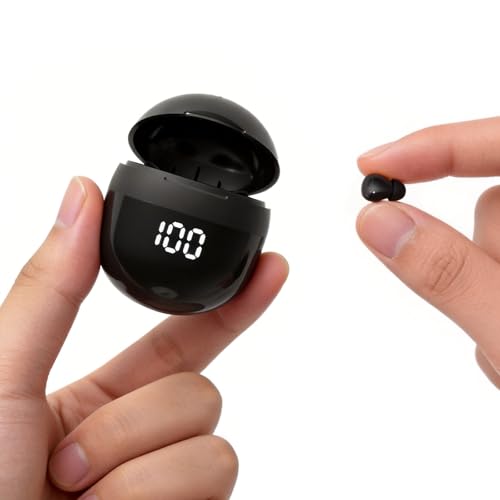
The Xmenha model emphasizes comfort for small ear canals with a 0.1 oz weight and a design aimed at stealth listening. It’s designed for sleeping or quiet study, with Bluetooth 5.3 and clear call quality through noise-reduction features. Best for: students who sleep or study in quiet, private spaces and want minimal external noise intrusion. Limitation: open-ear or semi-hidden designs may still be noticeable to keen observers in certain lighting or angles.
Ear Buds Invisible Mini Earbuds (Xmenha)

This variant mirrors the small, discreet profile and sleep-friendly design, ensuring comfort during prolonged use. Bluetooth 5.3 supports stable connections, and the microphone assists clear calls in noisy environments. Best for: students needing a compact, near-invisible listening option during classes or silent study. Caution: as with ultra-small devices, accidental loss is possible without a secure fit.
Loluka Invisible Earbuds

Loluka focuses on immersive sound with a discreet form factor. The Bluetooth 5.3 connection supports quick pairing and stable streaming, while the invisible design keeps a low profile in classrooms. Best for: students who want a comfortable, subtle earbud for listening or focus music without drawing attention. Limitation: feature specifics beyond Bluetooth and general audio quality are not detailed in the data provided.
Mehomeli Kid Headphones for School

Mehomeli offers an open-ear design using Air Conduction Technology. This setup lets children hear surrounding sounds, which is important for safety in school settings. The design weighs about 20 grams, aiding comfort during long wear and compatibility with glasses or helmets. Best for: younger students who need situational awareness and comfortable all-day wear. Caution: open-ear designs may not provide isolated listening in very noisy classrooms.
SIMOLIO Manyshare Series – Kids Headphones

SIMOLIO Manyshare Series provides adjustable volume control with three levels (75dB, 85dB, 94dB) and a visible switch for parental oversight. The built-in microphone supports hands-free calls and online learning. A shared-port design allows multiple listeners from one device, suitable for group activities. Best for: classrooms or homes where collaborative listening is needed. Limitation: wired compatibility means dependence on a connected device and cord management must be considered.
Buying Guide
- Discreteness vs. awareness: Choose hidden designs for minimal visibility or open-ear for safety in environments with potential hazards.
- Fit and comfort: Lightweight, low-profile earbuds reduce fatigue during school days; consider ear canal size and any sensitivity to materials.
- Sound control: For younger students, volume-limiting features (75dB–94dB) help protect hearing during study and travel.
- Connectivity: Bluetooth 5.3 offers stable connections and low latency, while some open-ear models rely on wired backups or shared ports.
- Safety and awareness: Open-ear and near-invisible options preserve ambient sounds, which is important for classroom safety.
- Durability and care: Look for sturdy construction and easy cleaning; small devices require careful handling to avoid loss.
- Use-case alignment: Sleeping or quiet study needs point to the most suitable models—consider whether you require sleep-friendly design or classroom-friendly sound fidelity.
Frequently Asked Questions
- What are hidden headphones good for in school? They provide discreet listening for focus tasks, audio routes for learning apps, and minimal distraction for peers.
- Are open-ear options safer for classroom use? Yes, open-ear designs allow ambient sound to pass through, supporting situational awareness.
- Do these devices affect hearing at school? If volume limits are respected, usage helps reduce hearing fatigue during long study sessions.
- Is Bluetooth or wired better for school use? Bluetooth offers wireless freedom; wired options provide reliable connectivity without battery concerns.
- How do I prevent losing small earbuds in class? Choose models with secure fits and consider a fabric or case for safe storage when not in use.
- What should I check before buying for a student? Comfort, safety features (volume limits), durability, and compatibility with school devices.