
The best high-output dynamic microphone depends on how you plan to connect it and where you will use it. The Shure SM58 is best for dependable vocal performance, while the Pyle dynamic mic is a practical choice if you need an included XLR cable. The FIFINE AM8 is better for creators who want USB and XLR options, and the FIFINE K6 is aimed at wired karaoke and speaker setups. Compare the connection type, pickup pattern, and included accessories before choosing.
| Microphone | Best For | Connection Or Standout Feature |
|---|---|---|
| Shure SM58 Pro XLR | Live vocals and general recording | XLR, cardioid pickup |
| Pyle Dynamic Cardioid | Value-conscious stage and studio users | Includes 15-foot XLR cable |
| FIFINE AmpliGame AM8 | Streaming and flexible desktop use | USB and XLR connections |
| FIFINE K6 | Karaoke and wired vocal use | 6.35 mm connection, detachable cable |
| Shure SM58 With XLR Cable | Vocalists who want a cable included | Includes 25-foot XLR cable |
Shure SM58 Pro XLR Microphone

The Shure SM58 is a strong all-around choice for singers and speakers who need a cardioid dynamic microphone for live performance, recording, podcasting, or broadcast use. Its frequency response includes a subtle midrange lift intended to help vocals sound warm and articulate in a mix.
The cardioid pickup pattern focuses on sound from the front of the microphone and helps minimize background noise and feedback. That directionality is useful on a stage or in a room where other sounds may compete with the speaker’s voice.
- Best for: Vocalists and presenters seeking a familiar XLR dynamic mic for several applications.
- Why it was selected: The listed features combine vocal-focused response, cardioid pickup, and suitability for live and recorded use.
- Consider: This listing does not state that an XLR cable is included, so check what else is needed for your setup.
Choose this model if vocal clarity and a conventional XLR connection matter more than built-in USB controls. It is not the best fit for someone who specifically wants a direct USB connection.
Pyle Dynamic Cardioid Microphone
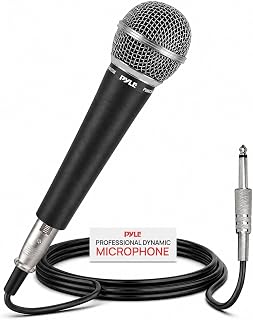
This Pyle microphone is a practical option for buyers who want a wired dynamic mic with an XLR cable included. The product details specify a 15-foot cable, a unidirectional cardioid pattern, and a built-in pop filter. Its stated frequency range is 50 Hz to 15 kHz.
The microphone has a zinc die-cast case and steel mesh windscreen, according to the product information. Its passive design does not require batteries or power, and the listing describes it for vocals and instruments in stage and studio settings.
- Best for: Buyers who want a straightforward wired microphone and an included XLR cable.
- Why it was selected: Its included cable and cardioid pickup make the basic setup requirements easy to compare with cable-free listings.
- Consider: The listed impedance is 600 ohms; check that your intended audio equipment accepts the connection and signal level you need.
Choose this model if the included cable and rugged metal construction suit your needs. Compare the stated frequency range and connection requirements with alternatives before purchasing.
FIFINE AmpliGame AM8 USB/XLR Microphone

The FIFINE AM8 is the most flexible choice here for streamers and desktop creators who may want either a direct USB connection or an XLR setup. Its listed features include a cardioid dynamic design, a 50 Hz to 16 kHz frequency response, a tap-to-mute control, a headphone jack, RGB lighting, and a desktop stand.
USB mode is intended for a direct plug-in workflow, and the microphone’s mute control works independently of computer or MacBook programs. In XLR mode, the mic connects to an audio interface or mixer using a separate XLR cable. The listed RGB and function key do not operate in XLR mode.
- Best for: Newer creators who want USB convenience with an option to move to XLR equipment later.
- Why it was selected: It offers two connection approaches and a built-in mute control for streaming and podcast use.
- Consider: The XLR cable is not included, and the recommended recording distance is 2 to 6 inches.
Choose the AM8 if you want a desktop-focused microphone with controls and connection flexibility. Avoid it if you need the RGB or mute-related function key while using XLR, since those features are listed as inactive in that mode.
FIFINE K6 Wired Karaoke Microphone

The FIFINE K6 is a wired handheld dynamic microphone intended for karaoke and singing. Its product name specifies a 6.35 mm connector, an on-and-off switch, and a 14.8-foot detachable cable. It is described for use with a speaker, audio mixer, or interface.
The cable length and switch are useful details for buyers comparing simple wired vocal microphones. The listed connection is different from the XLR connection on the Shure and Pyle models, so confirm that your equipment has a compatible 6.35 mm input before selecting it.
- Best for: Karaoke users who want a handheld wired mic with a detachable cable and power switch.
- Why it was selected: The listed connection and cable details make it relevant to buyers seeking a basic vocal microphone.
- Consider: The supplied product information does not specify its frequency response, pickup pattern, or construction details.
Choose this model when its 6.35 mm connection matches your speaker or mixer. If you need verified specifications for recording, noise rejection, or XLR operation, compare a product listing that provides those details.
Shure SM58 With 25-Foot XLR Cable

This Shure SM58 package is a close alternative to the cable-free SM58 listing, with one key purchasing distinction: the product name specifies a 25-foot XLR cable. The microphone is described for studio use, live performance, podcasting, and recording.
Its tailored frequency response and enhanced midrange are intended to give vocals warmth and presence. The uniform cardioid pickup pattern focuses on the voice while helping reduce unwanted background sound, according to the listed features.
- Best for: Vocalists who have chosen the SM58 and want a long XLR cable included in the package.
- Why it was selected: It shares the SM58’s stated vocal and cardioid features while making the cable inclusion explicit.
- Consider: It remains an XLR microphone, so a compatible connection path is needed; the listing does not describe USB operation.
Choose this package over the standard SM58 listing if the included 25-foot cable suits your setup. Compare package contents carefully so you do not buy a cable you already have or assume one is included with another listing.
Buying Guide: How To Choose A High-Output Dynamic Microphone
What Does “High Output” Mean For A Dynamic Microphone?
“High output” is a buyer search phrase, but the product details provided here do not give a comparable output-level specification for all five microphones. Instead of relying on that phrase alone, compare stated sensitivity, connection type, frequency response, and the equipment you will use. The Pyle listing, for example, specifies a sensitivity of -54 dB, while the other listings do not provide directly comparable sensitivity figures.
A dynamic microphone produces an audio signal that generally needs to be connected to suitable recording or sound equipment. A mic described as high output is not automatically guaranteed to work well with every interface, mixer, or computer. Check the microphone and equipment specifications together, particularly when recording quiet sources or speaking from farther away.
Should You Choose USB Or XLR?
USB is convenient when you want to connect a microphone directly to a computer without choosing a separate audio interface. The FIFINE AM8 includes USB operation and a tap-to-mute control, making it the clearest match here for a creator who prioritizes direct desktop use.
XLR is the connection to prioritize if your existing setup uses an audio interface or mixer. The Shure SM58 and Pyle are XLR options; the AM8 also supports XLR but requires a separate cable, and some of its controls are inactive in that mode. The K6 uses a 6.35 mm connection instead, so check equipment inputs before buying.
Which Pickup Pattern Works Best For A Noisy Room?
A cardioid or unidirectional pattern is designed to emphasize sound from the front of the microphone rather than equally from every direction. The Shure SM58, Pyle mic, and FIFINE AM8 list cardioid or unidirectional pickup features. This can help reduce pickup of some surrounding sound, but it does not make a room silent or eliminate all background noise.
Microphone placement matters as well. The AM8 listing recommends recording from 2 to 6 inches and keeping its end-addressed top facing the sound source. Follow the product’s orientation guidance, and keep the microphone aimed toward the speaker or singer for a more direct capture.
How Important Are Cable And Package Details?
Included accessories can change which product is easiest to set up. The Pyle listing specifies a 15-foot XLR cable, the cable-included Shure package specifies a 25-foot XLR cable, and the FIFINE K6 listing specifies a 14.8-foot detachable cable. The standard Shure SM58 listing does not state that a cable is included.
Before ordering, confirm that the cable connector matches your equipment and that its length works for your room or stage. Do not assume that two listings for the same microphone have identical package contents; the product name and listing details should make the distinction clear.
What Should You Prioritize For Live Vocals, Podcasting, Or Karaoke?
- Live vocals: Compare the Shure SM58 options for cardioid pickup and vocal-focused response. Select the cable-included package if you need the stated 25-foot XLR cable.
- Podcasting and streaming: Consider the FIFINE AM8 if USB connectivity and a physical mute control are priorities. Its RGB and function key are USB-only features.
- Karaoke: The FIFINE K6 is described as a wired handheld karaoke microphone, but verify the 6.35 mm input on your speaker or mixer.
- Basic wired use: The Pyle includes an XLR cable and lists a passive design, metal construction, and built-in pop filter.
What Specifications Should You Verify Before Buying?
Check the exact connector, whether a cable is included, stated frequency response, pickup pattern, and any setup requirements. If you plan to record through a computer, confirm whether the microphone connects by USB or needs an audio interface. For a stage, check cable length and the input available on your mixer or sound system.
Product descriptions do not provide every specification for every model. In particular, the K6 information supplied here does not state a pickup pattern or frequency response. If those details are essential to your application, confirm them in the current product listing before making a decision.
Frequently Asked Questions
Are Dynamic Microphones Good For Live Vocals?
Yes. Dynamic microphones are commonly used for live vocals, and several options here are described for stage performance. The Shure SM58 and Pyle listings specifically identify live vocal use and cardioid or unidirectional pickup.
Which Microphone In This List Connects Directly By USB?
The FIFINE AmpliGame AM8 supports USB connection. Its listing describes direct USB use and a tap-to-mute control. The other microphones listed here use XLR or 6.35 mm connections according to the supplied product details.
Does The Shure SM58 Need An XLR Cable?
The SM58 is an XLR microphone. One listed package includes a 25-foot XLR cable, while the other SM58 product details do not state that a cable is included. Check the specific package contents before ordering.
Which Microphone Includes An XLR Cable?
The Pyle dynamic microphone listing includes a 15-foot XLR cable. The Shure SM58 package variation specifies an included 25-foot XLR cable. The FIFINE AM8 requires a separate XLR cable when used in XLR mode.
Can I Use The FIFINE AM8’s RGB Features With XLR?
No. The listed product details state that RGB and the function key are inactive when the AM8 is connected through XLR. Those features are available with USB connection.
What Connection Does The FIFINE K6 Use?
The FIFINE K6 product name specifies a 6.35 mm wired connection and a detachable 14.8-foot cable. Confirm that your speaker, mixer, or interface has a compatible input before choosing it.