
Best High Quality Ground Loop Isolator for Clean Audio
Answer: A high quality ground loop isolator reduces hum, buzz, and interference that can plague car audio and home stereo systems. These units are best for buyers seeking to eliminate grounding-related noise without sacrificing audio clarity. They work across devices with 3.5mm or RCA connections and are ideal for car installers, home theater setups, or users upgrading Bluetooth receivers. The top picks below are selected for reliability, compatibility, and practical use in real-world environments.
Buyer-friendly overview: The following products help different listener types. Car owners dealing with alternator or grounding hum will appreciate robust RCA and 3.5mm options. Home theater enthusiasts can rely on compact, plug-and-play units to clean up signal paths. Audiophiles seeking minimal bass impact will benefit from models designed to maintain audio integrity. Use the quick compare table to identify the best fit for your setup.
| Product | Best For | Connection Type | Notes |
|---|---|---|---|
| BESIGN Ground Loop Noise Isolator | General car and home stereo users | 3.5mm | Widely compatible; easy plug-and-play |
| RECOIL MGLI 2-Channel RCA Isolator | Car amps and head units | RCA 2-channel | High fidelity transformer design |
| BOSS Audio B25N | Car systems with RCA wiring | RCA | Focuses on eliminating alternator-induced noise |
| Conext Link RCA Ground Loop Isolator | Car and home audio installations | RCA | Compact metal case, simple setup |
| ZIOCOM Ground Loop Isolator | Budget-friendly, quick fix | RCA | One-pack, straightforward noise suppression |
BESIGN Ground Loop Noise Isolator

- Best for: Users needing a versatile 3.5mm option that works with phones, tablets, and Bluetooth adapters.
- Why selected: It specifically targets ground loop noise in car and home stereo systems, providing a clean signal path.
- Why it helps: Eliminates hiss, buzz, and interference caused by shared power sources.
- Limitation: Works with devices using a 3.5mm jack; compatibility should be confirmed if using nonstandard adapters.
RECOIL MGLI 2-Channel RCA Ground Loop Isolator

- Best for: Car audio systems with head units and amplifiers seeking a high-fidelity signal path.
- Why selected: Built to minimize signal loss using advanced transformer technology, reducing common ground loop noise.
- Why it helps: Targets ground loop hum and alternator whine without introducing large bass penalties.
- Limitation: Not intended for correcting radio static, antenna noise, or speaker distortion; match the issue to the device.
BOSS Audio Systems B25N Ground Loop Isolator

- Best for: Car audio setups where alternator noise is a primary concern.
- Why selected: Focuses on reducing high-pitched whine while working with standard RCA cables.
- Why it helps: Addresses grounding issues that produce audible interference, keeping the main signal clearer.
- Limitation: Requires reliable RCA cables for best results; inferior cables can limit performance.
Conext Link RCA Ground Loop Isolator

- Best for: Enthusiasts who want a compact, durable RCA isolator for car or home use.
- Why selected: Eliminates humming and buzzing due to ground loop issues with a straightforward plug-and-play design.
- Why it helps: Filters DC in the signal path to stabilize sound quality.
- Limitation: Dimensions are modest; ensure fit in tight racks or dash spaces.
ZIOCOM Ground Loop Noise Isolator
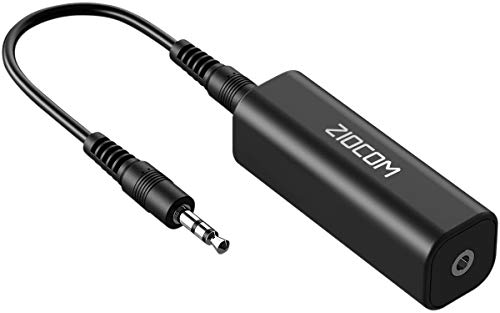
- Best for: Quick fixes where a single-pack RCA solution is desired.
- Why selected: Simple plug-and-play design that removes buzzing caused by ground loops.
- Why it helps: Improves clarity by stabilizing interference commonly found in car and home audio setups.
- Limitation: Being a budget option, some users may prefer higher-end transformers for sensitive systems.
Buying Guide: Key Considerations for Choosing a Ground Loop Isolator
- Connection type: Decide between 3.5mm (for portable devices) vs. RCA (for home theater or car systems). Some products support both via adapters, increasing flexibility.
- Noise source: Identify whether the hum is primarily from the alternator, grounding, or DC offset. This guides whether a simple isolation filter suffices or a higher-fidelity transformer is needed.
- Signal impact: Look for terms like “no affect bass” or “high fidelity transformer” to minimize adverse changes to the audio signal.
- Durability and enclosure: Metal or tough shells improve durability in automotive environments; consider heat tolerance in confined spaces.
- Ease of use: Plug-and-play designs with clear polarity and color coding reduce setup time and errors.
- Compatibility: Confirm device compatibility, especially with smartphone or Bluetooth modules, to ensure the isolator does not block essential features.
- Size and routing: For tight installations, compact forms and short cables help keep wiring neat and avoid interference from nearby electronics.
FAQ
- Do ground loop isolators affect audio quality? They reduce hum and buzz from grounding issues and are designed to preserve overall audio clarity, though some models emphasize minimal phase shift or bass changes.
- Can I use a ground loop isolator with Bluetooth receivers? Yes, many models work with Bluetooth adapters and car kits to eliminate noise on the 3.5mm or RCA paths.
- What should I verify before buying? Check connection type (3.5mm vs RCA), the primary noise source, and whether the device fits physically in your installation space.
- Are there any downsides to using isolators? Some units may introduce slight impedance or tonal differences; selecting a model designed for your system minimizes these effects.
- When is a high-end isolator worth it? In systems sensitive to signal loss or with long cable runs, a transformer-based isolator can better preserve fidelity.
- Is a single isolator enough for multiple sources? For multi-source setups, you may need a dedicated isolator per channel or a model designed for multi-channel isolation.