
The best home audio component depends on whether you need a complete surround system or a part for a speaker project. Saiyin is best for a compact 5.0 home theater setup, while Elimavi adds a subwoofer and wireless audio input. For DIY builds or replacements, the HiQltyla crossover, PRV AUDIO midrange driver, and piezo tweeters serve different roles. Compare the listed specifications carefully: these products are not interchangeable, and several are individual components rather than complete speaker systems.
| Product | Best suited for | Type |
|---|---|---|
| Saiyin 5.0 Home Theater System | Compact surround sound with a dedicated center speaker | Complete 5.0 speaker system |
| HiQltyla 3-Way Crossover | DIY speaker projects using compatible drivers | Two passive crossovers |
| PRV AUDIO 4MR60-4 | Midrange or vocal reproduction in a speaker build | Single midrange driver |
| Elimavi 5.1 Home Theater System | Home theater buyers seeking a subwoofer and multiple inputs | Complete 5.1 speaker system |
| Component Square Piezo Tweeters | Replacing or adding high-frequency drivers | Two tweeters |
Saiyin 5.0 Home Theater System

The Saiyin set is a complete 5.0 speaker package with four 3-inch passive bookshelf speakers and a center speaker. The listed power ratings are 40 watts for each bookshelf speaker and 75 watts for the center speaker. Its dedicated center channel is intended to improve dialogue clarity, a useful feature for movies and television.
Best for: Buyers who want a compact surround speaker arrangement with a separate center channel. The speakers can be placed on shelves or stands or mounted on walls, according to the product details. That flexibility may help when fitting a system to a room with limited floor space.
Why it was selected: It is a component-based home theater set rather than a single driver or crossover, so it suits buyers looking for several coordinated speakers in one package.
Limitation: This is a 5.0 system, and the listed features do not include a subwoofer. The speakers are passive, so confirm that your planned audio setup can drive passive speakers before choosing it.
HiQltyla 3-Way Speaker Crossover
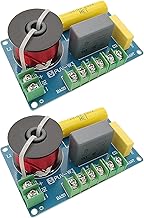
This two-pack contains passive three-way crossovers for DIY home audio or car audio projects. The listed specifications include 200 watts peak power, suitability for 4–8 ohm impedance, a 45 Hz–25 kHz frequency range, and crossover points at 860 Hz and 6,000 Hz. Screw terminals are provided to simplify wiring without soldering.
Best for: Builders assembling a multi-driver speaker system who need a passive crossover and whose drivers and design align with the stated impedance and crossover parameters. The product listing also identifies a bass inductor and capacitors among its components.
Why it was selected: A crossover is a central component in many multiway speaker builds. This product offers a pair, which may be useful when constructing a stereo pair, subject to the design and wiring requirements.
Limitation: A crossover does not function as a complete speaker or amplifier. Its stated frequency points and impedance range do not establish compatibility with every driver; check driver specifications and the intended circuit before buying.
PRV AUDIO 4MR60-4 Midrange Driver

The PRV AUDIO 4MR60-4 is a single 4-inch midrange speaker with a listed 30-watt RMS power rating and 60-watt program power rating. Its product details describe broad frequency coverage, a flat midrange response, high sensitivity, and an extended response up to 8 kHz. The compact driver is also described as suitable for use between mid-bass and high-frequency drivers in compact line arrays.
Best for: DIY speaker builders who need a dedicated midrange driver for vocals and instruments. It may suit a design where a compact driver is needed to cover the middle frequencies, but the complete speaker plan must account for the other drivers and crossover.
Why it was selected: It represents a clearly specified individual driver rather than a complete home theater set, making it relevant to readers searching for home audio components for custom builds or repairs.
Limitation: This listing is for one driver, not a full speaker system. Confirm the enclosure, crossover, power handling, and electrical requirements of the overall design before installation.
Elimavi 5.1 Home Theater System

The Elimavi package combines five full-range speakers with a 5.5-inch subwoofer. The product listing gives the subwoofer a 200-watt peak power output and describes 2.5-inch speakers, MDF wood cabinets, AUX audio input, and wireless audio input. Its five speakers and subwoofer are designed to form a 5.1 surround sound setup.
Best for: Buyers who want a home theater package that includes a subwoofer and offers both wired AUX and wireless audio input. The input options may be useful for connecting different audio sources, while the included subwoofer provides a dedicated bass component.
Why it was selected: Compared with a 5.0 set, this package explicitly includes a subwoofer and describes multiple input methods. Those are useful distinctions for shoppers comparing complete home theater systems.
Limitation: The listed 200-watt figure is identified as peak power for the subwoofer, not continuous system output. Check connection requirements and the intended source setup before purchase.
Component Square Piezo Tweeters

This package includes two square piezoelectric tweeters, each listed as 85 mm, with mounting screws. The stated frequency range is 5–20 kHz, and the listed sensitivity is 91 dB. The product description presents them as replacement or add-on treble drivers for speaker and sound-box projects.
Best for: DIY builders or repairers seeking a pair of high-frequency drivers and whose existing speaker design can accommodate the dimensions and electrical characteristics. The included screws may help with mounting where the enclosure and installation match.
Why it was selected: A tweeter covers the high-frequency role in a multi-driver design, so this pair is relevant to component-speaker searches focused on replacement parts or custom builds.
Limitation: The listing does not provide a detailed crossover specification or establish compatibility with a particular speaker. Check the mounting opening, wiring, and crossover requirements before connecting the tweeters.
Buying Guide: How to Choose Home Audio Components
Do you need a complete speaker system or a single component?
Start by deciding whether you want a ready-to-place group of speakers or a part for a custom build. The Saiyin and Elimavi products are complete multi-speaker packages. The crossover, midrange driver, and tweeters are individual building blocks; they do not provide a complete speaker system on their own.
A complete package is generally the simpler category to compare when your goal is surround sound. For a DIY project, plan the entire signal path and speaker design. That includes the drivers, enclosure, crossover, wiring, and an appropriate audio source or amplification setup. Do not assume that parts from different listings will work together simply because they are described as home audio components.
Should you choose a 5.0 or 5.1 speaker system?
The Saiyin listing describes a 5.0 arrangement with four bookshelf speakers and a center speaker. The Elimavi listing describes a 5.1 arrangement with five full-range speakers and a subwoofer. The practical difference in these product descriptions is the included subwoofer: Elimavi includes one, while Saiyin’s listed package does not.
Consider room layout, desired bass coverage, and available connection options. Elimavi lists AUX and wireless audio input. Saiyin highlights flexible placement and a center speaker for dialogue. Verify the connection and placement details that matter to your room before choosing either set.
What should DIY builders check before buying a crossover?
Match the crossover’s stated electrical parameters to the speaker design rather than treating its wattage or frequency range as a universal fit. The HiQltyla listing specifies 4–8 ohms, 200 watts peak, and crossover points at 860 Hz and 6,000 Hz. Check that the intended drivers are appropriate for those points and that the complete design follows the crossover’s wiring requirements.
Also distinguish peak power from continuous power. The product information provided here identifies peak power; it does not specify every operating condition or guarantee that a given driver combination will perform correctly. When exact compatibility is uncertain, consult the driver documentation or a qualified speaker builder.
How do midrange drivers and tweeters differ?
A midrange driver is intended to reproduce middle frequencies, including much of the vocal and instrument range. The PRV AUDIO driver is listed as a 4-inch midrange speaker with response up to 8 kHz. A tweeter is intended for high-frequency sound; the square piezo pair is listed for 5–20 kHz.
These frequency ranges alone do not show whether two drivers make a suitable pair. A speaker design must account for crossover behavior, impedance, mounting, power handling, and the enclosure. Check those details before replacing a driver or combining components from separate products.
Which specifications matter most for installation?
- Speaker type: Confirm whether the listing is for a complete system, passive crossover, midrange driver, or tweeter.
- Impedance and power: Compare stated values with the requirements of the rest of the system. Do not equate peak ratings with continuous output.
- Physical fit: Check dimensions, mounting method, and available space in the room or enclosure.
- Inputs and connections: Review whether the product lists AUX, wireless input, screw terminals, or another connection method relevant to your setup.
- Room needs: Consider speaker placement, center-channel dialogue, and whether a subwoofer is part of the package.
Frequently Asked Questions
What does “component speaker” mean for home audio?
It can refer to individual speaker parts, such as a midrange driver, tweeter, or crossover, used in a custom or repair project. It can also be used broadly for separate speakers in a home audio system. Check the listing to see whether it includes a complete set or only specific components.
Do passive home theater speakers need an amplifier?
Passive speakers need an appropriate source of amplified audio. The Saiyin listing identifies its speakers as passive. Check your planned system’s requirements and connections before purchase; the product details provided here do not specify a particular amplifier.
Is a 5.1 system always better than a 5.0 system?
Not automatically. A 5.1 system includes a subwoofer, while the listed Saiyin 5.0 package does not include one. The better choice depends on whether you want the included bass component, your room, and how you plan to connect and place the speakers.
Can I use any crossover with any speaker drivers?
No. Crossover points, impedance, power handling, and driver behavior must suit the speaker design. The HiQltyla listing states specific impedance and crossover values, but those values alone do not prove compatibility with every driver.
Can the listed piezo tweeters replace any existing tweeter?
Not necessarily. Compare the tweeter’s dimensions and electrical and crossover requirements with the existing speaker design. The product listing does not establish compatibility with a particular speaker model.
What should I check when buying a replacement midrange speaker?
Check the driver’s physical dimensions, impedance, power requirements, frequency range, enclosure fit, and crossover. The PRV AUDIO product is one 4-inch midrange driver, so confirm that its specifications fit the design before replacing another driver.