
The best in-line noise suppressor depends on where the unwanted sound enters the system. For 12-volt power wiring, consider a 10-amp filter or the 30-amp InstallBay model; for noise caused by an audio ground loop, consider the BESIGN 3.5mm isolator or the RCA two-channel isolator. The two-pack is useful when you need two 10-amp filters. These products address different parts of an audio system, so identify whether the noise is in the power line or audio signal before choosing.
| Product | Best suited for | Connection type or stated capacity |
|---|---|---|
| 10 Amp Inline Power Noise Suppressor Filter Eliminator Isolator Universal | Buyers seeking a single inline power filter | 10 amp |
| BESIGN Ground Loop Noise Isolator | 3.5mm audio connections | 3.5mm jack |
| Installation Solution 10 Amp Filter, 2-Pack | Buyers needing two filters for 12-volt applications | 10 amp; two-pack |
| InstallBay by Metra 30 Amp Noise Filter | Higher-capacity 12-volt accessory wiring | 30 amp |
| RCA Stereo 2 Channel Ground Loop Isolator | Two-channel RCA audio signal paths | RCA stereo |
10 Amp Inline Power Noise Suppressor Filter

This universal 10-amp inline power noise suppressor is the most basic choice in this group for a buyer looking for a filter identified for power wiring. Its name states a 10-amp rating and describes it as an eliminator and isolator. Those details make it relevant to shoppers comparing compact inline power-filter options for an audio setup.
Best for: A buyer whose system calls for an inline power suppressor rated at 10 amps and who does not need a two-pack. It was selected because it directly matches the in-line noise suppressor search and has a stated amp rating.
Limitation: The supplied product information does not specify supported vehicle types, wire connections, dimensions, or a particular noise source. Confirm that its rating and wiring arrangement suit the intended installation before selecting it. Do not treat it as an audio-signal isolator unless the product documentation confirms that use.
BESIGN 3.5mm Ground Loop Noise Isolator

The BESIGN isolator is designed for audio connections using a 3.5mm jack. Its listed use is to reduce hiss, buzz, and interference associated with ground loops between an audio source and speakers. The product information names smartphones, tablets, MP3 players, speakers, Bluetooth receivers, and Bluetooth hands-free car kits as possible devices when they have a 3.5mm connection.
Best for: A buyer hearing ground-loop noise through a 3.5mm audio connection, including some car or home stereo setups. It was selected because its listed connection type and intended noise problem are clear.
Limitation: This is an audio-path isolator, not a stated 12-volt power filter. Choose another category if the issue is believed to come from power wiring or if the equipment lacks a compatible 3.5mm connection. The listing says it can help when grounding issues persist; it does not establish that every kind of audio noise will be resolved.
Installation Solution 10 Amp Filter, 2-Pack

This two-pack contains 10-amp inline power noise suppressors described for car audio, marine equipment, CB radio, and other 12-volt applications. The product information identifies engine noise and alternator whine as target problems. It also describes the in-line design as a way to install the filters without removing existing wiring.
Best for: Buyers who need two filters or want a 10-amp option for a stated 12-volt application. It was selected for its explicit use cases and two-unit format. Compared with the single 10-amp product above, the key listed difference is quantity and the clearer application information.
Limitation: The supplied features do not describe exact wire connections, dimensions, or which individual devices should use a filter. Verify the current draw and installation requirements of the intended circuit. Its listed applications are not a reason to assume it fits every marine, CB, or car-audio setup.
InstallBay by Metra 30 Amp Noise Filter
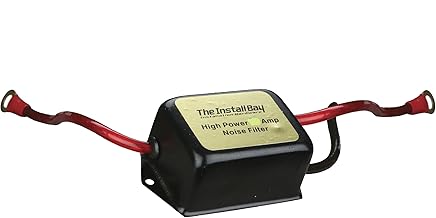
The InstallBay by Metra IBNF30 is a 30-amp noise filter for inline 12-volt accessory wiring. Its features describe it as a way to address alternator whine and electrical interference in a car audio system. The listed installation approach connects the filter between an amplifier and power source using pre-attached wires. The product information also gives dimensions of 5.125 inches long, 7.75 inches wide, and 0.3 inches high.
Best for: Buyers comparing a higher-capacity power filter with the listed 10-amp options. It was selected because its stated 30-amp capacity and inline wiring use provide a clear alternative for setups requiring a higher rating.
Limitation: A higher amp rating does not mean this filter is automatically appropriate for every circuit. Check the equipment’s requirements and the installation instructions before use. Its listed dimensions may also matter when planning a mounting location.
RCA Stereo Two-Channel Ground Loop Isolator

This two-channel RCA isolator is intended for humming and buzzing between an audio source and amplifier when ground-loop issues are involved. Its listed features say it filters DC current in the signal path. The product is described as having a cylindrical metal case with a heat-shrink tube and dimensions of 36 mm in diameter by 62 mm long.
Best for: A buyer with a two-channel RCA audio signal path who needs a ground-loop isolator rather than a power-line filter. It was selected because the connection type and signal-path use are stated directly.
Limitation: This product is described for RCA audio signals, not as a general 12-volt power suppressor. Check that the system’s connections match before choosing it. The listing specifically addresses ground-loop humming and buzzing, so it may not address unrelated noise sources.
Buying Guide: How to Choose an In-Line Noise Suppressor
Start by locating where the noise enters the system. In-line noise suppressors do not all connect to the same part of an audio setup. A power filter is intended for a power line or accessory circuit, while an audio ground-loop isolator sits in the signal path. Choosing the wrong category can leave the original problem untouched.
Is the noise coming from power wiring or an audio connection?
Consider a power filter when the product is intended for 12-volt wiring and the suspected issue is electrical interference, engine noise, or alternator whine. The 10-amp products and the 30-amp InstallBay model fall into this category based on their names or listed features.
Consider an audio isolator when the noise is associated with a ground loop between an audio source and an amplifier or speaker. The BESIGN model is for a 3.5mm connection, while the RCA model is for a two-channel RCA signal path. Confirm the connector type before buying.
How should you compare amp ratings?
Compare the filter’s stated amp capacity with the requirements of the circuit where it will be installed. The products here include 10-amp and 30-amp options. A larger number is not automatically better: select a rating that suits the intended application, and consult the product instructions or a qualified installer if the circuit requirements are uncertain.
Do not compare an audio signal isolator with a power filter by amp rating. The BESIGN and RCA products are described by their audio connections and ground-loop use, rather than by a power-circuit rating.
When does a two-pack make sense?
The Installation Solution product is listed as a two-pack. It may suit a buyer who needs two filters for separate applications or wants two units available for a planned installation. The supplied product details do not specify which circuits should receive each unit, so check the instructions and circuit requirements rather than assuming two filters should be connected together.
What should you check before installation?
- Identify whether the noise is associated with power wiring or an audio signal connection.
- Match the product’s connection type to the equipment: 3.5mm, RCA, or inline power wiring.
- For power filters, check the stated amp capacity against the intended circuit requirements.
- Review the installation instructions, wiring arrangement, and available mounting space.
- If the source of the noise is unclear, diagnose the system before adding a filter.
Noise can have causes beyond the specific problems described in these product listings. A suppressor is not a substitute for checking connections and identifying the source. When working with vehicle wiring or an unfamiliar system, use the manufacturer’s installation guidance or consult a qualified installer.
Frequently Asked Questions
What does an in-line noise suppressor do?
An in-line suppressor is placed in a power or audio path to address a specified type of interference. The right product depends on whether the unwanted sound is associated with electrical power wiring or a ground loop in the audio signal.
Can a 3.5mm ground-loop isolator fix alternator whine?
The BESIGN listing describes reducing ground-loop hiss, buzz, and interference over a 3.5mm audio connection. It does not identify the device as a 12-volt power filter, so use it only when the connection and suspected noise problem fit its stated purpose.
What is the difference between a 10-amp and 30-amp noise filter?
The stated capacity differs: the products in this selection include 10-amp and 30-amp power-filter options. Choose according to the requirements of the intended circuit, not simply because one rating is higher.
Should I choose an RCA or 3.5mm isolator?
Choose based on the audio connection in the signal path. The BESIGN model is described for 3.5mm connections, while the RCA product is described for two-channel RCA audio.
Will a noise suppressor remove every kind of audio noise?
No product information here establishes that a filter will resolve every noise source. These models are described for particular situations, such as power-line interference or ground-loop hum. Identify the cause and confirm the product’s intended connection before buying.