
The best karaoke machine with pitch correction depends on whether you prioritize vocal tuning, microphone capacity, or sound controls. Singtrix is the strongest fit for singers seeking extensive vocal effects and natural pitch correction, while the PPMIC MS78 adds pitch correction alongside bass, treble, and echo adjustments. The PPMIC MS75 models offer simpler pitch assistance, with versions for two or three microphones. The JYX system is better suited to buyers who want a large woofer and vocal-cut function, but its listed features do not include pitch correction.
| Product | Best for | Pitch correction details |
|---|---|---|
| Singtrix Portable Karaoke Machine | Vocal effects and tuning choices | Natural pitch correction and hard-tune effects |
| PPMIC MS78 | Manual sound control | AI pitch correction feature in Vocal Master Mode |
| PPMIC MS75-T | Groups using three microphones | Pitch correction assistance |
| PPMIC MS75 | Two-microphone karaoke | Pitch correction assistance |
| JYX 500W Peak Rolling Karaoke Machine | Large-speaker sound and vocal cut | Not listed among the supplied features |
Singtrix Portable Karaoke Machine

Best for: Singers who want several ways to alter vocals, from natural-sounding correction to pronounced hard-tune effects. Singtrix lists more than 375 voice effects, skill levels, harmonies, reverb, and delay, giving users a broad set of options for casual songs and more stylized performances.
The system includes a hit button and effects controller for creating four-part harmonies. Its listed features also include a PA speaker and karaoke microphone, and the product description says users can sing along with free YouTube karaoke songs. That makes it a flexible choice for households that want vocal processing as a central feature rather than a secondary setting.
Why it stands out: Among these options, Singtrix describes the widest range of vocal effects and explicitly lists both natural pitch correction and hard-tune processing. Choose it if you want to experiment with harmonies and different vocal styles.
Limitation: The large effects selection may be more than a buyer needs if the goal is only basic pitch assistance. The supplied features do not specify the exact steps for connecting or playing karaoke tracks.
PPMIC MS78 Karaoke Machine

Best for: Singers who want pitch correction plus hands-on control of the karaoke mix. The MS78 lists a beta AI pitch correction feature called Vocal Master Mode, activated with the MIC MODE button. It also offers manual bass, treble, and echo adjustments, so users can shape microphone and music sound instead of relying on one preset.
The listed speaker arrangement includes dual 4-inch woofers and dual 2-inch tweeters. The product description states an output of 300W and includes an Accompaniment Mode that partially eliminates vocals from songs. These functions suit buyers who want several ways to change both their voice and the backing track.
Why it stands out: It is the most feature-rich PPMIC option here for adjusting sound, combining pitch correction, accompaniment control, and separate bass, treble, and echo settings.
Limitation: The pitch feature is described as beta, so buyers seeking a fully specified, conventional tuning control should check the product details carefully. The listed controls may also take more adjustment than a simple plug-and-sing setup.
PPMIC MS75-T With Three Microphones
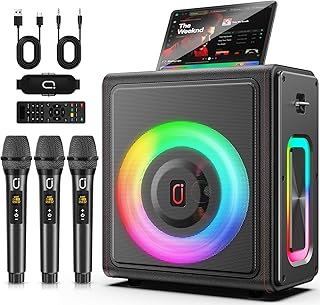
Best for: Families or groups who want three wireless microphones included and pitch correction assistance. The MS75-T is described as a 300W PA system with a 6.5-inch woofer and a 2-inch tweeter. Its MIC Mode engages pitch correction assistance, while an Echo knob lets singers add microphone reverb.
Compared with the two-microphone MS75, this version is the better choice when an additional singer needs a microphone without changing to a separate product category. The supplied description also highlights sound separation between voice and music, which is intended to keep vocals distinct during group use.
Why it stands out: It combines the listed pitch assistance and adjustable echo of the MS75 family with three wireless microphones and a stated 300W output. Choose it if simultaneous group participation matters more than having extensive manual tone controls.
Limitation: The product description does not specify how pitch correction can be adjusted beyond activating MIC Mode. It also does not list separate bass and treble controls.
PPMIC MS75 With Two Microphones

Best for: Duets and home karaoke sessions where two wireless microphones are enough. The MS75 lists a 200W PA system, a 6.5-inch woofer, and a 2-inch tweeter. Its MIC Mode engages pitch correction assistance, and the Echo control adjusts microphone reverb from a subtle room effect to a more pronounced hall sound.
The manufacturer description emphasizes separation between vocals and music, which may help singers remain audible over accompaniment. The model’s main distinction from the MS75-T is its two-microphone configuration and stated 200W output rather than the three-microphone version’s listed 300W output.
Why it stands out: It is a straightforward match for buyers who want basic pitch assistance and echo control without needing a third microphone. Choose it over the MS75-T if two singers are the usual maximum.
Limitation: The supplied features describe pitch correction as assistance but do not provide details about how strongly it changes a vocal or whether it can be customized. There are no listed bass and treble controls.
JYX 500W Peak Rolling Karaoke Machine
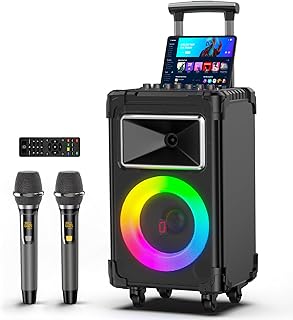
Best for: Buyers who prioritize a larger speaker and vocal-cut playback over built-in pitch correction. The JYX model lists a 10-inch woofer, a 3.5-inch tweeter, peak power of up to 500W, and two wireless microphones. Its controls include reverb, treble, and bass adjustment.
The vocal-cut function is designed to reduce the original singer’s voice so users can sing over a track. That is distinct from pitch correction: it changes the accompaniment rather than automatically tuning the performer’s notes. The system also lists TWS connection for connecting two matching speakers to create a dual-speaker setup.
Why it stands out: It is a relevant alternative for users who want a larger woofer, adjustable sound, and vocal reduction for sing-along sessions.
Limitation: Pitch correction is not included in the supplied feature list. Avoid this model if automatic vocal tuning is a required feature; consider one of the PPMIC or Singtrix options instead.
Buying Guide: How to Choose a Karaoke Machine With Pitch Correction
What kind of pitch correction do you need?
Pitch correction can mean different things in product descriptions. Some systems name a dedicated mode that assists with tuning, while others offer natural correction alongside stronger hard-tune effects. Singtrix explicitly lists natural pitch correction and hard-tune processing. The PPMIC MS75 and MS75-T describe pitch correction assistance through MIC Mode. The MS78 calls its function a beta AI pitch correction feature in Vocal Master Mode.
Check how the correction is activated and whether the description explains its behavior. If you want a subtle effect, look for wording such as natural correction. If you want an intentionally processed sound, hard-tune effects may be more relevant. Do not assume every product with microphone effects includes pitch correction: reverb and echo alter ambience, not vocal pitch.
How many microphones will your group use?
Choose a microphone count based on the number of people who will sing at once. The MS75 includes two wireless microphones, and the MS75-T lists three. Singtrix’s supplied features mention a karaoke microphone but do not state a quantity. The JYX description lists two wireless microphones, although pitch correction is not among its supplied features.
For duets, two microphones may be sufficient. For family or group performances, a third microphone can reduce the need to take turns, provided the included configuration matches your needs. Confirm the product listing for the exact included accessories before ordering.
Do you want simple operation or detailed audio controls?
A simple mode can be useful when several people will share the machine. The PPMIC MS75 models describe a MIC Mode button for pitch correction assistance and an Echo knob for reverb. The MS78 lists additional manual bass, treble, and echo adjustment, which offers more control but may require time to set the mix.
Singtrix focuses on vocal effects, including harmonies, reverb, delay, and multiple effect styles. The JYX lists reverb, treble, and bass controls, but its listed vocal-cut function is not pitch correction. Match the controls to what you plan to change: vocal tuning, microphone ambience, music tone, or the original vocals in a backing track.
How important are speaker size and stated output?
Speaker specifications can help compare product designs, but wattage figures alone do not establish how a machine will sound in your room. The PPMIC MS75 lists a 6.5-inch woofer and 2-inch tweeter at up to 200W; the MS75-T lists the same driver sizes and up to 300W. The MS78 lists dual 4-inch woofers and dual 2-inch tweeters, also with a stated 300W output. JYX lists a 10-inch woofer, 3.5-inch tweeter, and up to 500W peak power.
Consider room size, portability, and whether the machine will be used mainly for casual home singing or larger gatherings. Compare like with like: a peak-power figure is not necessarily the same kind of specification as another product’s stated output.
Do you need vocal removal or accompaniment features?
Some karaoke systems help users prepare a backing track rather than change their singing voice. The MS78 lists Accompaniment Mode, which partially eliminates vocals from songs. JYX lists a vocal-cut function that reduces the original singer’s voice. These can be useful when a preferred karaoke version is unavailable, but the descriptions do not say that vocal removal completely eliminates vocals.
If pitch correction is essential, treat accompaniment features as an extra rather than a substitute. The JYX feature list does not identify pitch correction, so it is a better fit for buyers who prioritize its speaker configuration and vocal-cut option.
What should you verify before buying?
- Confirm that pitch correction is explicitly listed, not inferred from echo, reverb, or vocal-cut functions.
- Check whether the product describes the correction as automatic, natural, beta, or selectable through a named mode.
- Verify the number of microphones included and the controls available for microphone effects.
- Review speaker and power descriptions carefully, especially when comparing peak power with other output figures.
- Check the product listing for setup and playback details that matter to your intended use.
Frequently Asked Questions
What does pitch correction do on a karaoke machine?
Pitch correction adjusts a singer’s vocal notes toward the intended pitches. The amount and character of the effect vary by product. It is different from echo or reverb, which add an ambient effect to the sound.
Which product lists the most vocal effects?
Singtrix lists more than 375 voice effects, along with natural pitch correction, hard-tune effects, harmonies, reverb, and delay. It is the most suitable option here for buyers who want a wide range of vocal processing.
Which PPMIC model is best for three singers?
The PPMIC MS75-T is the listed option with three wireless microphones. It also includes MIC Mode pitch correction assistance and an Echo control for microphone reverb.
Is vocal cut the same as pitch correction?
No. Vocal cut reduces the original singer’s voice in a backing track. Pitch correction changes the pitch of the performer’s vocal. The JYX description lists vocal cut, but does not list pitch correction.
Which option offers manual bass, treble, and echo controls?
The PPMIC MS78 lists separate bass, treble, and echo adjustments. The JYX also lists independent reverb, treble, and bass adjustment, but its supplied features do not identify pitch correction.
Can pitch correction replace vocal practice?
No. Pitch correction is an audio effect that can adjust vocals during performance. It does not teach singing technique or guarantee that every performance will sound natural.