
Best Large Diaphragm Condenser Microphones for Studio Quality Recordings
Looking for high-fidelity vocal and instrument capture? This guide highlights five top large-diaphragm condenser mics, each suited to different needs—from pristine studio vocals to flexible multi-pattern work. If you’re a home-producer, musician, or voice-over artist, these models offer clear, detailed tone with robust features. The recommended picks balance versatility, sound quality, and value, helping you match your project to the right mic.
Summary of selected products
| Product | Best For | Key Feature |
|---|---|---|
| CAD Audio M179 | Versatile studios and home setups | Variable polar pattern |
| Rode NTK | Tube microphone enthusiasts | Valve-driven, warm tone |
| Rode NT2000 | Multi-role studios | Pattern, pad, high-pass filter |
| Rode Broadcaster | Broadcasting voice with precision | Broadcast condenser with on-air indicator |
| CAD Audio USB U39 | Computer-based recording | USB connection, headphone output |
The following sections present five direct options. Use the “best for” guidance to quickly decide which mic aligns with your workflow, whether you’re tracking vocals, instruments, podcasts, or voice-over work.
CAD Audio M179 Variable‑Pattern Large‑Diaphragm Condenser Mic

The CAD Audio M179 offers a gold-sputtered 1.1″ diaphragm for rich, detailed tone across sources. It provides a continuously variable polar pattern from omnidirectional to figure-8 with a hard cardioid detent. Best for versatile home studios needing flexible pickup patterns for vocals, acoustic guitar, and ensemble recordings. Caution: setup and positioning require careful management of pattern changes to avoid phase issues in multi-mic setups.
Best for: Producers who want a single mic that adapts to multiple recording scenarios without swapping hardware.
Rode NTK Large-Diaphragm Tube Condenser Microphone Silver

The Rode NTK is a premium large-diaphragm valve condenser with a 1″ gold-sputtered capsule and a hand-selected twin-triode 6922 valve. It delivers a lush, warm tube character ideal for vocal warmth, guitar, and piano. Best for listeners seeking classic, high-end warmth in a project studio. Limitation: tube circuits can be more sensitive to heat and tube maintenance considerations may apply over time.
Best for: Studios focusing on vocal warmth and rich harmonics, or singers seeking a vintage tube tone.
Rode NT2000 Large-Diaphragm Condenser Microphone, Silver

The Rode NT2000 is a versatile studio condenser with a continuously variable polar pattern, plus a pad and high-pass filter. It handles omnidirectional, cardioid, and figure-8 patterns, enabling flexible room miking and stereo techniques. It exhibits extremely low self-noise and high SPL capability for diverse sources. Best for multi-use studios needing a single mic for voice-over, vocals, and instruments. Caution: full potential requires proper preamp compatibility and impedance matching for optimal performance.
Best for: Studios that require a flexible, all-around large-diaphragm mic with strong noise handling and filtering options.
Rode Broadcaster Large-Diaphragm Condenser Microphone, Silver
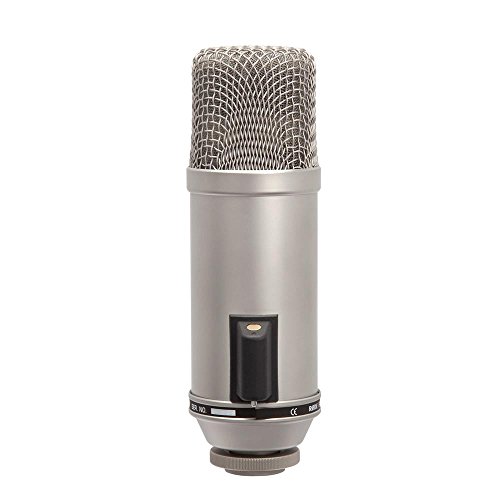
The Rode Broadcaster is a dedicated large-diaphragm condenser with a on-air indicator and cardioid pickup. It’s designed for spoken-word vocal clarity and broadcast-quality voice work. Best for podcasters and announcers who want a straightforward path to professional sound without extra processing. Limitation: cardioid focus may reduce ambient room capture, so it’s less suited for full-bandwidth choir or ensemble miking.
Best for: Clear, broadcast-style vocals and on-air projects where immediate, present voice is essential.
CAD Audio USB U39 Large Diaphragm Cardioid Condenser Microphone
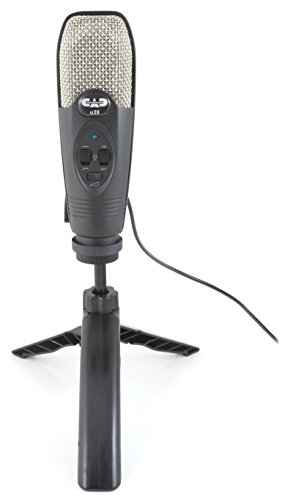
The CAD Audio USB U39 combines a 1″ large-diaphragm cardioid condenser with a built-in headphone output. It’s designed for computer-based recording and streaming, offering easy plug-and-play operation. Best for beginners or creators who want immediate use with minimal gear. Caution: USB mics may be less flexible in professional studio preamp chains, limiting certain high-end routing options.
Best for: Desktop recording and streaming setups needing a simple, direct USB solution.
Buying Guide
What should you consider when choosing a large-diaphragm condenser microphone?
- Polar pattern flexibility: If you record a lot in varied spaces, a mic with multiple patterns (omnidirectional, cardioid, figure-8) reduces the need for extra mics.
- Diaphragm size and tone: Larger diaphragms typically yield smoother low-end and extended high-end, beneficial for vocals and acoustic instruments.
- Tube vs solid-state: Tube mics (like the NTK) offer warmth and character but require more care and maintenance than solid-state designs.
- Built-in features: Pads, high-pass filters, and on-board indicators can simplify processing and monitoring in real-time.
- Connectivity: USB mics are convenient for quick setups; XLR mics generally offer better preamp options and future expandability.
Use-case guidance:
- Vocalists and voice-over artists may benefit from cardioid patterns and low-noise performance.
- Home studios seeking one mic for multiple roles should consider pattern versatility and the option to switch between direct USB and XLR paths.
- Broadcasting and podcasting often favor mics with clear presence and minimal room noise; on-air indicators and cardioid pickup help maintain consistency.
Compatibility and setup considerations:
- Preamp and interface quality affects overall fidelity; ensure your audio interface can handle the mic’s max SPL and impedance.
- Placement is critical: position diaphragms at mouth level with appropriate distance to avoid proximity effect or room coloration.
- Maintenance: tube microphones may require biasing checks or occasional servicing; verify care requirements with the manufacturer.
FAQ
- What is a large-diaphragm condenser microphone best for? They excel at capturing vocals, acoustic guitars, pianos, and room tone with detailed high-frequencies and full bodies of sound.
- Do I need a preamp or audio interface for these mics? Yes for XLR models. USB models like the CAD U39 can connect directly to a computer.
- Are tube mics better than solid-state mics? Tube mics offer a warmer, more harmonically rich tone; solid-state mics are typically more linear and require less maintenance.
- Which pattern is best for a vocal solo? Cardioid is the most common choice for isolated vocal recording, reducing side and rear pickup.
- Can I use these mics for broadcast? Some models, like the Rode Broadcaster, are tailored for broadcast voice, but most can work with proper processing and a good interface.
- What is a good all-around mic for beginners? A versatile cardioid large-diaphragm condenser with basic onboard controls or USB connectivity is typically easiest to start with.