
For György Ligeti’s Piano Études, Book 2, the Schott Volume 2 score is the direct choice for pianists who need the music, while the Naxos recording of Books I and II suits listeners who want a performance reference. The supplied listings also include Volume 3, a related continuation rather than Book 2. The comparison below separates the score, recording, and adjacent-volume option so you can choose based on whether you plan to play or listen.
| Product | Best For | What It Is |
|---|---|---|
| Schott, Études pour Piano Volume 2 | Pianists studying Book 2 | 76-page piano score |
| Naxos, Études, Books I & II / Biret | Listeners and performance reference | CD recording of music from both books |
| Schott, Études pour Piano Volume 3, Part 1 | Pianists exploring later études | 24-page score, not Book 2 |
Schott Études Pour Piano Volume 2

Best for: Advanced pianists seeking the score for Ligeti’s second book of piano études. This is the most directly relevant item in the supplied list because its title identifies Volume 2 and its listed instrumentation is piano.
The listing specifies 76 pages and piano voicing. It is a sheet-music publication, not a recording or a general piano-method book. Choose this if your goal is to study, prepare, or perform the Volume 2 repertoire from printed notation.
Ligeti’s études demand close attention to rhythmic coordination, texture, and control. A score lets players examine the written detail at their own pace, but it does not provide a recorded performance or instructional commentary. The listing does not state a difficulty level, so prospective buyers should assess the music and their own preparation before choosing it.
Limitation: This product is the score alone; the listing provides no accompanying audio or teaching material.
Naxos Ligeti Études, Books I And II
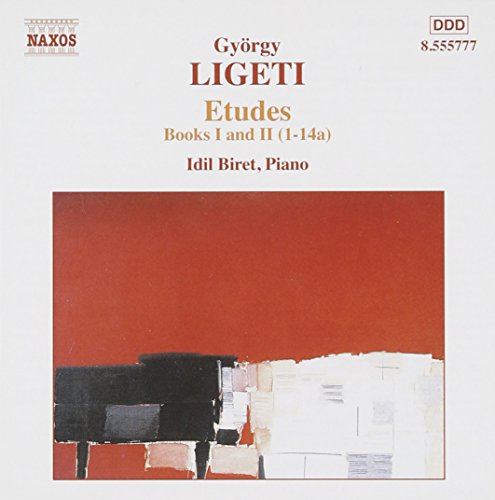
Best for: Listeners who want a recording of Ligeti’s études, including works from Book 2. The product is listed as a CD and identifies pianist Biret in its title.
Unlike the Schott score, this item is for listening rather than reading notation. It can help a student become familiar with the sound and pacing of the repertoire before or alongside score study. It is also a suitable option for classical-music listeners who want both Books I and II represented in one release, as indicated by the product title.
Use the recording as a listening reference, not as a replacement for the printed score if you need to follow notes, markings, or phrasing in detail. The supplied product information does not identify track contents individually, so check the listing details if you need to confirm exactly which études appear.
Limitation: The listed format is a CD, so it is not a digital score and does not serve as a print copy for performance preparation.
Schott Ligeti Études Volume 3, Part 1

Best for: Pianists looking beyond Book 2 to a later volume in Ligeti’s piano-étude collection. The listing describes four contemporary études in standard notation and identifies the instrumentation as piano.
This is a related score, but it is not the correct purchase for someone specifically seeking Book 2. The listing gives a length of 24 pages and identifies the volume as Volume 3, Part 1. It may suit a pianist who already has the earlier material or is comparing the broader sequence of Ligeti’s études.
Choose this only if you want the Volume 3 material described by the listing. For a Book 2 assignment or performance, the Schott Volume 2 score is the more direct match. The product listing gives “SMP Level 10 (Advanced)” in its title, which makes its intended advanced audience clear.
Limitation: It covers Volume 3, Part 1, not the second book. Do not use it as a substitute for the Book 2 score.
Buying Guide: How To Choose Ligeti Études Book 2
Do you need sheet music or a recording?
Start with the purpose of your purchase. Choose the Schott Volume 2 edition if you need notation for learning or performing the Book 2 études. Choose the Naxos CD if you want an audio presentation of music from Books I and II. These products serve different needs, so a recording should not be mistaken for a score, and a score will not provide a performance to listen to.
Some pianists may use both formats: the printed score for reading and practice, and the recording as a listening reference. The supplied listings do not specify whether the CD includes a booklet or detailed notes, so confirm those details if they matter to your purchase.
How can you confirm that a listing is actually Book 2?
Check the volume wording in the product title and description before ordering. The Schott Volume 2 listing explicitly identifies Volume 2 and piano. The Naxos title names Books I and II, making it relevant to a listener seeking Book 2 performances. The Schott Volume 3, Part 1 listing is a later-volume option, not the requested Book 2 score.
Keep the format in view as well. A product title containing “études” may refer to printed music or a recording. Confirm whether the listing identifies a CD, piano instrumentation, page count, or another format so you do not order the wrong type of item.
Is this repertoire suitable for every pianist?
Ligeti’s piano études are generally approached as challenging concert repertoire, requiring focused study of rhythm, coordination, and precise execution. The supplied Volume 2 listing does not provide a specific grade or difficulty rating, so it is better not to rely on an assumed level. Review the score or consult a qualified piano teacher to determine whether the pieces fit your current technique and preparation.
The Volume 3 listing states “SMP Level 10 (Advanced)” in its title, but that rating belongs to the Volume 3 product and should not be treated as a published rating for the Volume 2 score. Buyers should avoid transferring a level designation from one volume to another.
What details should you compare before buying?
- Volume: Confirm that the item says Volume 2 or Books I and II if Book 2 is your target.
- Format: Distinguish a piano score from a CD recording.
- Instrumentation: The Schott Volume 2 listing specifies piano.
- Length: The Volume 2 listing gives 76 pages; the Volume 3, Part 1 listing gives 24 pages.
- Purpose: Select notation for practice and performance preparation, or audio for listening and reference.
Should you buy a general piano technique book instead?
A general technique collection is not the same as Ligeti’s Études, Book 2. The supplied list includes Etudes with Technique, Book 2 by Helen Marlais and Suzanne Torkelson, but its listing does not identify it as Ligeti’s work. It is therefore not a substitute for the Schott Volume 2 score or the Naxos recording. Check author, composer, and series information carefully when a search result uses the word “études.”
Frequently Asked Questions
Which listed product is the direct score for Ligeti’s Book 2?
The Schott Études pour Piano Volume 2 listing is the direct match. It identifies Volume 2, piano instrumentation, and a length of 76 pages.
Which product includes a recording of Book 2?
The Naxos Études, Ligeti, G., CD listing is titled Ligeti: Etudes, Books I & II / Biret. It is the supplied audio option that names both books.
Is Schott Volume 3, Part 1 the same as Book 2?
No. It is identified as Volume 3, Part 1, so it is a related later-volume score rather than the Book 2 edition.
Does the Volume 2 score include audio?
The supplied listing describes a 76-page piano score and does not list accompanying audio. Choose the Naxos CD if you want a recording.
Is Etudes with Technique, Book 2 a Ligeti book?
The supplied listing names Helen Marlais and Suzanne Torkelson as contributors and does not identify Ligeti as the composer. It should not be confused with Ligeti’s piano Études, Book 2.