
Best Looper for Bass Guitar: Top Pedal Picks for Bassists
For bass players seeking real-time rhythm and layered parts, a reliable looper pedal is essential. This guide highlights five looper pedals best suited for bass or adaptable to bass lines, with clear pros, limitations, and practical buying notes. The top picks emphasize long memory, robust tone, tuning integration, and ease of use for practice, songwriting, and live playing.
| Product | Loops / Record Time | Key Benefit | Best For |
|---|---|---|---|
| LEKATO Looper Pedal — 9 Loops | 9 loops, 40 minutes total | Uncompressed 48K/24bit audio, Analog-Dry-Through | Bassists needing long, clean tones with overdubs |
| BOSS RC-1 Loop Station | Up to 12 minutes stereo | User-friendly, reliable looping | Beginners to intermediate players needing simple setup |
| LEKATO Looper Pedal — 3 Loops, 18 Minutes | 3 loops, 18 minutes | SYNC & Tuner, visual progress | Practice and layered ideas for bass lines |
| GOKKO GK-27 Looper Pedal | 10 minutes | Unlimited overdubs, undo/redo | Creative bass riff layering |
| LEKATO Looper Pedal — 3 Loops, 18 Minutes (Power Included) | 3 loops, 18 minutes | Sync, Tuner, Analog-Dry-Through | Compact setup with reliable tuning integration |
Note: The table above is a quick reference. Each product is discussed in detail below to explain why it suits bass players and what to watch for before purchase.
LEKATO Looper Guitar Pedal 9 Loops

This LEKATO model offers nine loops with up to 40 minutes of total recording time. It uses 48K/24-bit uncompressed audio and an Analog-Dry-Through design to preserve the dry bass signal. A built-in tuner helps keep bass lines in tune between phrases. Best for bassists who want long, clean overdubs without tone loss. Limitation: no explicit bass-optimized features beyond standard looper performance, so performance depends on the user’s control of gain staging.
BOSS RC-1 Loop Station Pedal

The BOSS RC-1 is known for straightforward operation and reliability. It supports stereo input/output and up to 12 minutes of looping time, which is ample for many bass practice and live scenarios. It offers clear looping modes and intuitive controls, making it a solid choice for players who prioritize ease of use over highly advanced features. Best for: bassists new to looping or players who want a durable, simple pedal. Limitation: shorter maximum loop time than some higher-capacity models.
LEKATO Looper Pedal — 3 Loops, 18 Minutes
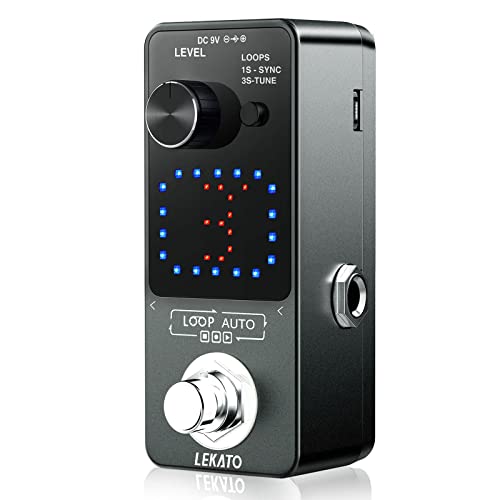
This LEKATO model provides three loops with a total 18 minutes of record time. It features a synchronous recording mode that allows recording to start during playback, minimizing moment loss. It includes a tuner and a 48K/24-bit lossless signal path with Analog-Dry-Through. Best for bass players who want flexible timing and reliable tuning in a compact package. Limitation: fewer loops than the 9-loop model, which may require more strategic arrangement of ideas.
GOKKO GK-27 Looper Pedal
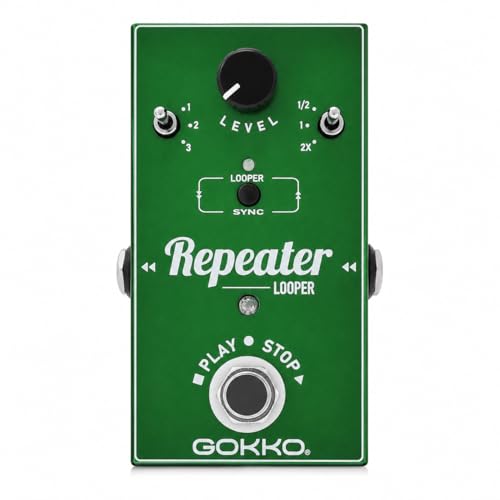
The GOKKO GK-27 supports up to 10 minutes of loop recording with unlimited overdubs and undo/redo during playback. It is a compact, affordable option for bass players focused on building layered rhythms and bass lines. Best for: players who want quick, practical looping with strong overdub capability. Caution: as with many compact loopers, space for long performances may be tight for complex bass parts.
LEKATO Looper Pedal — 3 Loops (Power Included)

This LEKATO pedal offers three loops with an 18-minute total recording time, plus a built-in tuner and synchronous recording. The Analog-Dry-Through design preserves the dry bass signal, and a dedicated 9V power supply is supported. Best for: bassists looking for a compact, tuner-equipped looper with reliable signal integrity. Limitation: power supply is not included in the package, so budget accordingly.
Buying Guide
What features matter most for bass looping?
- Memory and loop length: Longer loops and more loops give bassists flexibility for groove-based sections and comping ideas.
- Signal integrity: Analog-Dry-Through and 24-bit depth help preserve the bass tone during looping.
- Tuner integration: Built-in tuning keeps bass lines in tune between phrases without extra gear.
- Sync and overdub ease: Synchronous recording and easy overdubs simplify building layered parts on bass.
- Power and portability: Battery vs. power supply affects stage setup and reliability on tour.
How to choose between these options?
- For long, tonal bass grooves with many overdubs: choose a pedal with more loops and longer total recording time.
- For quick practice and simple riffs: a compact looper with easy controls is ideal.
- If you need straightforward operation with dependable performance: prioritize brands known for looper reliability (such as BOSS).
- For best tone preservation: look for uncompressed audio, Analog-Dry-Through, and 24-bit depth.
Compatibility and setup considerations
- Power supply: verify required voltage and polarity; some pedals include power or specify 9V center-negative adapters.
- Input/output options: stereo vs. mono paths may matter for live rigs or multi-amp setups.
- Tuning behavior: some pedals tune during playback; others pause for tuning—consider your playing style.
FAQ
- Which looper is best for bass beginners? A model with simple controls and reliable looping time, like the BOSS RC-1, is a solid starting point.
- Can these loopers preserve bass tone? Yes, pedals with 48K/24-bit audio and Analog-Dry-Through help maintain tone quality.
- How many overdubs should I expect? That varies; models range from a few to many overdubs, so choose based on your layering needs.
- Is a power supply included? Some models include power; others require you to purchase a 9V adapter separately. Check product details.
- Do loopers work well for live bass performances? Yes, when paired with a stable power source and proper input/output routing.