
For marching euphonium and drum corps use, the most relevant items in this list are the two clamp-on music lyres, which are described for vertical-key euphoniums. The Bb marching baritone is a related brass option, while the listed euphonium may suit players seeking a full instrument; check its conflicting key details before buying. The clip-on mustache is a novelty accessory, not playing or marching equipment.
| Product | Best For | Key Detail |
|---|---|---|
| 11-inch vertical-key lyre | Players comparing a stated length | Metal, nickel-plated finish |
| 33 cm vertical-key music clip | Vertical-key euphonium players | Described for three- or four-key instruments |
| Bb euphonium | Buyers seeking a full euphonium | Listing features conflict on key |
| Bb marching baritone | Players considering a related instrument | Monel pistons and case included |
| Brasstache mouthpiece accessory | Novelty or gift use | Not performance equipment |
11-Inch Vertical-Key Euphonium Lyre
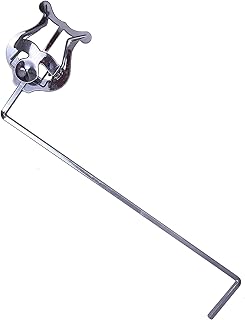
This clamp-on lyre is described for three- or four-key euphoniums with vertical keys. Its listed length is 11 inches, and the product description identifies a metal construction with a nickel-plated finish. A lyre holds sheet music where a player can read it while playing, making this the most directly relevant item here for a marching euphonium player who needs a music holder.
Best for: Players who have confirmed that their euphonium has vertical keys and want a lyre with a stated 11-inch length. It was selected because its listed instrument configuration directly addresses a marching music-stand need.
Check before buying: The listing does not provide detailed clamp dimensions or confirm fit for every euphonium. Compare the clamp design and instrument layout before ordering; the vertical-key description is important.
33 Cm Vertical-Key Music Clip

This silver clamp-on music clip is described as suitable for three- or four-key vertical-key euphoniums. The listing gives its length as 33 cm and says it has a metal electroplated construction with a nickel-plated finish. Its intended role is to hold music on the instrument during playing, rather than serve as a general-purpose stand.
Best for: A player looking for a vertical-key lyre with a metric length specification. It was selected because the product description explicitly names euphoniums and its intended marching music-clip function.
Better for: Buyers who want to compare the stated 33 cm measurement with their existing lyre or the placement they need. Although this and the 11-inch model are both listed for vertical keys, the product data does not establish that they have identical dimensions or fit.
Check before buying: Confirm the instrument’s key orientation and clamp fit. The listing does not specify compatibility with every model or provide a detailed measurement of the clamping area.
Brass Bb Euphonium With Case

This listing presents a brass euphonium for students, teachers, and professional musicians. Its features describe a warm, full-bodied tone, a responsive valve system, and use for practice, school brass bands, ensembles, recitals, and competitions. The package is said to include a hard-shell case, mouthpiece, polishing cloth, and maintenance gloves.
Best for: Buyers comparing a complete euphonium package with an included case and basic care accessories. It was selected because it is the list’s only product presented as a euphonium rather than a lyre, baritone, or novelty item.
Important limitation: The product name identifies a Bb euphonium, but its feature text also calls it an E-flat euphonium. That inconsistency makes the instrument’s key unclear from the supplied information. Confirm the actual key, valve configuration, and suitability for the intended ensemble before purchase. The listing does not specifically establish that it is a marching-design instrument.
Bb Marching Baritone With Case

This instrument is identified as a Bb marching baritone, not a euphonium. The listed features include a nickel-plated finish and smooth, durable Monel pistons. A case and mouthpiece are also stated in the product name. Because the product is a marching baritone, it is a related option for readers comparing brass instruments used in marching settings, but the listing alone does not establish that it is an interchangeable substitute for a euphonium.
Best for: A buyer specifically looking for a Bb marching baritone and comparing piston material and included items. It was selected for its direct marching designation and close relevance to the article topic.
Choose this if: Your ensemble or instructor has specified a marching baritone. Avoid assuming it meets a euphonium requirement without checking the required instrument type and ensemble specifications.
Brasstache Clip-On Mouthpiece Accessory

This product is a novelty mustache that snaps onto a brass-instrument mouthpiece. The listing describes high-strength, mercury-free plastic and an included carrying case. It names several brass instruments, including euphonium and baritone, but its stated purpose is decorative rather than functional.
Best for: A player seeking a humorous gift or novelty accessory. It was included because the listing names euphonium and baritone players, not because it improves marching performance or holds music.
Limitation: This is not a lyre, instrument, or maintenance tool. The product information does not establish how it affects playing, so players should not treat it as required drum corps equipment.
Buying Guide: Choosing Marching Euphonium Gear
Do you need an instrument or a music holder?
Start by identifying the item you actually need. A euphonium is the instrument; a lyre or music clip holds sheet music while playing. The two vertical-key clips are the most targeted choices in this product list for a player who already owns a compatible euphonium. The Bb euphonium and marching baritone are instrument listings, while the Brasstache is decorative.
For ensemble or drum corps participation, follow the instrument and equipment requirements provided by the director or organization. Product names alone do not establish that a particular model is approved, appropriate for a specific part, or accepted by a group.
How can you check whether a lyre fits?
Confirm that your euphonium has vertical keys and compare the clamp with the instrument’s layout. Both lyre listings describe three- or four-key vertical euphoniums, but neither supplied feature list gives detailed clamp measurements or claims universal fit. If the orientation or model is uncertain, check with the seller or consult the instrument manufacturer before ordering.
The first lyre is listed as 11 inches long; the second is listed as 33 cm. Those length statements can help with comparison, but they do not tell you the exact usable music area, clamp opening, or whether a clip will sit at a comfortable reading angle. Do not assume the two products are identical based on their similar descriptions.
Should you choose a euphonium or marching baritone?
Use the instrument type required by your music program or ensemble. The product list distinguishes a Bb marching baritone from a euphonium. Although both are low brass instruments, the listing information does not show that one can replace the other for a particular part. Check the required instrument name, key, configuration, and any equipment guidance before choosing.
For the listed euphonium, resolve the key discrepancy before making a decision: its title says Bb, while its features refer to E-flat. Ask for confirmation of the actual instrument specification. The description also does not specifically call it a marching euphonium, so verify that its design suits your intended use rather than relying only on the general instrument name.
What should you verify in an instrument package?
Compare the stated instrument type and key first, then check what the package includes. The euphonium listing names a hard-shell case, mouthpiece, polishing cloth, and maintenance gloves. The marching baritone listing identifies Monel pistons, a nickel-plated finish, a case, and a mouthpiece. These details describe the supplied product information; they do not establish performance quality or suitability for a specific player.
Beginners may want an instructor or school music program to confirm the instrument and accessories before purchase. Experienced players should still verify the exact model configuration and ensemble requirements, particularly where the listing contains conflicting specifications.
Which product is useful for marching music?
A compatible lyre is the clearest choice in this selection when the goal is to keep sheet music attached to a vertical-key euphonium while playing. The two lyres differ in their stated length, but the available descriptions do not provide enough detail to rank them by fit or stability. Compare the measurements and clamp configuration against your instrument.
The novelty mustache is not functional marching gear. It may be considered as a gift or for novelty use, but it should not be confused with equipment needed to read music, maintain an instrument, or meet an ensemble requirement.
Frequently Asked Questions
What is the most directly relevant product for a marching euphonium player?
One of the two clamp-on vertical-key music lyres is the most directly relevant item if you need a music holder. Confirm the euphonium’s key orientation and the clamp fit before choosing.
Are the two listed euphonium lyres the same size?
The first is listed as 11 inches long, and the second as 33 cm. The listings do not provide enough detail to establish that their clamp dimensions or usable music areas are identical.
Is the Bb marching baritone a euphonium?
The product is listed as a Bb marching baritone. The supplied information does not say that it is a euphonium or that it can replace one in an ensemble.
What key is the listed brass euphonium?
The key is unclear from the supplied product details. The product name says Bb, while its feature text refers to E-flat. Confirm the specification with the seller before buying.
Does the Brasstache help with playing or marching?
The product is described as a novelty mouthpiece accessory. The listing does not identify it as functional marching equipment or as a tool for improving performance.