
If you are searching for a metal drum with holes, a steel tongue drum may fit the intent: its cut slots form vibrating tongues that create musical notes. The HOPWELL 15-note drum is best for players seeking a wider range, while the 6-inch LEKATO and YUNDIE models suit beginners who want compact instruments. The Weipoken offers 15 notes in a smaller 12-inch format. These are not ordinary hollow drums with open holes; their shaped slots are part of the sound-producing design.
| Product | Best For | Key Difference |
|---|---|---|
| HOPWELL 13-inch, 15-note | Broader melodic playing | D major; songbook and accessories |
| Lidguni 13-inch, 15-note | C-major melodies | G3-E5 range and 440 Hz tuning claim |
| LEKATO 6-inch, 11-note | Compact beginner use | D major; hands or mallets |
| YUNDIE 6-inch, 8-note | Casual outdoor or indoor play | Compact, mellow sound; light-rain playing described |
| Weipoken 12-inch, 15-note | More notes in a mid-size body | Carbon steel; music book and accessories |
HOPWELL 13-Inch 15-Note Steel Tongue Drum

The HOPWELL is a D-major steel tongue drum with 15 notes. Its larger note count is intended to make more melodies and complex songs available than a model with fewer notes. The listed kit includes a music book, mallets, and a carry bag, giving a new player basic items for learning and transport.
Best for: Beginners or developing players who want a wider range without moving to a specialized instrument. The 15-note layout is the main reason to choose it over compact 8- or 11-note options. The product description also highlights a clear, melodic tone and a hand-crafted, painted surface.
Limitation: The listed tuning is D major, so buyers looking specifically for C major should compare the Lidguni instead. The product information does not specify the individual note names or exact range.
Lidguni 13-Inch 15-Note C-Major Drum

This 13-inch Lidguni model is a C-major steel tongue drum with 15 tones. The listed range is G3-E5, and the product description says it is tuned to 440 Hz. It is made from titanium carbon material and includes a songbook, mallets, and a carrying bag, according to the product name.
Best for: Buyers who want a wide note range and prefer a C-major instrument. Compared with the HOPWELL, it shares a 15-note layout but lists a different key and an explicit note range. That makes it a useful choice for shoppers comparing musical range details.
Limitation: The product description does not provide the specific contents of the songbook or the exact note layout. Check the listing details if those specifics matter to your learning plan.
LEKATO 6-Inch 11-Note Beginner Drum
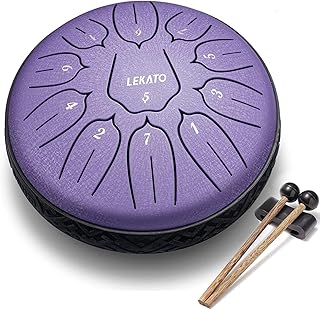
The LEKATO is a compact 6-inch steel alloy tongue drum with 11 notes in D major. Its product information describes it as suitable for meditation, yoga, early music education, and stress-relief routines. It can be played with the hands or drum mallets, and the listing identifies a songbook as part of the beginner kit.
Best for: First-time players looking for a small instrument with more notes than a basic 8-note drum. Its 11-tone layout offers a middle ground between the compact YUNDIE and the larger 15-note models. Hand or mallet playing also gives beginners two simple ways to explore its sound.
Limitation: The 6-inch size and 11-note layout provide a more compact playing surface and fewer notes than the 13-inch models. Choose a larger 15-note drum if access to a broader range is your priority.
YUNDIE 6-Inch 8-Note Rain Drum

The YUNDIE is a 6-inch, 8-note alloy steel drum described as hand-tuned for balanced notes and a clear, gentle tone. It can be played by hand, with mallets, or, according to the listing, touched by light rain. The product name lists a carry bag and music book with the instrument.
Best for: Casual players who value a compact size and a straightforward set of notes over a broad melodic range. The 8-note layout may be a simpler starting point for experimenting at home, on a patio, or in a garden corner.
Limitation: Its 8 notes offer less range than the 11- and 15-note alternatives. Although the product description mentions light rain, it does not state that the drum is waterproof or intended for prolonged exposure; use a sheltered space outdoors.
Weipoken 12-Inch 15-Note Steel Tongue Drum

The Weipoken combines a 12-inch body with 15 notes. It is described as a carbon steel instrument with a clear, calming tone, and the listing says its size is suitable for adult hands. The product name includes a music book, mallet, and carrying bag.
Best for: Buyers who want a 15-note layout but prefer a 12-inch model rather than the 13-inch HOPWELL or Lidguni. It offers more notes than the 6-inch options while keeping the listed size below the other full-size choices.
Limitation: The product information does not identify a musical key or exact note range. If matching a particular key is important, compare the listed tuning carefully before buying.
Buying Guide: How To Choose A Metal Drum With Holes
What does “metal drum with holes” usually mean?
In this product category, “holes” often refers to the cut openings or slots in a steel tongue drum. Those slots outline tongues in the metal. When a tongue is struck, it vibrates and produces a note. This is different from a standard metal container or a drum with simple drilled holes, which may not be designed as a tuned musical instrument.
Search terms such as steel tongue drum, rain drum, and steel drum with cut tongues can help narrow results to melodic instruments. Check product photos and specifications to confirm that the item has shaped note tongues and is meant to be played.
How many notes should a beginner choose?
Note count affects the number of pitches available, but more notes do not automatically make a drum easier. An 8-note instrument such as the YUNDIE offers a simpler, compact arrangement for casual exploration. The LEKATO adds three notes while retaining a 6-inch body. A 15-note model provides a wider range for melodies, but it may require more attention to note placement as you learn.
Choose 8 or 11 notes if portability and uncomplicated play matter most. Choose 15 notes if you want more options for songs and melodies, and are comfortable learning a larger note layout.
Does the key matter?
Yes, especially if you plan to play along with a particular song, another instrument, or a recording. The products here list D major for HOPWELL and LEKATO and C major for Lidguni. The Weipoken description does not specify a key, and the YUNDIE description focuses on balanced notes rather than a named key.
Do not assume that two tongue drums with the same number of notes share the same tuning. Check the key and, when provided, the note range. A listed key is more useful for matching instruments than color or size alone.
Should you choose a 6-, 12-, or 13-inch model?
A 6-inch drum is the most compact option in this group and may be easier to store or carry. The 12-inch Weipoken and 13-inch HOPWELL and Lidguni models are larger options with 15 notes. The product details do not give exact weights or storage dimensions, so compare those specifications in the current listing if portability is a deciding factor.
Size can affect the feel of the playing surface, but note count and tuning are also important. Compare all three rather than assuming a larger drum always has more notes or is automatically better for your needs.
What accessories are useful?
A songbook can provide simple material for practice, while mallets offer a way to strike the tongues without using fingers. A carry bag can help with storage and transport. The product names identify these accessories for the HOPWELL, Lidguni, LEKATO, YUNDIE, and Weipoken models, though the exact contents may differ. Check the listing for details before purchase.
Also consider how you plan to play. The LEKATO explicitly describes both hand and mallet playing. The YUNDIE product description likewise mentions playing by hand or with mallets. Do not assume every included accessory or playing method is identical across models.
Can a rain drum stay outside?
“Rain drum” is used in product names for some tongue drums, but it does not by itself establish that an instrument is waterproof or suitable for permanent outdoor storage. The YUNDIE listing says light rain can touch its drum, but does not describe long-term weather protection. For outdoor use, favor a sheltered area and store the instrument indoors when it is not being played unless the product details clearly explain its exposure limits.
Frequently Asked Questions
Are steel tongue drums actually made with holes?
They have cut slots that outline metal tongues, rather than ordinary open holes used only for ventilation. The tongues vibrate when struck to create musical notes.
Is a steel tongue drum suitable for beginners?
Yes. The listed models are described for beginner or easy-play use. An 8- or 11-note model offers a simpler range, while a 15-note drum provides more pitches to learn.
Is a 15-note drum better than an 8-note drum?
Not for every buyer. A 15-note drum offers more pitches for melodies, while an 8-note model may be a more compact and straightforward choice for casual playing.
Can I play a tongue drum without mallets?
Some models are described for hand playing. The LEKATO and YUNDIE product information specifically mentions playing by hand, and mallets are another listed playing option.
Which product is the best choice for a specified key?
The HOPWELL and LEKATO are listed in D major. The Lidguni is listed in C major and gives a G3-E5 range. The Weipoken and YUNDIE descriptions do not specify a named key.
Can I leave a metal tongue drum outdoors in the rain?
Do not assume it can remain outdoors. The YUNDIE listing mentions playing with light rain, but the available product details do not establish waterproofing or long-term weather resistance. Use shelter and store it indoors when practical.