
Best Metronome Apps and Devices for Guitar Practice and Rhythm Training
Looking for a metronome app or device that fits playing guitar and builds reliable timing? This guide compares five strong options from Amazon, covering digital metronomes with tuners, combo devices, and classic mechanical metronomes. Each choice suits different practice needs, from quiet backstage sessions to loud jam rooms. The top picks are ideal for guitarists who want precise tempo control, stronger rhythm training, and practical features like tuners or headphone jacks. The summary table below helps you compare key traits at a glance.
| Product | Best For | Key Benefit | Limitations |
|---|---|---|---|
| Sondery ProBeat Digital Metronome | Garage practice & stage-ready players | Color screen, fast tempo/beat settings | Digital, may require power or charging |
| Ulumac Aroma 3-in-1 Metronome | Multi-instrument players | Metronome, tuner, tone generator in one | Not piano-tuning capable |
| Ueteto Mechanical Metronome | Traditionalists & classroom use | Wind-up, loud audible cues | Limited tempo options |
| SDREAM Digital Metronome | Tech-forward learners | Human voice option, rechargeable | 3.5mm jack may be used by some devices |
| WEGROWER 3-in-1 Metronome | Travel players & multi-instrumentists | Rechargeable, clip-on options | Newer brand; check availability |
Sondery ProBeat Digital Metronome for Guitar and More
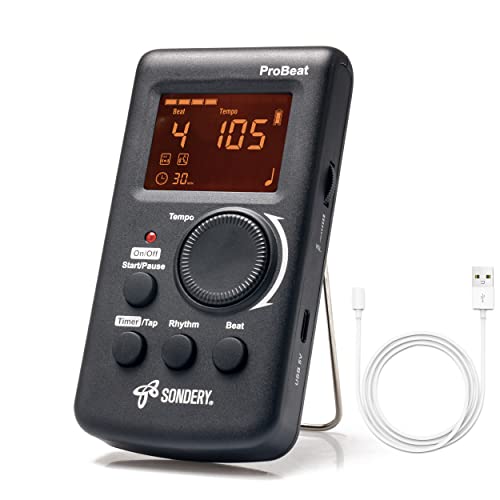
The Sondery ProBeat digital metronome offers direct and fast setting of beat, tempo, and rhythm via buttons and knobs. It features a color display to visually interpret tempo and rhythm, a vocal counting option, and three digital sound types for practice or performance. Best for players who want clear, quick adjustments during busy practice sessions or gigs. Note the device includes a top LED tempo indicator and a headphone jack for silent practice.
Who it’s best for: Guitarists who value quick tempo changes, visual tempo cues, and the option to practice with or without an audible click. This model suits players who need clear tempo feedback during fast passages or ensemble work. Limitations: It is a digital device and relies on power or charging; ensure you carry a charger for extended sessions.
Ulumac Aroma 3-in-1 Metronome, Tuner, Tone Generator

This compact 3-in-1 device combines a digital metronome, chromatic tuner, and tone generator. It runs across 30–260 BPM with 10 beat patterns and 8 rhythm styles, suitable for practicing guitar, bass, violin, piano, and more. The tuner supports A0–C8 with ±0.5 cent accuracy and A4 calibration in a broad range. Best for players who want a single, portable practice tool that covers both tempo and tuning across multiple instruments. Limitation: Not suitable for piano tuning.
Ueteto Mechanical Metronome for Piano, Guitar, and More

This wind-up mechanical metronome emphasizes a traditional approach with audible clicks and a bell to cue tempo. It is designed to work without batteries and offers tempo ranges from 40–208 BPM with beat selections including 0, 2, 3, 4, and 6. It’s best for players who prefer a tactile, battery-free metronome during practice or teaching. Limitation: Fewer tempo options than digital models; wind-up routine is required for operation.
Donner DMT-01 Metronome with Tuner and Tone Generator

The Donner DMT-01 combines a tuner, metronome, and tone generator in one 3-in-1 device. It supports a wide tempo range of 30–260 BPM and 0–9 beat patterns, with 8 rhythm options. This model is best for players who want a compact, all-in-one tool for both rhythm and basic tuning during practice or live sessions. Limitation: The tuner accuracy is described as high precision but may require interaction with a clip or mic for best results.
Defabee Mechanical Metronome with Loud Sound
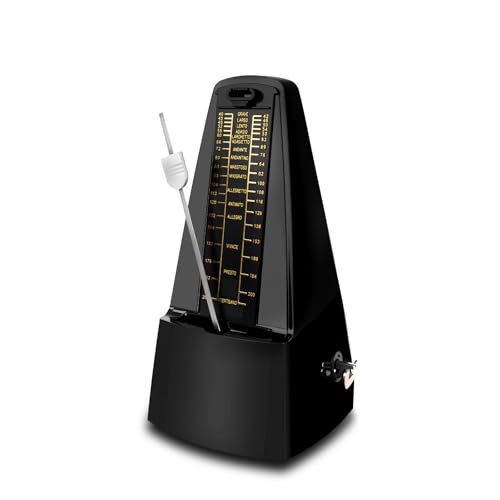
The Defabee mechanical metronome is designed for multiple instruments, delivering accurate beat calibration for daily practice. It emphasizes simple operation: remove the dust cover, wind the mainspring, and start. It offers five tempo settings (0, 2, 3, 4, 6) with a range of 40–208 BPM. Best for traditional practice rooms and students who prefer a wind-up device with a strong audible click. limitation: Fewer modern features compared with digital models.
AUPHY Mechanical Metronome with Accent Bell

The AUPHY mechanical metronome combines classic styling with an accent bell to emphasize beats. Its wind-up mechanism avoids batteries, providing approximately 2,160 clicks per wind and 10–40 minutes of use per wind. Tempo ranges 40–208 BPM with beat options 2, 3, 4, 6, and 0 (off). Best for players who value a vintage look and battery-free operation. Limitation: Accent bells are fixed; some users may prefer digital versatility.
Buying Guide: Key Purchase Considerations
- Tempo range and beat options: If you need broad tempo control for complex riffs, choose models with 30–260 BPM and multiple beat patterns.
- Sound and visibility: Digital metronomes with bright displays and visible tempo cues help with fast passages; mechanical metronomes offer reliable clicks without batteries.
- Additional features: Tuner functions, tone generators, or voice cues can add value for guitarists who practice rhythm and pitch simultaneously.
- Power and portability: Rechargeable devices and compact form factors are ideal for travel; wind-up models work well where power is limited.
- Instrument compatibility: Some devices are tuned for multiple instruments; others are guitar-specific. Check if the tuner range covers your instrument’s needs.
Frequently Asked Questions
- What is the best metronome for guitar practice?
- Do metronomes with tuners save time during practice?
- Is a 40–208 BPM range sufficient for most guitar genres?
- Should I choose a 3-in-1 metronome or separate devices?
- Is a loud audible click important for practice?
- Can I rely on mechanical metronomes for modern music practice?
The best choice depends on your needs: digital metronomes with tuners and multiple rhythms suit versatile practice, while wind-up mechanical models are ideal for battery-free use and traditional cues.
Yes. A combined metronome and tuner lets you correct timing and pitch in one session, reducing setup time between exercises.
For most common genres, yes. Some fast metal or virtuosic passages may benefit from higher ranges or precise subdivision options.
A 3-in-1 device saves space and may be more convenient for beginners. Dedicated metronome or tuner devices can offer higher precision or better ergonomics for advanced players.
Audible cues help with rhythm alignment, especially away from the instrument or in ensemble settings. If you need silent practice, opt for a model with a headphone jack or reduced-sound options.
Mechanical metronomes remain reliable for tempo discipline and battery-free operation, but they lack some digital conveniences like tuners and multiple rhythms.