
If you need a metronome with MIDI input, confirm that the exact model has a MIDI input connection before buying. None of the five product descriptions below explicitly lists MIDI input, so none can be confirmed as a match from the supplied specifications. The BOSS DB-90 is the strongest option to investigate for advanced rhythm features; the Sondery is best for vocal counting and visual cues, while the Korg models suit players seeking varied sounds and beat patterns.
| Product | Best suited for | MIDI input confirmed in supplied features? |
|---|---|---|
| BOSS DB-90 Dr. Beat | Players who want customizable rhythms and instrument connections | No |
| Sondery Digital Metronome | Players who want vocal counting, a display, and an LED cue | No |
| Korg KDM-3 White | Players who want many sounds and beat patterns | No |
| Korg KDM-3 Black | Players who want a compact design and varied practice sounds | No |
| TERENCE Mechanical Metronome | Players who prefer a mechanical, non-digital beat | No |
BOSS DB-90 Dr. Beat
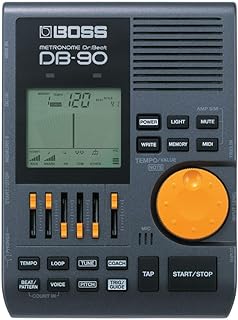
The BOSS DB-90 is the most feature-rich digital option in this selection for players who want to shape practice rhythms. Its listed features include a Note Mixing function for customizing rhythms, built-in play-along drum patterns, and four metronome sounds, including a human voice.
It also offers direct connections for guitar and bass, plus headphone monitoring. These features make it a better fit for musicians who want more than a basic click and who practice with instruments or headphones.
- Best for: Musicians seeking customizable rhythm practice and instrument connections.
- Why it was selected: It has the broadest set of rhythm-focused features among the listed products.
- MIDI note: The supplied description does not state that it has MIDI input. Check the exact model’s manufacturer specifications if MIDI synchronization is essential.
- Limitation: MIDI input is not confirmed by the provided feature list, so it should not be treated as a verified MIDI-in metronome.
Sondery Digital Metronome

The Sondery digital metronome is best for players who want visual tempo feedback and vocal counting. Its listed features include a color screen, a top LED tempo indicator, a speaker, and an earphone plug. Vocal counting and three digital sounds give users alternatives to a single click.
Tempo is set with a rotary dial across a stated range of 40 to 208 beats per minute. The product also offers 10 beat patterns, including settings from zero through nine. Buttons and knobs provide direct controls for beat, tempo, and rhythm.
- Best for: Individual practice where vocal counts, a visible cue, or headphone use are useful.
- Why it was selected: It combines tempo controls, multiple beat patterns, and several ways to follow the beat.
- MIDI note: MIDI input is not mentioned in the supplied features.
- Limitation: Its listed tempo range ends at 208 BPM, which may not suit users who need settings above that rate.
Korg KDM-3 White

The white Korg KDM-3 is a digital metronome with styling inspired by mechanical metronomes. It offers eight metronome sounds, including a mechanical-metronome sound, and 19 beat patterns. The listed patterns are intended to support songs across different genres.
This model is best for musicians who want a digital device with multiple sound choices and more pattern options than a basic metronome. The mechanical-style sound may also appeal to players who prefer a traditional metronome tone while using a digital unit.
- Best for: Players who want a range of metronome sounds and beat patterns in a mechanical-inspired design.
- Why it was selected: Its 19 patterns and eight sounds provide useful variety for practice.
- MIDI note: The supplied product description does not list MIDI input.
- Limitation: The provided features do not specify a MIDI connection or other external synchronization method.
Korg KDM-3 Black

The black Korg KDM-3 offers a compact, mechanical-style design and a built-in speaker. Its eight sounds include a mechanical metronome, cowbell, rimshot, and voice. It has 19 beat patterns, with options such as triplets and claves, as well as patterns covering zero to nine beats per measure.
Choose this version if the listed sounds and patterns fit your practice needs and you prefer the black finish. Its feature set is useful for players who want different audible cues for different exercises without relying on one click sound.
- Best for: Players who want varied sounds, including voice and percussion-style cues.
- Why it was selected: It provides a clear set of sound and pattern choices in a compact design.
- MIDI note: MIDI input is not identified in the supplied listing details.
- Limitation: Its many sound options do not establish that it can receive MIDI clock or MIDI data.
TERENCE Mechanical Metronome

The TERENCE is a mechanical metronome, not a digital model with a listed MIDI feature. Its supplied description highlights an all-metal mechanical movement, a metal accent bell, a transparent design, and a loud, clear sound. The description also says the upgraded movement is designed to require less frequent winding.
This is best for beginners, teachers, or instrumentalists who want a traditional mechanical beat and do not need digital rhythm functions. Its transparent body distinguishes its appearance, while the accent bell provides an audible beat emphasis.
- Best for: Players who prefer a mechanical metronome for straightforward tempo practice.
- Why it was selected: It provides a clear comparison with the digital options and may suit buyers who do not need electronic connectivity.
- MIDI note: MIDI input is not listed; this product is described as mechanical.
- Limitation: It does not meet a MIDI-input requirement based on the supplied description.
Buying Guide: How to Choose a Metronome With MIDI In
For a true MIDI-in metronome, look for explicit wording in the exact model’s specifications. A product’s digital display, headphone jack, instrument connection, rhythm patterns, or electronic sounds do not by themselves prove that it accepts MIDI input. The five descriptions here do not confirm MIDI input, so use them as comparisons for practice features rather than as verified MIDI-in recommendations.
What does “MIDI in” need to mean for your setup?
Decide whether you need the metronome to receive MIDI clock, MIDI notes, or another type of MIDI message. These are not interchangeable requirements. Check the manufacturer’s documentation for the specific connection and supported function, and confirm whether the device has the physical input or adapter your setup requires.
If you want the metronome to follow a sequencer or drum machine, verify that it can synchronize to the signal your source sends. If you want MIDI notes to trigger sounds, confirm that the product supports that use. Do not assume a port labeled MIDI supports every MIDI task.
Should you choose a digital or mechanical metronome?
A digital metronome is the more relevant category when you want electronic sounds, selectable patterns, vocal counting, headphone monitoring, or possible external synchronization. Among these products, the BOSS DB-90 and Korg models list multiple rhythm features, while the Sondery emphasizes vocal counting, an LED cue, and a tempo range of 40 to 208 BPM.
A mechanical metronome is a simpler choice for following a physical beat without digital features. The TERENCE description lists a mechanical movement and accent bell, but not electronic connectivity. It is therefore not a candidate if MIDI input is mandatory.
Which practice features matter besides MIDI?
- Tempo range: Check the slowest and fastest tempos you need. The Sondery’s listed range is 40–208 BPM; the other supplied descriptions do not give a tempo range.
- Beat patterns: Compare the patterns with the meters and subdivisions you practice. The Korg KDM-3 listings describe 19 patterns, while the Sondery lists 10 beat patterns.
- Sound choices: Consider whether you need a voice, a mechanical-style click, or percussion sounds. The BOSS and Korg descriptions list several sound choices.
- Monitoring: If you practice with headphones, confirm that the exact model has the connection you need. The Sondery lists an earphone plug, and the BOSS listing mentions headphone monitoring.
- Visual feedback: If you want to see the beat as well as hear it, the Sondery lists a color screen and LED tempo indication.
How can you verify compatibility before ordering?
Check the manufacturer’s product page or manual for the exact model number, not just a similar product name. Look for an explicit MIDI input specification, the supported MIDI function, and any required cable or adapter. If the specification only mentions an instrument input, headphone output, or audio connection, ask the manufacturer whether it supports the MIDI use you need.
Also compare the metronome’s intended role with the rest of your setup. A unit that provides strong standalone practice features may still be unsuitable for MIDI synchronization. If MIDI in is non-negotiable, do not buy based solely on the features summarized here; first obtain confirmation from the manufacturer.
Frequently Asked Questions
Do any of these five metronomes have confirmed MIDI input?
No. The supplied feature descriptions for all five products do not explicitly list MIDI input. Verify the exact model with its manufacturer before purchasing for a MIDI-based setup.
Which listed metronome is the best one to investigate for advanced rhythm practice?
The BOSS DB-90 is the strongest one to investigate because its listed features include Note Mixing, built-in play-along drum patterns, four metronome sounds, instrument connections, and headphone monitoring. Its supplied description still does not confirm MIDI input.
Does a headphone jack mean a metronome has MIDI in?
No. A headphone connection is for monitoring audio. It does not establish that a device can receive MIDI data or synchronize to MIDI clock.
Which product offers the most listed beat patterns?
Both Korg KDM-3 descriptions list 19 beat patterns. The Sondery lists 10 patterns, including settings from zero through nine.
Is the TERENCE metronome suitable for MIDI synchronization?
The supplied description identifies it as a mechanical metronome and does not list MIDI input. It is better suited to buyers seeking a traditional mechanical beat than to buyers requiring MIDI connectivity.
What should I confirm before buying a MIDI-input metronome?
Confirm the exact model has a MIDI input and supports the specific function you need, such as receiving MIDI clock or MIDI notes. Check its connection type and any cable or adapter requirements in the manufacturer’s documentation.