
A microphone foam cover reduces wind noise, breath pops, and some unwanted moisture or dust reaching a microphone capsule. The right fit depends on the microphone: standard handheld mics need larger ball-shaped covers, while headset and lapel microphones use miniature windscreens. The 6-pack is best for frequent handheld use, the Mudder 5-pack suits events and shared microphones, and the Innconee mini covers are intended for small headset or lapel mic openings.
| Product | Best For | Key Detail |
|---|---|---|
| 6 Pack Foam Microphone Covers | Repeated handheld use | Dense foam; listed as washable |
| Mudder 5 Pack | Events and spare covers | 1.4-inch caliber size |
| Yiasangly 10 Pieces | Colorful handheld setups | Colorful covers for handheld mics |
| Innconee 20 Mini Covers | Headset and lapel mics | Small 2 mm pore diameter |
| HIYANCO 2 Pack | Small household supply | 1.5-inch caliber size |
6 Pack Foam Microphone Covers

Best for: People who regularly use handheld microphones and want several matching covers available. This set includes six black ball-type windscreens sized 2.8 by 2.3 inches, with a 1.4-inch opening. The listed fit is for most standard handheld microphones, not headset microphones.
The product uses thick, high-density foam that is described as soft and shape-retaining. Its stated purpose is to reduce plosive sounds, breath, and wind noise while avoiding muffling high and low frequencies. The covers are also described as washable and suitable for repeated washing without tearing.
Why it was selected: It combines a multi-cover quantity with explicit noise-reduction and cleaning information, making it a clear option for repeated handheld use. Choose this if you need several covers for one setup or want replacements ready for rotation.
Limitation: The 1.4-inch opening and handheld design may not fit every microphone. Avoid this if you need a small cover for a headset or lapel mic.
Mudder 5 Pack Foam Mic Covers
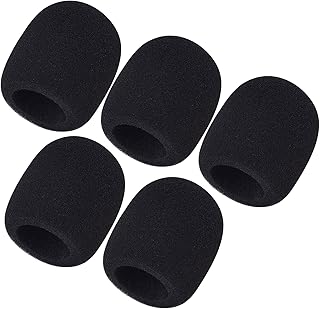
Best for: Karaoke, conferences, interviews, stage performances, and other settings where handheld microphones may be shared or need spare covers. The set contains five ball-type foam covers, each listed as 2.9 by 2.5 inches with a 1.4-inch caliber size.
The thick, soft foam is described as elastic and easy to put on a microphone. The listed applications include KTV, dance halls, conference rooms, news interviews, and stage performances. These are handheld windscreens, not covers for headset microphones.
Why it was selected: The listed dimensions and intended settings make it a practical general-purpose choice for standard handheld microphones. Choose this if your main need is a small supply for events, shared use, or backup.
Limitation: The product information does not specify a noise-reduction level or cleaning instructions. Check your microphone’s head size before ordering, especially if its grille is unusually wide or narrow.
Yiasangly Colorful Foam Mic Covers

Best for: Buyers who want colorful covers for handheld microphones, such as for a karaoke or DJ setup. The product name describes a set of 10 thick, colorful foam covers intended for most handheld microphones and identifies them as reusable.
A colorful cover can make it easier to distinguish microphones in a group, but color does not replace a fit check. This product is described for handheld stage microphones, so it is a different size category from tiny headset or lapel windscreens.
Why it was selected: It offers a larger stated set quantity and a colorful alternative to the black options in this list. Choose this if appearance and having multiple covers are priorities for a handheld-mic setup.
Limitation: The supplied product details do not give dimensions, opening size, specific noise-reduction claims, or cleaning instructions. Confirm the size and care details on the product listing before relying on it for a particular microphone.
Innconee 20 Mini Mic Foam Covers

Best for: Users of small headset, ear-hook, or lapel microphones that need a miniature windscreen. The set contains 20 skin-colored covers. The listed pore diameter is 2 mm and the length is 1.5 cm, making these a distinct alternative to large handheld microphone covers.
The product information describes high-density foam intended to reduce wind interference and other unwanted background noise. It also states that the covers can help shield microphones from dust, moisture, and saliva. Those protective functions are useful considerations for a small mic worn close to the mouth.
Why it was selected: It fills the small-microphone category that the handheld options do not serve. Choose this if your microphone has a small opening and the listed dimensions match it.
Limitation: These miniature covers are not presented as replacements for ball-shaped handheld windscreens. Check the opening and microphone dimensions carefully; a small cover will not fit a standard handheld mic grille.
HIYANCO 2 Pack Handheld Mic Covers

Best for: Buyers who need a small set of covers for standard handheld microphones. The package contains two covers measuring 2.95 by 2.67 inches, with a 1.5-inch caliber size. The product information says they fit most standard handheld microphones and are not for headset microphones.
The foam windscreen is described as washable and intended to reduce some background noise during recording. The listing also says it helps keep saliva and moisture away from the microphone. The two-piece quantity may suit a simple home or small-group setup that does not need a large supply.
Why it was selected: Its stated dimensions and washable design provide useful details for buyers comparing handheld covers. Choose this if you want two covers and your microphone head is compatible with the 1.5-inch opening.
Limitation: The set has fewer covers than the five-, six-, and 10-piece options. Its fit is described broadly as suitable for most standard handheld microphones, so check the actual microphone dimensions first.
Buying Guide: How To Choose A Microphone Foam Cover
What Is The Purpose Of A Microphone Foam Cover?
A foam microphone cover, often called a foam windscreen, sits over or around a microphone’s pickup area. Its main purpose is to soften bursts of air that hit the microphone when someone speaks, sings, or performs in moving air. These bursts can sound like popping or rumbling, especially with close speech and sounds such as “p” and “b.” Foam can also reduce some breath and wind noise.
A cover is not a general-purpose soundproofing device. It does not make a room quieter or remove every background sound. Its effectiveness depends on the microphone, the fit, the speaking environment, and the sound source. A cover that is too small, loose, or incorrectly positioned may not provide the intended result.
Does Your Microphone Need A Handheld Or Mini Cover?
Identify the microphone style before choosing a product. A standard handheld microphone generally needs a ball-shaped cover with an opening large enough to stretch over its grille. A headset, ear-hook, or lapel microphone has a much smaller pickup area and normally needs a miniature windscreen.
These sizes are not interchangeable. The Innconee product is listed for small headset and lapel microphones, while the Mudder, HIYANCO, Yiasangly, and six-pack covers are described for handheld use. Do not select by the word “microphone” alone; compare the product’s dimensions and intended microphone type with your equipment.
How Do You Check The Fit?
For a handheld cover, compare the opening or caliber size with the microphone grille and check the cover’s overall length and width. The listed handheld options here have openings of 1.4 or 1.5 inches, but that does not guarantee a fit for every model. For miniature covers, check both the pore diameter and length against the mic’s exposed capsule or opening.
A cover should sit securely without being forced onto the microphone. If a product listing does not provide dimensions, as with the Yiasangly option in the supplied details, verify the measurements before buying. A close fit is particularly important when the cover will be used during movement or performance.
Which Cover Is Better For Wind And Plosive Noise?
Look for a product description that clearly names the noise it is designed to reduce. The six-pack specifically mentions pops, breath, and wind noise. The Innconee miniature covers describe reducing wind interference and other unwanted background noise. The HIYANCO listing mentions reducing some background noise, while the Mudder and Yiasangly product details focus on construction, intended use, or appearance.
Those descriptions help compare stated purposes, but they do not establish how much noise a cover will remove in every situation. If outdoor wind is strong or a recording environment is noisy, foam alone may not solve the problem. Choose the correct size first, then consider whether the product’s listed use matches your recording conditions.
Should You Choose A Washable Or Reusable Cover?
If a cover will be used often, cleaning and replacement matter. The six-pack is described as holding up through repeated washing, and the HIYANCO covers are listed as washable. The Yiasangly product name calls its covers reusable. The other supplied product details do not establish a cleaning method, so check the manufacturer’s instructions rather than assuming every foam cover can be washed.
For shared microphones, keeping clean covers available can support more organized use. Follow the product’s care instructions and allow a cover to dry fully if washing is permitted. Replace a cover if it no longer holds its shape, fits securely, or remains clean. Avoid stretching foam aggressively, which can damage its structure.
How Many Covers Do You Need?
Quantity depends on how many microphones you use and how often covers need to be rotated or replaced. A two-piece pack can suit a small setup with limited spare needs. Five- or six-piece sets offer more covers for events or repeated use. The Yiasangly set lists 10 handheld covers, while the Innconee set lists 20 miniature covers for a different microphone category.
Do not compare quantities without considering size. Twenty miniature covers do not provide the same coverage as a set of 20 handheld windscreens. For groups, count the microphones that need covers and decide whether you also want spares available.
Frequently Asked Questions
Do Foam Microphone Covers Improve Sound Quality?
They can reduce certain unwanted sounds, particularly wind, breath, and plosive bursts, which may make speech easier to hear. They do not automatically improve every recording or remove general room noise. Fit and microphone placement still matter.
Can A Handheld Microphone Cover Fit A Headset Mic?
Usually, no. Handheld covers are much larger than headset and lapel microphone windscreens. Choose a miniature cover designed for the small microphone opening and compare its dimensions before purchase.
Do Foam Covers Protect A Microphone From Saliva?
A foam cover can provide a barrier against some saliva and moisture reaching the microphone, and several products in this list state that protective purpose. It should not be treated as complete waterproof protection or as a substitute for cleaning and care.
Can Foam Windscreens Be Washed?
Only follow washing instructions provided for the specific product. The six-pack and HIYANCO listings describe their covers as washable, but cleaning guidance is not provided for every item in this comparison. Do not assume all foam materials tolerate washing.
Will A Foam Cover Eliminate Outdoor Wind Noise?
No cover can be assumed to eliminate all wind noise. Foam is intended to reduce some wind interference, but performance varies with wind strength, microphone design, fit, and placement. Check the product’s stated purpose and use the right cover size.