Best Microphones for Recording Instruments
Looking for a microphone that delivers clear, studio-quality sound for recording instruments? This guide highlights five strong options, focusing on devices well-suited for guitars, drums, keyboards, and other instruments. Each pick includes practical reasons to choose it, plus a candid note on any limitations. Whether you’re setting up a home studio or enhancing a live track, these mics help you capture authentic instrument tones with minimal noise and easy setup.
Buyer profiles:
– Home-studio player: prioritizes USB convenience and compact setups.
– Podcaster or streamer with instrument input: needs easy mix and mute features.
– Band or live-tracker: seeks durable build and reliable cardioid patterns.
– Budget-conscious creator: wants solid performance without complex gear.
Summary table of chosen products follows.
| Product | ||
|---|---|---|
| FIFINE Studio T669 | USB Condenser Kit with Boom Arm | Home studios, voice overs, instrument demos |
| FIFINE AM8 | XLR/USB Dynamic | PC gaming, streaming, podcasting with instrument input |
| Shure SM57 | Dynamic Cardioid, XLR | Guitar amps, drums, studio and stage versatility |
| ZealSound K66 | USB Condenser | Podcasts, voiceovers, online content with noise reduction |
| FIFINE K669B | USB Condenser | Mac/Windows setups, vlogs, recording vocals and instruments |
FIFINE Studio Condenser USB Microphone Kit with Boom Arm
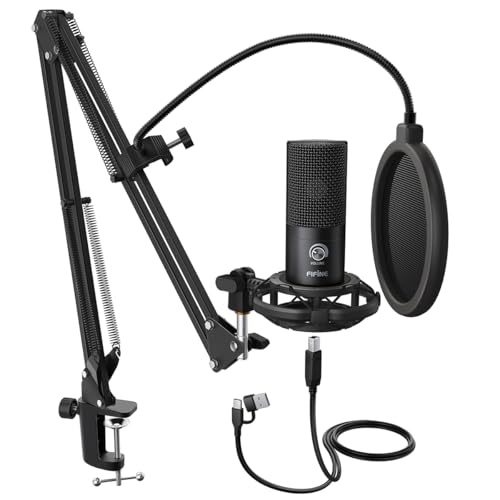
The FIFINE T669 is a USB condenser microphone kit that includes a boom arm, shock mount, and dual pop filter. This setup provides an easy plug-and-play path for recording vocals, podcasts, and instrument demos on a PC or laptop. The cardioid capsule focuses on the front sound source, helping reduce room noise and ambient interference. Best for solo instrument demos, voice demos, and small home studios that value a complete mic stand package. Limitation: not compatible with Xbox gaming consoles.
FIFINE AM8 Dynamic USB/XLR Microphone

The FIFINE AM8 offers both USB and XLR connectivity with a compact desktop form and RGB lighting. It delivers natural vocal clarity with a 50 Hz–16 kHz response, making it suitable for spoken word, gaming streams, and instrument recording where direct vocal presence is desired. Best for beginner creators who want flexibility between USB plug-and-play and traditional XLR interfaces. Caution: RGB features are inactive when using XLR mode.
Shure SM57 Dynamic Microphone

The Shure SM57 is a legendary cardioid dynamic mic known for instrument capture. Its focused pickup isolates the sound source, delivering punchy guitar amps, snare drums, and percussion detail with low bleed. Best for professional-sounding instrument recordings in studios and on stages. Limitation: an XLR-only connection requires an audio interface or mixer, not USB direct to a computer.
ZealSound USB Podcast Microphone with Noise Reduction

The ZealSound K66 USB microphone emphasizes noise reduction with a dedicated mode to minimize keyboard clicks and ambient hum, making it suitable for voice-over work and instrument podcasts in noisy environments. Best for creators who record in shared spaces or with nearby appliances. Caution: features are most effective in USB mode; XLR performance is not indicated in data.
FIFINE USB Microphone K669B

The FIFINE K669B focuses on convenience with plug-and-play USB connectivity and a compact metal body suitable for laptop setups. It supports recording vocals and simple instrument inputs for creators who need a budget-friendly, durable mic for meetings, streaming, or quick demos. Best for students or hobbyists who want a straightforward USB option with reliable performance. Limitation: not compatible with Xbox and some mobile devices without adapters.
FIFINE AM8T USB/XLR Gaming Microphone Set

The AM8T combines USB and XLR dynamic microphone capabilities with a boom arm, mute button, and headphone jack. This kit suits streaming and instrument vocal work where you want on-the-fly control and monitoring. Best for multi-purpose setups that mix instrument tracks with live commentary or vocal overlays. Caution: RGB lighting is primarily a USB feature and not active via XLR mode.
Buying Guide: Key Purchase Considerations
- Connectivity: USB mics are easiest for quick setups, while XLR mics offer professional expansion with interfaces and mixers. Choose based on current gear and future needs.
- Voice vs. Instrument Emphasis: Cardioid patterns focus on the primary sound source, reducing room noise, which is ideal for instrument recording in small spaces. Consider dynamic mics for louder guitar amps or drums.
- Desk Space and Mounting: A kit with a boom arm or sturdy stand helps position the microphone for instrument capture and ergonomic use during long sessions.
- Noise Handling: Built-in pop filters and noise-reduction modes help during home recording; assess the environmental noise level where you record.
- Durability and Build: Metal-bodied mics usually withstand regular desk use and occasional movement during sessions.
- Budget vs. Features: USB-only kits are affordable and simple; USB/XLR hybrids offer flexibility for growing setups.
Frequently Asked Questions
- What type of microphone is best for recording instruments at home?
– A cardioid dynamic or condenser mic with good isolation is typically best for instrument capture, with an option for USB convenience if you want plug-and-play simplicity. - Do I need an audio interface for instrument recording?
– If you choose an XLR microphone, yes, an audio interface or mixer is required. USB mics don’t need an interface. - Is USB better than XLR for beginners?
– USB is easier to set up, but XLR offers more expansion options and potentially better control over sound when paired with external gear. - Can I record guitar amps with a Shure SM57?
– Yes, the SM57 is commonly used for guitar amps and other instruments due to its focus on the source and low bleed. - Should I use a pop filter with instrument mics?
– A pop filter is beneficial for vocal work and can reduce plosives that may accompany certain instrument recordings when close-miked.