
The best microphone to plug into an amp is one whose connector matches the amp’s microphone input. For a confirmed 1/4-inch connection, the FIFINE K6 is the clearest match in this selection. The Pyle is an option for an amp with an XLR input, while the Yiowner, Marengo, and TONOR models require checking the supplied connector before purchase. These five wired dynamic microphones suit different needs, from karaoke to stage use.
| Microphone | Best For | Connection Detail |
|---|---|---|
| FIFINE K6 | Amps with a 1/4-inch input | 6.35 mm (1/4-inch) plug |
| Pyle Dynamic Cardioid | Amps with an XLR input | Includes XLR cable |
| Marengo Handheld | Simple operation and cable reach | Check product connector |
| TONOR D5 | Durable vocal use | Check product connector |
| Yiowner Wired Microphone | Karaoke and general amplification | Check product connector |
FIFINE K6 1/4-Inch Plug-In Microphone

Best for: People who need a wired microphone for an amplifier with a matching 6.35 mm (1/4-inch) microphone input. The listed plug size makes this the most straightforward choice here when the amp has that exact input.
The FIFINE K6 is a dynamic microphone with a cardioid pickup pattern. Its listed features include a 50 Hz to 18 kHz frequency range, no power requirement, and a cable. FIFINE describes it as suitable for karaoke, presentations, conferences, and live performances. The cardioid pattern is intended to focus pickup toward the speaker and reduce feedback and surrounding noise.
Why it was selected: Its connector is explicitly identified, which helps shoppers compare it with an amp without guessing from a product name. Choose this if your amp accepts a 1/4-inch microphone plug and you want a no-battery wired mic.
Limitation: The product information says it is not available for 3.5 mm connections, even with an adapter. Do not choose it for an amp that only has a 3.5 mm input.
Pyle Dynamic Cardioid Microphone With XLR Cable
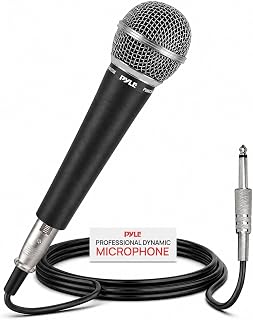
Best for: Buyers whose amplifier has an XLR microphone connection and who want a cable included. The listed package includes an XLR cable, so this model is a useful match to investigate when the amp’s input is also XLR.
This is a passive dynamic microphone with a unidirectional cardioid pattern, zinc-alloy body, and steel mesh windscreen. Pyle lists a 50 Hz to 15 kHz frequency response, 600-ohm impedance, and -54 dB sensitivity. Its features also describe use for vocals and instruments on stage or in a studio, with background-noise reduction as a design goal.
Why it was selected: The included cable and detailed specifications make it easier to assess against an amp’s connection and input requirements. It does not require batteries or power, according to the product details.
Limitation: The included cable is specified as XLR, not as a 1/4-inch plug. Check the amp’s input and cable ends before buying; this is not the direct choice for an amp with only a 1/4-inch microphone input.
Marengo Handheld Mic With On/Off Switch

Best for: Singers or presenters who want a wired microphone with a switch on the handle and a longer listed cable. Marengo specifies a cable of about 13 feet, which may be helpful when the user needs more room to move near the amp.
The microphone uses a cardioid dynamic design, and the listing says it requires no battery. Its external switch lets the user turn the microphone on or off without unplugging the cable. The product is described for use with speakers, karaoke machines, amplifiers, and mixers. The directional pickup is intended to favor the main sound source and reduce unwanted sound.
Why it was selected: The switch, no-battery operation, and stated cable length distinguish it for users who value simple controls and reach. Choose it if those features suit your setup and the connector matches your amplifier.
Limitation: The provided product details do not identify the plug type. Confirm the cable connector and your amp’s input before ordering rather than assuming it is 1/4-inch or XLR.
TONOR D5 Dynamic Vocal Microphone

Best for: Vocalists seeking a microphone described as having a durable metal body and a pickup pattern designed to limit background sound. The TONOR D5 has a hypercardioid pattern, which the product information says helps capture the voice while minimizing background noise and feedback.
TONOR lists an all-metal zinc-alloy construction, low impedance, high sensitivity, and a 120 dB SPL design. The manufacturer describes the microphone as suitable for professional and amateur use. These stated features make it worth considering for vocal applications where construction and directional pickup matter.
Why it was selected: It offers a different pickup pattern from the cardioid options and emphasizes a solid metal build. Choose this if those characteristics fit your intended vocal use and the connector works with your amplifier.
Limitation: The supplied details do not state the cable or plug type. Verify whether the microphone includes a cable and whether its connector matches the amp before purchase.
Yiowner Wired Karaoke Microphone

Best for: Karaoke users and buyers looking for a wired handheld microphone described for use with amplifiers, speakers, mixers, and DVD equipment. Its listed 2.5-meter cable provides a defined cable length for planning a basic setup.
The product information describes a dynamic vocal microphone with a shielded oxygen-free copper cable. The listing says the cable is designed to reduce hum and noise and that the microphone aims to reduce background noise for clear vocals. It is presented for parties, conferences, karaoke, and outdoor activities.
Why it was selected: It is specifically marketed for amplification and karaoke, making it relevant to buyers seeking a simple vocal mic for an amp-based setup. Consider it if the intended use is casual singing or announcements and the connector matches your equipment.
Limitation: The provided features do not specify the connector size. Check the actual plug type and the amplifier’s microphone input before buying; the product’s broad compatibility wording does not identify every connection.
Buying Guide: How To Choose A Microphone For An Amp
A microphone can connect to an amp only when its plug and the amp’s input are compatible. Begin by checking the input labels and physical sockets on the amplifier. Common microphone connections include 1/4-inch and XLR, but do not infer a plug type from a microphone’s general description. Confirm the product’s cable ends and the amp’s manual or panel markings.
Does the microphone plug match the amp?
Match the connector first, then consider sound features. The FIFINE K6 listing explicitly states a 6.35 mm (1/4-inch) plug. The Pyle includes an XLR cable. The other three products in this selection do not identify their connector in the supplied features, so verify those details before ordering.
A 1/4-inch plug and an XLR connection are not interchangeable just because both are used for audio. An adapter may or may not suit a particular microphone and amplifier. Check the input type and any connection requirements rather than assuming an adapter will solve a mismatch.
Is a dynamic microphone suitable for your setup?
All five selections are described as dynamic microphones. The FIFINE, Marengo, TONOR, and Pyle listings specify directional pickup patterns: cardioid for the first three listed models and unidirectional cardioid for Pyle, while TONOR specifies hypercardioid. The Yiowner features describe noise reduction but do not state a pickup pattern.
Directional patterns are designed to favor sound arriving from a particular direction. In practice, microphone position and speaker placement also matter. Keep the microphone pointed toward the speaker’s intended sound source and avoid aiming it toward the amplifier’s speaker to help manage feedback.
Do you need a cable, switch, or extra reach?
Check whether a cable is included and whether its length suits the distance between the singer and the amplifier. Marengo lists a cable of about 13 feet, while Yiowner lists a 2.5-meter cable. FIFINE’s supplied features mention a cord but do not give its length. Pyle includes an XLR cable, but the supplied information does not state its length.
A built-in switch can make it easier to mute a microphone between announcements or songs. Marengo specifically lists an on/off switch. The Pyle listing says it has no on/off switch and is ready to use when the XLR cable is connected. The other supplied details do not establish switch availability.
Where will you use the microphone?
For karaoke or casual singing, compare ease of connection, cable reach, and handling. FIFINE and Yiowner are described for karaoke use. Marengo also lists karaoke and includes a switch. For presentations or live events, the FIFINE and Pyle feature descriptions mention performance or stage applications, while TONOR emphasizes vocal use and its metal body.
Do not treat a product’s stated use cases as proof that it will work with every amp. The amplifier’s input type remains the deciding connection requirement. Also consider where the amp will sit, how far the microphone user will move, and whether a wired setup is practical for the room.
What should you check before ordering?
- Identify the amp’s microphone input: 1/4-inch, XLR, or another connection.
- Confirm the microphone plug or included cable ends from the product details.
- Check cable length against the distance from the singer to the amplifier.
- Look for a stated pickup pattern if reducing surrounding sound is important.
- Confirm whether the microphone needs power; the listed FIFINE, Marengo, and Pyle details describe no-power operation.
- For a 3.5 mm-only input, do not choose the FIFINE K6 based on an adapter; its listing says it is not available for 3.5 mm connections, even using an adapter.
Frequently Asked Questions
Can I plug any microphone directly into an amp?
No. The microphone connector must match an appropriate input on the amp. Check both the plug and the amp’s input before connecting.
Which microphone in this list has a confirmed 1/4-inch plug?
The FIFINE K6 listing specifies a 6.35 mm (1/4-inch) plug. The provided product information says it is not suitable for 3.5 mm connections, even with an adapter.
Which microphone includes an XLR cable?
The Pyle Dynamic Cardioid Microphone listing says an XLR cable is included. It is the option to consider when the amplifier has a compatible XLR microphone input.
Do these microphones need batteries?
The supplied features say the FIFINE K6 and Marengo need no battery, and Pyle describes its microphone as passive with no power or batteries required. The provided details do not confirm power requirements for every product in the list.
How can I reduce feedback when using a microphone with an amp?
Choose a suitable directional microphone, position it toward the speaker, and avoid pointing it toward the amp’s speaker. The FIFINE and Marengo list cardioid patterns, Pyle lists a unidirectional cardioid pattern, and TONOR lists a hypercardioid pattern.
Can I use a microphone with a 3.5 mm amp input?
Check the microphone and amp instructions for a supported connection. The FIFINE K6 specifically states it is not available for 3.5 mm connections, even with an adapter. The supplied details do not confirm 3.5 mm compatibility for the other listed products.