
The best microphone for a brass instrument depends on whether you need a hands-free clip-on, a conventional wired mic, or wireless freedom. The Shure BETA 98H/C is best for a close-mounted wired setup, while the Audio-Technica PRO 35 offers a clip-on condenser design. For wireless use, the Lefiko 2.4G system is a versatile brass-focused option, and the HHLPRO system is aimed at players who want a detachable transmitter arrangement.
| Microphone | Best for | Connection or design |
|---|---|---|
| Shure BETA 98H/C | Close-mounted brass pickup | Wired XLR clip-on |
| Audio-Technica PRO 35 | Clip-on performance capture | Cardioid condenser clip-on |
| Lefiko 2.4G System | Teaching and small gigs | Wireless clip-on |
| Shure SM57 | Studio or stage setups | Wired XLR dynamic mic |
| HHLPRO Wireless System | Wireless movement on stage | Detachable mic and transmitter |
Shure BETA 98H/C Clip-On Instrument Mic
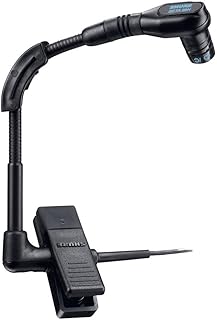
The Shure BETA 98H/C is a miniature wired instrument microphone with an XLR connector and a clip-on gooseneck design. It is intended for saxophone, brass, and percussion applications. Its transformerless preamplifier circuitry is designed to improve linearity across the frequency range, and its high maximum SPL is suited to loud sources such as brass instruments.
Best for: Brass players who want a close-mounted microphone and a wired XLR connection. The pickup pattern is designed for high gain before feedback and rejection of unwanted noise, which can help when amplifying an instrument in a live setting.
Choose this if you want a clip-on microphone that stays positioned near the instrument and your setup supports a wired XLR connection. Limitation: It is not a wireless system, so the cable can restrict movement compared with wireless alternatives.
Audio-Technica PRO 35 Clip-On Microphone

The Audio-Technica PRO 35 is a cardioid condenser clip-on instrument microphone. Its UniMount clip allows accurate positioning, provides shock resistance, and protects the microphone element. The cardioid pattern reduces pickup from the sides and rear, while the extended frequency response is intended to capture performance nuances.
Best for: Players who want to mount a microphone on an instrument instead of relying on a stand. The clip and positioning feature make it a practical choice when consistent placement is important, and its directional pattern can help isolate the intended source from surrounding sounds.
Choose this if you prefer a clip-on condenser design and need to position the microphone close to the instrument. Limitation: The supplied product details do not specify a wireless connection or list brass-specific mounting compatibility, so check the intended instrument fit and required connection equipment before buying.
Lefiko 2.4G Wireless Brass Microphone

The Lefiko system is a wireless clip-on microphone designed for saxophone and brass instruments, including trumpet, trombone, tuba, cornet, and French horn. It uses 2.4GHz wireless transmission and lists 12ms latency. Its 360-degree adjustable gooseneck lets the player change the microphone’s pickup position for practice, teaching, rehearsals, or small performances.
Best for: Students, teachers, and performers who want a hands-free wireless setup for several types of brass instruments. Its stated instrument range is broader than a saxophone-only microphone, and the flexible gooseneck supports adjustment near the sound source.
Choose this if you need wireless movement and want a system described for multiple brass instruments. Limitation: The listed latency is 12ms, and the product description positions the system for practice, teaching, and small gigs rather than making a specific claim about large-stage use.
Shure SM57 Wired Instrument Microphone

The Shure SM57 is a wired XLR dynamic instrument microphone for stage and studio use. Its contoured frequency response and presence boost are intended to bring out attack, detail, and clarity. The cardioid pickup pattern focuses on the source and reduces background noise and bleed, making this a flexible choice for brass in a complex recording or live setup.
Best for: Players and sound operators who prefer a conventional wired microphone that can be used for brass as well as other instruments. It may suit a shared studio or stage microphone setup where the mic is placed separately from the instrument.
Choose this if you want a cardioid mic for close-miking and do not require an instrument-mounted clip. Limitation: Unlike the clip-on options here, the SM57 is not described as an instrument-mounted microphone, so placement and stand positioning become part of the setup.
HHLPRO Detachable Wireless Instrument Mic

The HHLPRO system separates its miniature microphone from its transmitter. The mic clamps to the instrument, while the transmitter clips to a strap or waist. The product description lists UHF transmission, a stated range of 260 feet, latency under 5ms, a 360-degree adjustable cardioid condenser microphone, and a Shure-compatible XLR adapter.
Best for: Players who want the transmitter carried separately from the instrument-mounted microphone. This arrangement is intended to keep the instrument lighter and preserve a natural playing posture, while the adjustable mic supports changes to pickup angle.
Choose this if transmitter placement and low stated latency are priorities for a wireless performance setup. Limitation: The description emphasizes saxophone and mentions brass, but does not name individual brass instruments. Confirm that the clip works with your instrument before choosing it.
Buying Guide: How To Choose A Brass Instrument Microphone
Do you need a clip-on microphone or a stand-mounted mic?
A clip-on microphone attaches to the instrument, which can help keep the pickup position consistent as the player moves. The Shure BETA 98H/C and Audio-Technica PRO 35 are clip-on options, and the Lefiko and HHLPRO products add wireless transmission. A conventional microphone such as the Shure SM57 is better suited to a stand-based arrangement when the player or sound operator can manage microphone placement.
Consider how often the instrument moves during a performance. A clip-on design can reduce the need to stay at a fixed microphone position, while a stand-based setup may be preferable when a shared microphone is needed or when the player wants to avoid attaching equipment to the instrument.
Should you choose wired or wireless?
A wired mic avoids the need to manage a wireless link, but its cable can limit movement. Wireless systems can make it easier to move around while teaching, rehearsing, or performing. Compare the listed wireless details rather than treating all systems as equivalent: Lefiko specifies 2.4GHz transmission and 12ms latency, while HHLPRO lists UHF transmission and latency under 5ms.
Wireless performance also depends on the equipment included and the intended environment. Check the product listing for the components, connections, and setup instructions you need. The provided details do not establish that either wireless system will work with every amplifier, mixer, or recording interface.
What pickup pattern and microphone type should you consider?
A cardioid pattern is designed to focus more on sound from the front and reduce pickup from the sides and rear. That can help isolate a brass instrument in a noisy setup, as described for the Audio-Technica PRO 35 and Shure SM57. The BETA 98H/C also lists rejection of unwanted noise and high gain before feedback.
Condenser and dynamic microphones are different designs, but the best choice depends on the specific mic, placement, and sound system. The products here include condenser clip-on models and a dynamic wired option. Compare their mounting style, connection, and stated features instead of assuming one type is universally better for brass.
How important are positioning and instrument fit?
Brass instruments vary in shape, bell size, and playing position. A flexible gooseneck or adjustable pickup angle can help direct a microphone toward the desired sound source. Lefiko and HHLPRO both list 360-degree adjustment, while the Audio-Technica PRO 35 highlights accurate positioning through its UniMount clip.
Before ordering, verify that the clip and microphone arrangement suit your instrument. The product descriptions name different instrument ranges: Lefiko explicitly lists trumpet, trombone, tuba, cornet, and French horn, while HHLPRO’s description primarily emphasizes saxophone and makes a broader reference to brass.
What connection does your sound system require?
Check the microphone’s output and your mixer, amplifier, or recording equipment before selecting a product. The Shure BETA 98H/C is listed with a wired XLR connector, and HHLPRO includes a Shure-compatible XLR adapter. The Shure SM57 is identified as a wired XLR microphone. The supplied product information does not specify every connection detail for the wireless systems, so confirm included components and system requirements in the listing.
Which option is best for your use?
- For close-mounted wired brass pickup: Consider the Shure BETA 98H/C for its clip-on gooseneck and stated high-SPL handling.
- For a clip-on condenser: Consider the Audio-Technica PRO 35 for its UniMount clip and cardioid pattern.
- For a multi-instrument wireless setup: Consider Lefiko because its listed instrument range names several brass instruments.
- For a separate transmitter arrangement: Consider HHLPRO if carrying the transmitter away from the instrument suits your setup.
- For a conventional stand-based mic: Consider the Shure SM57 for wired cardioid instrument pickup.
Frequently Asked Questions
Can I use a saxophone microphone on a trumpet or trombone?
Some systems list compatibility with multiple brass instruments. Lefiko specifically names trumpet and trombone, among others. Check the stated instrument list and confirm that the clip fits your instrument before buying.
Is a clip-on microphone better for brass?
A clip-on microphone can keep the pickup close to the instrument and move with the player. A stand-mounted microphone may be preferable when you want a conventional setup or need to share the microphone. The better choice depends on movement, mounting preference, and equipment.
What is the advantage of a wireless brass microphone?
A wireless microphone can reduce cable restrictions and allow a player to move more freely. Compare each system’s stated transmission type, latency, range, and included components, and verify that it suits the performance environment.
Do I need a cardioid microphone for brass?
Not necessarily. A cardioid pattern can help reduce pickup from the sides and rear, which may be useful in a busy sound environment. Other factors, including microphone placement, connection, and stage setup, also affect the result.
Can a Shure SM57 attach directly to a brass instrument?
The supplied product details describe the SM57 as a wired instrument microphone but do not list an instrument clip. It is better treated as a stand-positioned option unless a suitable mounting solution is confirmed separately.
What should I check before ordering?
Confirm instrument fit, microphone mounting style, wired or wireless operation, connection requirements, and what components are included. For wireless products, also compare the stated latency and transmission details with the needs of your performance or teaching setup.