
The best microphone for radio broadcasting depends on how you work: the Electro-Voice RE20 is a broadcast-announcer option, the Audio-Technica BPHS1 combines a microphone and headset, and the MAONO PD200W offers wireless, USB, and XLR connection choices. The Pyle PDMICR42SL emphasizes retro styling, while the Icom SM-30 is a compact desktop microphone. Compare connection needs, microphone format, and the information available about each model before choosing.
| Microphone | Best suited for | Key distinction |
|---|---|---|
| Electro-Voice RE20-BLACK | Announcer-style broadcasting | Dynamic broadcast microphone with Variable-D |
| Audio-Technica BPHS1 | Broadcast work requiring a headset | Stereo headset with dynamic cardioid boom mic |
| MAONO PD200W | Flexible home or creator setups | Wireless, USB, and XLR options |
| Pyle PDMICR42SL | Retro styling and vocal use | Built-in pop filter and included XLR cable |
| Icom SM-30 | Compact desktop use | Desktop format with low-cut function |
Electro-Voice RE20-BLACK Dynamic Broadcast Microphone

The Electro-Voice RE20-BLACK is the most directly broadcast-focused option in this group. Its listed features describe the classic sound of FM radio voices and a smooth, natural, controlled sonic character. The Variable-D design is specified as minimizing proximity effect, a useful consideration for presenters who may vary their distance from a microphone while speaking.
Best for: Announcers and broadcasters looking for a dedicated dynamic microphone with stated broadcast-oriented sound characteristics. It was selected because its product description specifically refers to FM radio voices and identifies a feature aimed at reducing proximity effect.
Consider: The supplied product information does not list its connector, included accessories, or a connection method. Check the full product details and your mixer or interface requirements before choosing it; do not assume it connects directly to a computer.
Audio-Technica BPHS1 Broadcast Stereo Headset
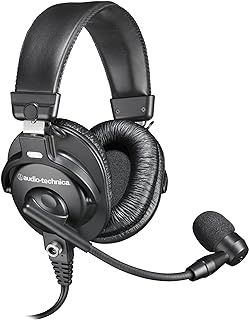
The Audio-Technica BPHS1 combines a stereo headset with a dynamic cardioid boom microphone, according to its product name. This format puts headphones and a microphone together rather than requiring a separate microphone and listening device. That can suit broadcast situations in which a presenter or commentator wants a headset-based setup.
Best for: Buyers who specifically need a broadcast stereo headset with a boom microphone. It was selected because its name identifies both the headset format and the dynamic cardioid microphone, making it distinct from the standalone desktop and announcer microphones in this list.
Consider: No detailed features were supplied for this product. Confirm connector types, cable arrangement, and compatibility with the intended broadcast equipment in the product listing before purchase. The available information does not establish whether adapters or other accessories are included.
MAONO PD200W Hybrid Wireless Podcast Microphone

The MAONO PD200W offers three listed connection approaches: wireless, USB, and XLR. The product description says USB supports plug-and-play use with a phone, tablet, or computer, while XLR is intended for a stable setup with audio interfaces. It has a 30 mm dynamic capsule and cardioid pickup pattern, with a stated signal-to-noise ratio of 82 dB and maximum sound pressure level of 128 dB.
Best for: Home broadcasters and creators who want multiple connection choices or may change their recording setup. It was selected for its flexibility and because the listed features specifically address vocal recording, streaming, and podcasting.
The description also says one receiver can connect two wireless desktop microphones, record each to its own track, and capture synchronized audio and video directly on a camera. It notes that camera and Lightning accessories are sold separately.
Consider: Wireless operation requires attention to the receiver and setup, and separately sold accessories may be needed for certain camera or Lightning workflows. Choose another option if you need a product whose listed features focus specifically on conventional radio-announcer use.
Pyle PDMICR42SL Classic Retro Dynamic Microphone

The Pyle PDMICR42SL is a dynamic vocal microphone with a retro silver design. Its listed features include a unidirectional cardioid pickup pattern, built-in pop shield, 30 Hz–15 kHz frequency response, and 600-ohm output impedance. Pyle says the pop shield is designed to reduce popping sounds caused by fast-moving air. The package description also specifies a 16-foot XLR cable.
Best for: Broadcasters or vocal users who want a vintage appearance, a built-in pop filter, and an included XLR cable. It was selected because the stated features cover both speech-oriented use and practical setup details.
Consider: The product description emphasizes vintage styling and live performance as well as studio recording. Buyers prioritizing a purpose-built announcer microphone should compare its listed specifications and intended format with the RE20-BLACK. Confirm that the XLR cable works with the rest of the planned signal chain.
Icom SM-30 Compact Desktop Microphone

The Icom SM-30 is described as a compact desktop microphone with a low-cut function and an 8-pin round connector. Those details distinguish it from the headset and multi-connection models in this roundup. Its desktop form may be relevant to buyers who want a microphone positioned on a desk rather than worn as a headset.
Best for: Buyers whose setup specifically calls for a compact desktop microphone with an 8-pin round connector and low-cut function. It was selected to represent a desktop option with clearly identified connection and control details.
Consider: The provided product information does not state its microphone type, pickup pattern, frequency response, or which equipment it works with. Check those details against the intended system before buying. The connector description alone is not enough to establish compatibility with a particular radio or audio device.
Buying Guide: How To Choose A Radio Broadcasting Microphone
What type of broadcast setup do you have?
Start with the equipment the microphone must connect to. A studio chain may include a mixer or audio interface, while a simpler recording setup may use a computer or mobile device. The MAONO PD200W is the product here whose listed features explicitly include wireless, USB, and XLR connection choices. The Pyle PDMICR42SL listing specifies an XLR cable, and the Icom SM-30 specifies an 8-pin round connector. For the RE20-BLACK and BPHS1, the supplied information does not give detailed connector specifications.
Do not choose based on connector shape alone. Verify whether the microphone’s connection and any required supporting equipment match the input available on your system. Check which accessories come with the product, and determine whether a receiver, interface, adapter, or cable is necessary for your planned use.
Do you need a standalone microphone or a headset?
A standalone microphone can be placed on a desk or mounted as part of a studio arrangement, depending on the product and accessories. The listed models include desktop options and microphones intended for vocal or announcer use. The BPHS1 is different because it combines a stereo headset with a dynamic cardioid boom microphone. That format may be preferable when the user wants listening and speaking equipment in one product.
Consider how you work during a broadcast. A headset can keep the microphone near the speaker’s mouth, while a standalone microphone leaves the listening device separate. The supplied details do not provide wearing-comfort or adjustability information for the headset, so review the complete listing if those factors matter.
Which microphone features matter for speech?
Pickup pattern, pop reduction, and proximity behavior can influence how a microphone suits spoken-word use. The Pyle PDMICR42SL is described as cardioid and includes a built-in pop shield intended to reduce plosive sounds. The RE20-BLACK listing identifies Variable-D as a way to minimize proximity effect. The MAONO PD200W is described as cardioid and includes stated signal-to-noise and sound-pressure figures.
These specifications do not guarantee a particular result in every room or voice. Microphone placement, speaking distance, room acoustics, gain settings, and processing also affect recorded speech. Compare the features that are actually listed rather than assuming two products with similar names or formats will sound identical.
Should you choose USB, XLR, or wireless?
USB may be convenient when a device needs to connect directly to a compatible computer or mobile device; the MAONO description specifically lists those uses. XLR can fit a setup built around an audio interface, as stated for the MAONO, and the Pyle package includes an XLR cable. Wireless operation can reduce cable dependence, but it also involves a wireless receiver and setup. Confirm the exact components included before relying on a wireless workflow.
For an established studio, choose a connection path that works with existing equipment. For a setup that may change between devices, multiple connection modes can offer flexibility, but only if the required accessories and inputs are available. Avoid assuming that every microphone in this roundup is plug-and-play with every computer, mixer, camera, or radio system.
How important are size and appearance?
Physical format matters when desk space, placement, or visual presentation is part of the decision. The Icom SM-30 is identified as compact and desktop-style, while the Pyle PDMICR42SL has a vintage silver design. The BPHS1 is a headset, and the other products have different intended formats. Compare the microphone’s overall form with the available workspace and the way it will be used on air.
Appearance should not replace a check of connection requirements and useful audio features. A retro microphone may suit a visible studio, while a compact desktop model may suit a limited space. The product information provided here does not include dimensions for these products, so consult the full product listing if exact fit is important.
What should you verify before ordering?
- Connection: Match the connector and connection method to the mixer, interface, computer, camera, or other intended equipment.
- Included items: Confirm whether cables, receivers, stands, and any needed accessories are included. The Pyle listing specifies a 16-foot XLR cable; the MAONO listing notes some camera and Lightning accessories are sold separately.
- Use case: Decide whether you need an announcer microphone, a headset, a desktop microphone, or a flexible creator-oriented model.
- Available specifications: Compare the features actually supplied, and look up missing details rather than treating them as confirmed.
- Recording environment: Consider microphone position and room conditions along with the product’s stated features.
Frequently Asked Questions
Which microphone in this list is most clearly aimed at radio announcing?
The Electro-Voice RE20-BLACK is the clearest announcer-focused option in the supplied descriptions. Its features refer to the classic sound of FM radio voices, a smooth and controlled sonic character, and Variable-D to minimize proximity effect.
Which option includes a headset and microphone together?
The Audio-Technica BPHS1 is identified as a broadcast stereo headset with a dynamic cardioid boom microphone. Confirm its connector and equipment compatibility in the full product listing before purchase.
Which microphone offers wireless, USB, and XLR choices?
The MAONO PD200W lists wireless, USB, and XLR connection options. Its description also identifies a 30 mm dynamic capsule and cardioid pickup pattern.
Which product includes an XLR cable?
The Pyle PDMICR42SL description specifies an included 16-foot XLR cable. Check that the cable and microphone connection suit the rest of the recording setup.
Does the Icom SM-30 work with any radio or audio system?
The available information identifies an 8-pin round connector but does not establish compatibility with every system. Verify the exact device requirements and connector compatibility before ordering.
Are these microphones guaranteed to work directly with a computer?
No. The MAONO PD200W listing specifically describes USB use with computers, phones, and tablets. The supplied information does not establish direct computer compatibility for every other model, so check its connection requirements first.