
The best midrange speaker crossover depends on whether you need a standalone passive crossover or a speaker set with crossover functions already included. The HiQltyla is the clearest match for a home-audio three-way setup, while the Audiopipe and DS18 PRO-CFX are two-way car-audio crossovers for dividing sound between speaker components. The DS18 package and PRO-ZT6 are alternatives for shoppers choosing speakers with midrange capability rather than a separate crossover.
| Product | Best For | Key Detail |
|---|---|---|
| HiQltyla 3-Way Crossover | Home audio | Passive, three-way design for 4–8-ohm speakers |
| Audiopipe CRX-203 | Car audio | Two-way crossover with gold-plated screw terminals |
| DS18 PRO-CFX | Car audio component systems | Two-way passive crossover, listed at up to 300W RMS |
| DS18 Mid and High Package | Buyers needing speakers and built-in crossover | Includes midrange speakers, tweeters, and crossover |
| DS18 PRO-ZT6 | Single pro-audio-style speaker | Midrange speaker with built-in bullet tweeter |
HiQltyla 3-Way Speaker Crossover
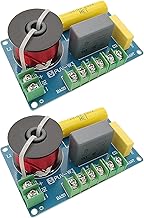
The HiQltyla is a passive three-way crossover sold as a two-pack. Its listed specifications identify it as a 200-watt unit for 4–8-ohm speakers, with applications including bass, midrange, and tweeter drivers in bookshelf speakers. Those details make it the most direct option in this selection for someone searching specifically for a midrange speaker crossover for home audio.
Best for: Home-audio builders who want to divide a signal among bass, midrange, and treble drivers. Choose this if your project calls for a three-way passive design and the speaker impedance is within the stated 4–8-ohm range.
Why it was selected: It is the only listed standalone crossover explicitly described as a three-way divider for bass, midrange, and tweeter speakers.
Limitation: The supplied product details do not specify crossover frequencies or filter slopes. Confirm that its frequency behavior suits the drivers in your speaker design before choosing it.
Audiopipe CRX-203 2-Way Crossover

The Audiopipe CRX-203 is a two-way passive crossover sold as a two-pack for car-audio speaker systems. Its listed features include gold-plated screw terminals, 150 watts RMS and 300 watts peak handling, and a tweeter frequency range of 3.39–20 kHz. It is designed for separating tweeter and midrange or other high-frequency components rather than providing a three-way bass-mid-treble network.
Best for: Car-audio buyers assembling a two-component setup who want a passive crossover with screw terminals. The listed tweeter frequency range gives shoppers a useful specification to compare with their tweeter’s requirements.
Why it was selected: It is a dedicated two-way car crossover with stated power handling and frequency information, making it easier to assess against a system’s needs.
Limitation: Its listed frequency specification describes the tweeter range, not a full set of crossover points for every connected driver. Check the complete product information and speaker requirements before installation.
DS18 PRO-CFX 2-Way Passive Crossover

The DS18 PRO-CFX is a two-way passive car-audio crossover intended for tweeters and midrange speakers. The product information lists power handling up to 300 watts RMS and says it filters frequencies for two components using one amplifier channel. It is sold as a two-pack, which may suit buyers configuring a left-and-right speaker arrangement.
Best for: Car-audio builders who need a passive crossover for a tweeter and midrange combination. Choose this if using one amplifier channel for two speaker components is part of your planned system.
Why it was selected: The product is specifically described for tweeters and midrange speakers, and its stated one-channel arrangement is relevant to system planning.
Limitation: The supplied details do not list the crossover frequency or impedance. Verify those specifications against the connected drivers rather than relying on the power figure alone.
DS18 Mid And High Speaker Package

This DS18 package includes two 6.5-inch midrange speakers, two 1-inch tweeters, and a built-in crossover. It is not a standalone crossover, but it may be a practical alternative for buyers who want the principal midrange and high-frequency components together. The supplied listing does not provide further specifications for the crossover or the speakers.
Best for: Car-audio shoppers who need a matched midrange-and-tweeter package and prefer a crossover included with the speaker components. Choose this if you are selecting the speakers and crossover arrangement together.
Why it was selected: It directly combines midrange speakers, tweeters, and a crossover, addressing the broader goal of building a system that reproduces midrange frequencies.
Limitation: The provided details do not state crossover points, impedance, or power handling. Check the full listing and compare those details with your amplifier and installation plan.
DS18 PRO-ZT6 Midrange Speaker

The DS18 PRO-ZT6 is a 6.5-inch, two-way pro-audio midrange speaker with a built-in bullet tweeter. The listing states 4-ohm impedance, 225 watts RMS, 450 watts maximum, and water-resistant construction. A black metal mesh grille is included. Because the tweeter is built into the speaker, this is a speaker option rather than a standalone crossover component.
Best for: Buyers seeking a single midrange speaker that also includes a tweeter. Choose this if you want a combined two-way speaker design rather than a separate midrange driver and crossover.
Why it was selected: Its built-in tweeter and stated impedance and power figures make it relevant to shoppers comparing midrange speaker configurations.
Limitation: The listing identifies it as one speaker, so buyers planning a pair should account for that. The supplied details do not describe a separate crossover or its frequency behavior.
Buying Guide: How To Choose A Midrange Speaker Crossover
A crossover directs different frequency ranges to the speaker components intended to reproduce them. A midrange driver handles the middle portion of the audio spectrum, while a tweeter handles higher frequencies and a woofer or bass driver handles lower frequencies. The right crossover depends on the drivers, amplifier, system layout, and whether the application is home or car audio.
Do You Need A Two-Way Or Three-Way Crossover?
A two-way crossover separates a signal between two components, often a midrange speaker and tweeter in the products listed here. A three-way crossover divides the signal among bass, midrange, and treble drivers. Choose a three-way unit when the speaker design has three separate driver sections; a two-way model is not a direct substitute for that arrangement.
Is It For Home Audio Or Car Audio?
Match the crossover to the intended system rather than assuming every passive crossover is interchangeable. The HiQltyla listing identifies bookshelf and home-audio use, while the Audiopipe CRX-203 and DS18 PRO-CFX are described for car audio. Check the complete product information for installation requirements and system suitability.
How Should You Compare Impedance?
Impedance affects whether a crossover and connected speakers are appropriate for the same system. The HiQltyla is listed for 4–8-ohm speakers, and the PRO-ZT6 is listed as 4 ohms. The supplied details do not state impedance for every product here. Confirm the crossover and driver specifications before connecting components.
What Power Rating Should You Check?
Compare the crossover’s stated power handling with the system’s amplifier output and the connected speakers’ specifications. Pay attention to whether a figure is RMS or peak: they are not equivalent measures. For example, Audiopipe lists 150 watts RMS and 300 watts peak, while DS18 describes the PRO-CFX as handling up to 300 watts RMS. Do not use a maximum figure alone to determine system compatibility.
Why Do Crossover Frequencies Matter?
Crossover frequency determines where one driver’s assigned range gives way to another’s. The Audiopipe listing provides a tweeter frequency range of 3.39–20 kHz, but the supplied information does not provide full crossover points for several other options. Compare the actual crossover specifications with the connected drivers’ recommended operating ranges. If the information is unavailable, consult the full product documentation before purchase.
Should You Buy A Crossover Or A Speaker Package?
Buy a standalone crossover when you already have compatible drivers and need a component to divide the signal. A package with speakers and a built-in crossover may be more appropriate when selecting those components together. The DS18 Mid and High package includes midrange speakers, tweeters, and a crossover; the PRO-ZT6 is a single speaker with a built-in bullet tweeter. Neither listing should be treated as identical to buying a separate crossover.
What Installation Details Should You Verify?
Before choosing, check the number of channels, terminals, wiring arrangement, driver count, and installation space required by your project. The Audiopipe model lists gold-plated screw terminals, while the DS18 PRO-CFX is described as using one amplifier channel for two speaker components. Verify that these details match your planned setup and follow the product’s wiring instructions.
Frequently Asked Questions
What Does A Midrange Speaker Crossover Do?
A midrange speaker crossover directs the appropriate portion of an audio signal to a midrange driver. In a multi-driver speaker system, it helps separate the signal between the midrange driver and other components, such as a woofer or tweeter.
Can I Use A Two-Way Crossover For A Three-Way Speaker?
A two-way crossover is intended to divide a signal between two components. A three-way speaker with separate bass, midrange, and tweeter drivers generally needs a crossover designed for three frequency bands. Check the speaker design and crossover specifications before connecting them.
Which Product Here Is A Standalone Three-Way Crossover?
The HiQltyla is the listed standalone three-way passive crossover. Its supplied specifications identify it for 4–8-ohm speakers and applications involving bass, midrange, and tweeter drivers.
Are The DS18 PRO-CFX And Audiopipe CRX-203 The Same Type Of Product?
Both are listed as two-way passive car-audio crossovers, but the product details differ. Audiopipe lists gold-plated screw terminals and a tweeter frequency range; DS18 describes its PRO-CFX for tweeter and midrange components and states up to 300 watts RMS. Compare full specifications before choosing.
Does A Speaker With A Built-In Tweeter Include A Separate Crossover?
Not necessarily. The PRO-ZT6 listing describes a midrange speaker with a built-in bullet tweeter, but the supplied details do not identify a separate crossover. Check the complete listing to determine how the speaker manages its frequency division.
What Is The Most Important Specification To Check First?
Start with the crossover type and the connected drivers’ requirements. Confirm whether you need a two-way or three-way design, then check impedance, frequency points, and power handling against the system components.