
The best no-load potentiometer depends on your guitar’s control layout, knob fit, and preferred resistance: the Fender 250K split-shaft model suits push-on knobs, while the Allparts 500K option is a tone-pot choice. For a 250K no-load pot with detailed imperial dimensions, consider the CTS 450G. One listed Fender 500K split-shaft pot is not identified as no-load, so it is better treated as a conventional-pot alternative rather than a direct substitute.
| Product | Best suited for | Key detail |
|---|---|---|
| Fender 250K No-Load Split Shaft | Guitars using push-on knobs | 250K; 3/8-inch split shaft |
| Allparts Silver 500K No-Load Tone Pot | A 500K no-load tone-pot option | Short knurl |
| Fender 250K Solid Shaft No-Load | Setups requiring a solid shaft | Genuine Fender replacement part |
| CTS 450G No-Load A250K | Buyers checking detailed dimensions | 24-spline split shaft; 250K |
| Fender 500K Split Shaft Potentiometer | Buyers seeking a conventional 500K pot | Not listed as no-load |
Fender 250K No-Load Split Shaft Potentiometer
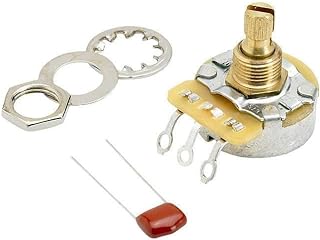
This Fender pot is a straightforward choice for a guitar that calls for a 250K no-load control and a split shaft. Its listed features specify a 3/8-inch split-shaft design and compatibility with push-on control knobs. The product is described for volume or tone use, so the intended circuit position should be confirmed before ordering.
Best for: Players replacing a 250K control in a setup that uses a push-on knob. It was selected because the listing clearly identifies both the no-load design and the shaft style. A no-load tone control can be useful when a player wants a control setting that removes the tone pot’s effect from the signal at its designated endpoint.
Limitation: The split shaft is not the same as a solid shaft. Check the existing knob and control opening rather than assuming this pot will fit every guitar.
Allparts Silver 500K No-Load Tone Pot

The Allparts model is listed as a 500K no-load tone pot and has a short knurl. That makes it a candidate for a replacement where a 500K no-load tone control and a short-knurled shaft are required. The available product details do not provide more measurements, so compare the physical pot and knob requirements carefully.
Best for: Buyers specifically seeking a 500K no-load tone pot. It adds a higher-resistance option to a shortlist otherwise centered on 250K models. Choose it if the existing circuit calls for 500K and its shaft construction suits the control knob.
Limitation: “Short knurl” is the only listed fit detail. The listing information provided does not specify shaft length, thread dimensions, or whether the shaft is split or solid. Verify those details before purchase if the installation space or knob is particular.
Fender 250K Solid Shaft No-Load Potentiometer

This Fender replacement part is a 250K no-load potentiometer with a solid shaft. The listing identifies it for volume or tone use and describes it as a genuine Fender replacement part. Its solid shaft makes it a different fit choice from the split-shaft products in this list.
Best for: Guitarists whose existing control requires a solid-shaft 250K no-load pot. It was selected to give buyers a no-load option when a split shaft is not the desired style. Compare the original pot and knob before choosing, since shaft type affects the physical connection.
Limitation: The provided features do not state shaft dimensions or knob attachment details. Do not assume that a knob made for a split shaft will fit this solid-shaft model.
CTS 450G No-Load A250K Pot

This CTS 450G is specified as a 250K no-load audio-taper pot with 10% tolerance. Its listed physical details include a fine 24-spline imperial split shaft, a 6 mm shaft diameter, a 9.5 mm thread diameter, and a 6.5 mm thread height. The listing also describes a full brass shaft and bushing and a vintage-style dish back.
Best for: Buyers who want more dimensions to compare before selecting a 250K no-load pot. The listing says it fits many USA electric guitars and basses, including ST and TL styles, and mentions blender Strat-style applications. Confirm the specific instrument and control layout rather than relying on broad fit language alone.
Limitation: Its 24-spline shaft is a particular knob interface. Check the knob’s spline count and measurements; a similar-looking split shaft is not necessarily a match.
Fender 500K Split Shaft Potentiometer

This Fender pot is a 500K split-shaft potentiometer for volume or tone use. The listed measurements include 3/8-inch threading and a shaft length of .344 inch. The product details do not identify it as no-load, so it should not be mistaken for a no-load replacement simply because it is included alongside no-load models.
Best for: Buyers who need a conventional 500K split-shaft pot and want listed thread and shaft measurements for comparison. It was selected as a useful reference for distinguishing resistance and function from the no-load models above.
Limitation: This is not described as a no-load potentiometer. Choose another product in this list if a no-load function is essential to the intended circuit.
Buying Guide: How to Choose a Guitar No-Load Pot
What does “no-load” mean on a guitar potentiometer?
A no-load potentiometer is designed so that, at its designated endpoint, the tone circuit is disconnected from the signal path. This can let a guitar’s signal bypass the tone control at that setting. The benefit is specific to the circuit and control position; it does not mean the pot has no resistance at every setting. Check the product description and wiring plan to confirm that a model is actually no-load.
Should you choose 250K or 500K?
Choose the resistance specified for the circuit or replacement part. The products here include 250K and 500K options, but resistance alone does not determine physical fit or whether the pot is no-load. If replacing an existing component, note its value and intended position before ordering. If modifying a circuit, consult a wiring diagram that matches the guitar and pickup arrangement.
In this selection, the Fender split-shaft model, Fender solid-shaft model, and CTS 450G are 250K no-load choices. The Allparts product is a 500K no-load tone pot. The Fender 500K split-shaft listing is not identified as no-load, making it a different type of option.
Which shaft style and knob connection do you need?
Match the new shaft to the knob already in use or to the knob you plan to install. A split shaft is designed for a push-on style connection, while a solid shaft is physically different. Spline count and shaft diameter can matter too. The CTS listing gives a 24-spline, 6 mm split-shaft specification; the Fender 250K split-shaft listing states that it takes a push-on control knob.
Do not rely only on a product’s brand or resistance value to establish fit. Compare shaft style, dimensions, thread size, and the existing control opening. When those measurements are not provided in the listing, verify them with the seller or manufacturer before purchasing.
How should you compare mounting dimensions?
Measure the existing pot’s threaded bushing, thread height, and shaft length if those details affect installation. The CTS listing provides a 9.5 mm thread diameter and 6.5 mm thread height. The Fender 500K conventional pot lists 3/8-inch threading and a .344-inch shaft length. Product specifications may use metric or imperial units, so compare equivalent measurements rather than assuming they match.
Also consider the guitar’s control cavity and pickguard or body thickness. A pot that has the right resistance may still be unsuitable if its bushing or shaft does not work with the instrument’s mounting arrangement. The product information provided for some models is limited, so inspect the full listing when a dimension is important.
Does the intended control position matter?
Yes. A listing may describe a potentiometer for volume or tone, but the circuit’s wiring and desired behavior determine its role. The Allparts item is specifically described as a no-load tone pot. The Fender 250K models are listed for volume or tone, while the CTS product description calls out no-load use in blender-style Strat applications. Confirm the intended circuit function before installation.
What should you check before ordering?
- Resistance: Confirm whether the circuit calls for 250K or 500K.
- No-load function: Make sure the listing explicitly identifies the pot as no-load if that feature is required.
- Shaft style: Match split or solid shaft to the knob and instrument.
- Dimensions: Compare shaft length, thread diameter, and thread height where available.
- Control purpose: Check whether the pot is intended for volume, tone, or a particular circuit arrangement.
- Missing specifications: Seek clarification when the listing does not provide a measurement needed for fit.
Frequently Asked Questions
Can a no-load potentiometer be used as a tone control?
Yes. The products listed include no-load tone-pot options, and some are described for volume or tone use. Confirm that the chosen pot’s resistance, physical fit, and circuit wiring are suitable for the intended tone-control position.
Is every 500K guitar pot a no-load pot?
No. Resistance and no-load function are separate specifications. The listed Fender 500K split-shaft pot is not identified as no-load, while the Allparts 500K item is explicitly described as a no-load tone pot.
Will a split-shaft pot fit any push-on knob?
Not necessarily. Shaft diameter and spline configuration can vary. Compare the pot’s listed measurements with the knob and existing control before ordering.
What is the difference between a split shaft and a solid shaft?
A split shaft has a divided end intended for a particular knob connection, while a solid shaft has a different physical design. The replacement should match the knob style and the existing installation requirements.
Which listed product provides the most fit measurements?
The CTS 450G listing provides several dimensions, including shaft diameter, thread diameter, thread height, and spline count. Those measurements help with comparison, but buyers should still confirm fit for their specific guitar.