
Best Noise-Blocking Headphones for Quiet, Protected Ears
When shopping for noise-blocking headphones, look for models with strong NRR/SNR ratings, comfortable long-wear design, and durable construction. The top picks below suit different buyers: professionals needing hearing protection on the job, shooting enthusiasts seeking all-day comfort, parents protecting kids, and travelers seeking quiet environments. The following table summarizes five strong options.
| Product | Brand | NRR / SNR | Best For |
|---|---|---|---|
| ProCase Hearing Protection Ear Muffs SNR 33dB | ProCase | SNR 33dB / ANSI S3.19 NRR 28dB | General use, long wear, eyeglass wearers |
| Noise Reduction Earmuffs for Adults – 35 dB | Vanderfields | NRR 23 dB / SNR 30 dB | Construction, lawn work, shooting ranges |
| 2 Pack 34dB Noise Canceling Headphones | Floriogra | SNR 34dB | Shooting, mowing, loud environments |
| LIBUS Noise Cancelling Ear Muffs – 25dB | LIBUS | NRR 25 dB / SNR 29 dB | Large heads, lawn care, noisy shops |
| 2 Pack Sleep Headphones Headband | Perytong | Not specified as NRR/SNR; focus on noise masking via sleep headset | Sleep, side sleepers, travel |
Below, five carefully chosen products are described with clear buying guidance. Each section notes who should buy, why it was chosen, and a practical caveat to consider.
ProCase Hearing Protection Ear Muffs SNR 33dB

Best for long wear and eyeglass compatibility. These earmuffs offer a dual standard noise attenuation rating, with SNR 33dB and ANSI S3.19 NRR 28dB. They feature a fully adjustable metal headband and a foldable, portable design for shooting ranges, construction sites, travel, or outdoor events. The design minimizes sound leakage even when wearing glasses. Cautious note: some users may notice tighter fit if worn over thicker frames for extended periods.
Noise Reduction Earmuffs for Adults – 35 dB
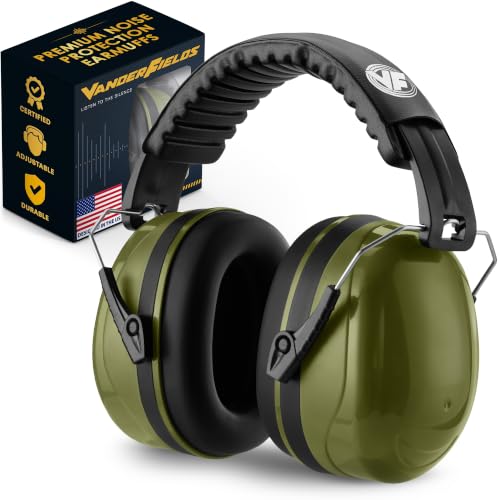
Best for professionals in high-noise environments. ANSI and CE certified with 23 dB NRR and 30 dB SNR, these muffs use high-density foam and a durable body with an anti-slip band. They suit shooting ranges, lawn equipment use, and industrial settings. Caution: the rating leans toward general safety rather than extreme noise; for extremely loud environments, consider higher-rated options.
2 Pack 34dB Noise Canceling Headphones

Best for shooting, mowing, and loud construction work. These earmuffs provide SNR 34dB attenuation with a double-layer foam design and a spacious inner cup for comfort. They feature adjustable headbands and rotatable pins for a custom fit. Caution: larger head shapes may require careful adjustment to avoid pressure on the temples during long sessions.
LIBUS Noise Cancelling Ear Muffs – 25dB

Best for large heads and long wear. With NRR 25 dB / SNR 29 dB, these cups adjust in height, rotation, and angle to fit larger head shapes. The one-size-fits-most design uses a lightweight frame and padded cushions to reduce pressure. Caution: slightly lower attenuation at very high frequencies compared with higher-SNR models.
2 Pack Sleep Headphones Headband

Best for side sleepers and travel. This headband houses ultra-thin 40mm drivers within a soft band for comfortable all-night wear. It emphasizes sleep-quality features like long battery life (14 hours) and Bluetooth 5.4 for stable connections. Caution: these are not traditional passive ear protectors; they are designed to mask noise via audio playback, not to block all ambient noise at high levels.
Buying Guide
Key considerations when choosing noise-blocking headphones:
- Noise attenuation: Compare NRR and SNR ratings to estimate real-world effectiveness. Higher values typically indicate stronger noise reduction.
- Fit and comfort: Look for an adjustable headband, padding quality, and cup shape that suits your head size and if you wear glasses.
- Intended use: Shooting, construction, and loud environments benefit from passive protection; sleep and travel may benefit from comfort-focused designs or noise-masking features.
- Durability: Consider materials (ABS, metal frames) and hinge or band durability for daily wear in tough environments.
- Additional features: Rotatable pins, cushion density, and low-pressure designs reduce fatigue over long wear. For sleep headbands, battery life and wireless connectivity matter.
Comparison tips:
- Best overall protection: Look for SNR ≥ 30 dB and robust construction.
- Best for long shifts or extreme noise: Prioritize models with high NRR and comfortable, lightweight design.
- Best for kids: Choose smaller, properly sized earmuffs with comfortable padding and secure headbands.
FAQ
- What is the difference between NRR and SNR?
- NRR is the US standard, while SNR is used internationally. Higher numbers indicate better attenuation, but the effective reduction varies by frequency and testing method.
- Are sleeping headbands effective for noise reduction?
- Sleeping headbands focus on comfort and sleep quality by embedding speakers; they are not primarily designed as hearing protectors for loud environments.
- How should I choose for a large head?
- Look for adjustable bands, wide padding, and cups that don’t press directly on the ears. Some models explicitly mention “fits large heads.”
- Can I wear earmuffs with glasses?
- Many ProCase-style and similar models are designed to minimize sound leakage with glasses; check user-fit notes for each product.