
The best open-ear Bluetooth bone conduction sport headphones depend on your priorities: choose the Bluetooth 5.4 model for its stated 15-hour playback, the Bluetooth 6.0 IP54 option for its listed reduced sound leakage, or the IPX5 model if an eight-hour playtime claim meets your routine. The Ortizan is an air-conduction alternative, not a bone-conduction headset. The comparison below separates these options by their listed features so runners, cyclists, and gym users can choose more carefully.
| Product | Best for | Listed highlights |
|---|---|---|
| Bluetooth 6.0 IP54 Bone Conduction | Reduced leakage and secure fit | Mic, balanced audio, IP54 |
| Bluetooth 5.4 Bone Conduction | Longer stated playback | 15 hours, IPX6, lightweight |
| Bluetooth 6.0 Waterproof Open-Ear | Bluetooth 6.0 feature preference | Long battery life claim, stable connection |
| Ortizan Air Conduction | Air-conduction shoppers | 19 g, IPX6, 19-hour weight claim not given; clear calls |
| Bluetooth 6.0 IPX5 Bone Conduction | Shorter sessions | 8 hours, IPX5, lightweight |
Bluetooth 6.0 IP54 Bone Conduction Headphones

This model is best for sports users who want an open-ear fit and specifically value the listing’s reduced sound leakage claim. Its name also identifies Bluetooth 6.0, a microphone, balanced audio, an IP54 rating, and a secure fit for running, workouts, and cycling.
Choose this if you want the combination of a stated secure fit and a water-and-dust protection rating. The listing positions the headset for several activity types, so it may suit a buyer who wants one pair for varied workouts rather than one narrowly defined sport. The microphone may also be useful for calls, although call performance details are not provided.
Limitation: The product information does not state battery life or define the conditions behind its reduced-leakage claim. Avoid choosing it on the assumption that it will be inaudible to people nearby; the listing does not promise that.
Bluetooth 5.4 Bone Conduction Headphones

This is the better choice for buyers who prioritize a stated playback duration: the product name claims up to 15 hours. It also lists Bluetooth 5.4, a microphone, an IPX6 sweatproof rating, and a lightweight open-ear fit for running, cycling, walking, and outdoor use.
Choose this model if a longer advertised listening window matters more than selecting the newest Bluetooth version among these options. Its listed use cases cover both exercise and everyday outdoor activities. The orange color is stated in the product name and may also help shoppers distinguish it from less visible color options.
Limitation: Fifteen hours is a product-listing claim, not a guaranteed runtime under every volume level or usage pattern. IPX6 is a water-resistance rating, not a promise that the headset is suitable for swimming or submersion.
Bluetooth 6.0 Waterproof Open-Ear Headphones

This model is best for shoppers seeking a Bluetooth 6.0 open-ear headset with a stated focus on battery life and connection stability. The product name describes it as bone conduction and lists a long-battery-life claim, an ultra-light wireless design, and use for running, cycling, workouts, and hiking.
Choose it if you want a headset described for several outdoor activities and prefer Bluetooth 6.0. The claimed stable connection may appeal to buyers who want wireless audio during movement, while the hiking and workout use cases make it a broadly positioned sports option.
Limitation: The supplied product information gives no specific playback-hour figure or IP rating. Although the name says “waterproof,” shoppers should check the full listing for the exact water-resistance rating and usage limits before relying on it for wet conditions.
Ortizan Open-Ear Air Conduction Headphones
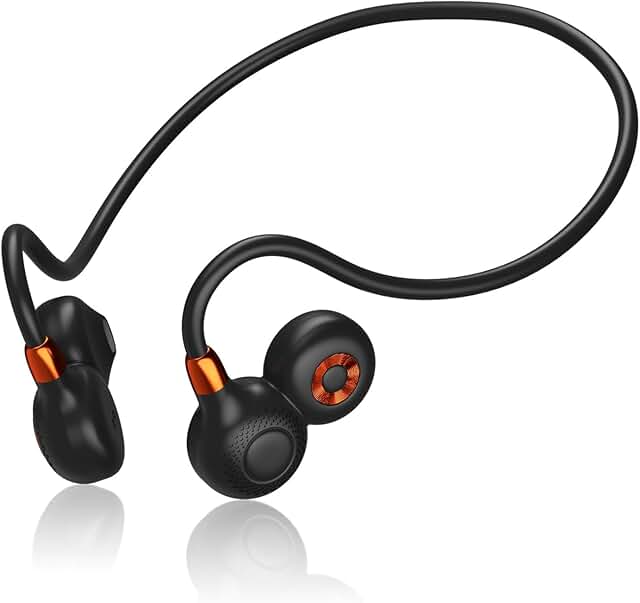
The Ortizan is best for buyers who want an open-ear sports headset but are not set on bone conduction. Its name specifies air conduction, Bluetooth 5.3, a 19-gram weight, IPX6 waterproofing, a microphone for clear calls, and use for running, cycling, and workouts.
Choose this if you want to compare a lightweight air-conduction design with the bone-conduction options in this roundup. It is not a bone-conduction product, so it should not be treated as a like-for-like match for shoppers who specifically want vibration-based sound transmission. Its stated weight and call feature are useful comparison points when shopping across open-ear designs.
Limitation: The listing does not provide a battery-life figure in the supplied information. Its IPX6 claim should not be interpreted as permission to swim or submerge the headphones.
Bluetooth 6.0 IPX5 Bone Conduction Headphones

This model is best for buyers whose typical workout fits within the stated eight-hour playtime. Its product name lists Bluetooth 6.0, IPX5 water resistance, a lightweight and comfortable design, and use for running, gym sessions, cycling, and workouts.
Choose this if you want a bone-conduction headset with a specific runtime claim and an IP rating identified in the listing. The range of named activities makes it suitable for shoppers comparing one headset for different exercise settings. Its Bluetooth 6.0 designation is another point of comparison with the Bluetooth 5.3 and 5.4 alternatives here.
Limitation: The listed eight hours may not match every listening condition, and the product information does not specify how the figure was measured. IPX5 is not a swimming rating; check the manufacturer’s use instructions before exposing the headset to water.
Buying Guide: How to Choose Open-Ear Sport Headphones
Do you specifically need bone conduction?
Bone-conduction headphones transmit sound through vibration at the cheekbones rather than placing a speaker inside the ear canal. Open-ear air-conduction models, such as the Ortizan, direct sound toward the ear without sealing the canal. Both styles keep the ear canal uncovered, but they use different sound-delivery methods. If bone conduction is a firm requirement, compare the four products explicitly described as bone-conduction models rather than treating all open-ear designs as interchangeable.
Open-ear listening can make it easier to hear surrounding sounds than sealed earbuds, but it does not guarantee awareness of traffic or other hazards. Keep volume at a level that allows attention to the environment, and follow local rules when cycling or exercising near roads.
How much playback time do you need?
Among these listings, the Bluetooth 5.4 headset states 15 hours of playback, while the Bluetooth 6.0 IPX5 model states eight hours. The other supplied product descriptions do not provide a specific runtime. Compare the stated figures with the length of your workouts, commute, or outdoor outings, and look for the full listing’s testing conditions if battery duration is important.
A stated maximum is not necessarily the runtime you will get in every situation. Volume, call use, and other operating conditions can affect battery performance, but the supplied listings do not specify how these factors change the figures.
What do the water-resistance ratings tell you?
Three listings identify ratings: IP54, IPX6, and IPX5. These ratings are not interchangeable, and a rating alone does not establish suitability for swimming. The first model lists IP54; the Bluetooth 5.4 and Ortizan models list IPX6; and the eight-hour Bluetooth 6.0 model lists IPX5. Check the product documentation for the precise conditions, care instructions, and limits.
The Bluetooth 6.0 waterproof model does not include a specific IP rating in the supplied details. If you expect rain or heavy sweat, verify the complete product specification before buying rather than relying on the word “waterproof” alone.
Which Bluetooth version should you compare?
The products list Bluetooth 5.3, 5.4, or 6.0. Version numbers are useful specification points, but the supplied information does not establish range, device compatibility, or real-world connection performance for any particular model. Do not select a headset solely by the largest version number; check that its stated features and intended use match your needs.
What fit and call features matter for exercise?
Look for explicit fit descriptions such as lightweight, secure, or comfortable, but remember that fit can vary by person. The first product lists a secure fit, and several models describe themselves as lightweight. The Ortizan is identified as 19 grams. If calls matter, the first, second, and Ortizan listings mention a microphone or clear calls; the supplied details do not give microphone specifications for the remaining options.
For cycling and outdoor running, consider whether the design stays comfortable during movement and whether you can hear your surroundings. A product’s intended-use wording is not a guarantee that it will fit every head or remain secure for every activity.
How should you compare these five options?
- For a stated 15-hour runtime: compare the Bluetooth 5.4 bone-conduction model.
- For a stated eight-hour runtime and IPX5: consider the Bluetooth 6.0 bone-conduction model.
- For IP54 and a reduced-leakage claim: review the first Bluetooth 6.0 model.
- For an air-conduction alternative: compare the 19-gram Ortizan.
- For Bluetooth 6.0 and a long-battery-life description: review the waterproof model, then verify its exact runtime and water rating.
Frequently Asked Questions
Are bone-conduction headphones the same as open-ear headphones?
No. Bone-conduction headphones use vibration to transmit sound, while open-ear air-conduction headphones direct sound toward the ears. Both can leave the ear canal uncovered, but they are different technologies.
Can I swim with IPX5 or IPX6 headphones?
The listed IPX5 and IPX6 ratings do not, by themselves, establish that a headset is suitable for swimming or submersion. Follow the product’s specific water-use instructions.
Which product lists the longest specific battery life?
The Bluetooth 5.4 bone-conduction headset lists 15 hours of playback. The Bluetooth 6.0 IPX5 model lists eight hours. The other supplied product details do not state a specific number of hours.
Is the Ortizan a bone-conduction headset?
No. Its product name describes it as an air-conduction open-ear headset. It may suit shoppers considering open-ear sport headphones who do not require bone conduction.
Do open-ear headphones make outdoor exercise completely safe?
No. An open-ear design may leave the ear canal uncovered, but it cannot guarantee that you will hear or notice every hazard. Use a suitable volume and remain attentive to your surroundings.
What should I check before buying the Bluetooth 6.0 waterproof model?
Check the complete listing for an exact battery-life figure and water-resistance rating. The supplied description claims long battery life and calls the headset waterproof, but does not identify a runtime or IP rating.