
Best Optical SPDIF to Coaxial Converters for Clear Digital Audio
The best optical SPDIF to coaxial converters provide reliable, bidirectional digital audio conversion for home theater setups. This guide highlights five top options and explains who each is best for, with practical comparisons to help you choose. Ideal buyers include: home theater enthusiasts seeking easy plug-and-play solutions, older TVs or soundbars needing Toslink to coaxial compatibility, and hobbyists who want a compact, reversible converter. Below is a quick summary table of the selected products.
| Product | Type | Best For | Key Benefit |
|---|---|---|---|
| PROZOR 192K Bi-Directional Optical Converter | Bi-Directional Toslink/Coaxial | Home theater with multiple formats | 192 kHz support with LPCM, DTS, Dolby |
| LiNKFOR 192kHz Coaxial to Optical Converter | Coaxial to Optical | Long-distance optical output | Built-in cables for easy setup |
| LUKFOCAB Bi-Directional Optical/Coaxial Converter | Bi-Directional Toslink/Coaxial | Flexible input/output switching | Switchable input with repeater capability |
| Musou RCA Analog to Digital Optical Toslink Converter | Analog to Digital Optical | Converting analog RCA to digital formats | Simultaneous Coaxial and Toslink outputs |
| diaogenlee Optical/Coaxial Bi-Directional Converter | Optical ↔ Coaxial | Digital signal extension | Three usage modes: converter, repeater, splitter |
PROZOR 192K Bi-Directional Optical Converter

The PROZOR Bi-Directional Converter supports both Toslink and coaxial interfaces, allowing Coaxial to Toslink and vice versa. It handles LPCM 2.0, DTS, Dolby AC3, and 5.1-channel formats while offering 192 kHz sampling for high-quality audio transmission. Best for users who need flexible input/output and high-resolution audio conversion in a single box. Caution: performance may vary with extremely long digital cable runs; ensure power supply is stable to avoid dropouts.
LiNKFOR 192kHz Coaxial to Optical Converter
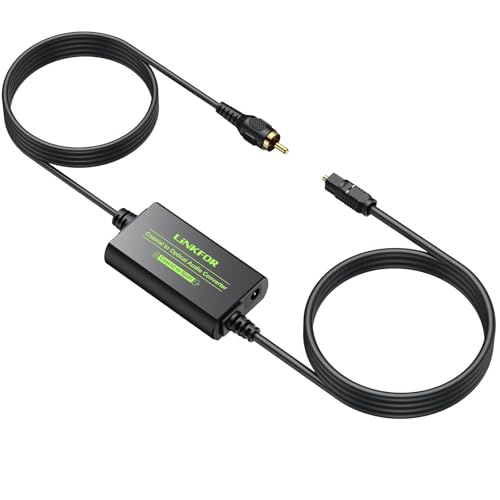
LiNKFOR’s converter focuses on converting Coaxial Digital to Optical SPDIF with a built-in Toslink and Coaxial cable, enabling long-distance transmission. It supports 192 kHz sampling with 24-bit depth and formats including LPCM2.0, DTS, Dolby AC3, and 5.1 ch. Best for older TVs or soundbars needing a simple, cable-included solution. Limitation: mainly designed for coaxial-to-optical direction; bidirectional use is less emphasized than some competitors.
LUKFOCAB Bi-Directional Optical/Coaxial Converter
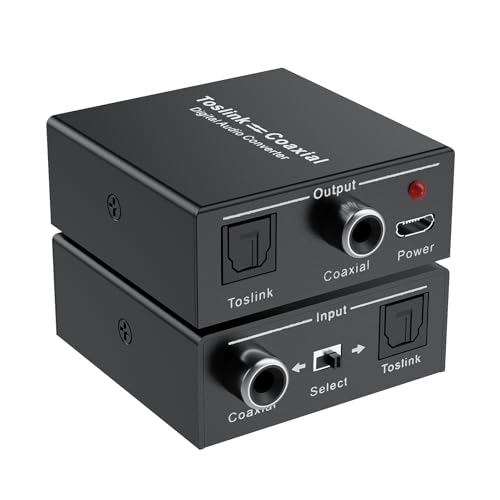
LUKFOCAB offers a true bi-directional converter with an input switch to select SPDIF optical or coaxial input. It supports 192 kHz/24-bit PCM and common surround formats (Dolby, DTS). It can also act as a repeater to extend signal distance. Best for users who want flexible input switching and a built-in repeater. Caution: ensure compatible audio format support on connected receivers to avoid format mismatches.
Musou RCA Analog to Digital Optical Toslink Converter

Musou focuses on converting analog RCA stereo into digital optical and coaxial outputs. It enables uncompressed 2-channel LPCM output, with a 48 kHz sampling rate. Best for users upgrading legacy analog gear to digital systems. Caution: does not carry Dolby Digital or multi-channel formats from the analog source.
diaogenlee Optical/Coaxial Bi-Directional Converter

diaogenlee provides a flexible bi-directional solution with three modes: digital-to-analog, analog-to-digital, and digital-to-digital conversions. It supports both optical and coaxial formats with long-distance capability and a converter/repeater/splitter function. Best for multi-room setups or when you need a device that can bridge different digital formats. Caution: performance is dependent on cable quality over long runs.
Azduou Optical to Coaxial Bi-Directional Converter

Azduou provides a bi-directional optical-coaxial converter with straightforward plug-and-play setup. It focuses on high-definition audio output, suitable for systems needing reliable SPDIF conversion without drivers. Best for straightforward installations where user wants quick setup. Limitation: may not feature advanced downstream options like long-distance aggressive repeater performance.
Buying Guide: How To Choose The Right Optical SPDIF To Coaxial Converter
- Bidirectional vs. unidirectional: If you need to go both ways (optical to coaxial and coaxial to optical), choose a true bi-directional model like PROZOR, LUKFOCAB, diaogenlee, or Azduou. If you only need one direction, a unidirectional option may be cheaper and simpler.
- Supported formats and sampling rate: Look for devices that support LPCM and common surround formats (DTS, Dolby Digital/AC3) and high sampling rates (192 kHz) for best audio quality. Consider your receiver’s capabilities when selecting formats.
- Input/output flexibility: Some converters provide built-in cables or extendable repeater functions. Decide if you need extra length or the ability to extend signal farther over longer runs.
- Ease of use: Plug-and-play devices are preferable for quick setups. Check for dedicated input selection switches to easily choose between coaxial and optical inputs.
- Distance and cable considerations: For optical paths, ensure the converter supports the needed distance and that your fiber optic cables meet the recommended specs. Coaxial runs are typically shorter and less susceptible to signal loss.
- Power requirements: Some devices include a USB power cable; verify whether your setup provides a suitable power source and needed adapters.
FAQ
- What is the primary purpose of an optical to coaxial converter?
To convert digital audio signals between Toslink (optical) and coaxial SPDIF formats, enabling compatibility between devices that only support one interface. - Do bidirectional converters require drivers?
No. Most bidirectional converters are plug-and-play and do not require drivers. - Can these devices improve audio quality?
They preserve digital audio quality by converting signals without processing, as long as both source and destination support the intended formats. - Which product is best for long-distance optical transmission?
LiNKFOR and some bi-directional models with built-in cables are better for longer runs, but always verify the maximum recommended distance for your setup. - Can I use these converters with older receivers?
Yes, but ensure the receiver supports the audio formats you output (LPCM, DTS, Dolby Digital, etc.). - Is a separate power supply required?
Some models include a micro USB power cable; others may draw power from connected devices. Check the product details for power needs.