
Best Optical to 3.5mm Female Adapters for TV Audio
Answering the common need for turning digital optical audio into a usable 3.5mm analog signal, these adapters are ideal for viewers who want to connect TVs, consoles, or players with an optical output to older or basic headphones, speakers, or soundbars. The top picks favor ease of use, reliable DAC performance, and clear instructions for PCM/LPCM setups. This guide highlights five options best for different setups—especially for viewers with TVs lacking a dedicated analog output.
Summary of chosen products
- ESWN DNXB 192KHz DAC Optical to 3.5mm Female Audio Converter
- Tackston 192KHz DAC SPDIF Optical to 3.5mm AUX Speaker Audio Converter
- Tackston 192KHz DAC SPDIF Optical to 3.5mm AUX Speaker Audio Converter (another listing)
- Elecan Unidirectional Optical Male to 3.5mm AUX Female Audio Converter Cable 3 Ft
- Elecan Unidirectional Optical Male to 3.5mm AUX Female Audio Converter Cable 6.6 Ft
Best Optical To 3.5mm Female Converter: ESWN DNXB
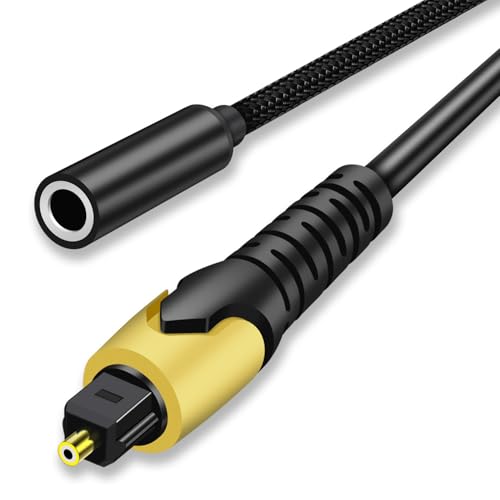
The ESWN DNXB unit converts optical (SPDIF/Toslink) to a stereo 3.5mm AUX output. It supports up to 192kHz sampling rate with 24-bit data, providing high-detail audio for TV listening or computer setups. It is best for listeners with a TV or media PC that only has an optical output and needs simple, reliable analog sound.
Who it’s best for: casual TV watchers and computer users who want straightforward optical-to-analog conversion without extra features.
Why selected: It covers the essential PCM/LPCM-capable path and notes PCM/Stereo mode setup steps for common brands, reducing setup ambiguity.
Caution: This device is not reversible; it cannot convert 3.5mm to optical.
Tackston Optical To 3.5mm AUX, 192kHz

This Tackston model emphasizes compatibility with many TVs by supporting up to 192kHz/24-bit PCM through a straightforward optical-to-aux path. It notes a remediable limitation: volume control must be adjusted on the playback device, since the TV remote may not affect the connected speakers or headphones.
Who it’s best for: users who want to maximize audio quality while using existing 3.5mm speakers or headphones and don’t need remote control integration.
Why selected: The listing clearly defines sampling rates and the active limitation, helping buyers decide based on their remote control expectations.
Caution: TV remote volume control may be unavailable; adjust volume on the output device instead.
Tackston 192KHz Optical To 3.5mm AUX (Second Listing)

This variant mirrors the 192kHz/24-bit capability and 32–192kHz range, making it a strong option for users who want a similar performance profile as the Tackston model above. It shares the same note about PCM/LPCM formatting settings and non-reversibility of the signal path.
Who it’s best for: buyers who want a parallel option from the same brand with similar performance characteristics for comparison shopping.
Why selected: It provides another direct optical-to-aux option with consistent high-resolution support for easy side-by-side evaluation.
Caution: Not suitable for bidirectional use; AUX to Optical is unsupported.
Elecan Unidirectional Optical To 3.5mm Cable (3 Ft)

This Elecan option is a unidirectional SPDIF/TOSLINK to 3.5mm AUX female converter. It includes a built-in DAC and amplifier and uses aluminum housing with gold-plated connectors for durability. It is designed to improve quiet or weak-sounding outputs and pairs with 3.5mm to RCA adapters for broader amp compatibility.
Who it’s best for: gamers or movie watchers who need reliable audio linkage with a compact 3 ft cable and added RCA compatibility.
Why selected: It emphasizes a robust DAC, heat-dissipating housing, and a bundled RCA adapter to broaden device compatibility.
Caution: Optical output is fixed to stereo 2.0; it does not support Dolby/DTS multi-channel audio.
Elecan Unidirectional Optical To 3.5mm Cable (6.6 Ft)
This longer 6.6 ft Elecan cable maintains the same unidirectional SPDIF/TOSLINK to 3.5mm AUX output design, with built-in DAC and amplifier. The extended length is ideal for setups that position a TV or media player farther from speakers. It also includes RCA adapters for broader compatibility.
Who it’s best for: home theater layouts where the source device is a fair distance from the audio system and a longer cable helps reduce clutter.
Why selected: The longer length offers flexibility for arranging components while preserving high-resolution PCM output.
Caution: As with other optical adapters, it is not suitable for reverse AUX to Optical use and volume control must be managed on the playback device.
Buying Guide: Key Considerations For Optical To 3.5mm Adapters
- Supported audio formats: Look for units that handle 24-bit PCM and 32–192kHz sampling rates to preserve detail.
- Directionality: All listed options are unidirectional (Optical/TOSLINK to 3.5mm). They do not convert 3.5mm to optical.
- Power requirements: Some adapters require USB power for the DAC; check whether a power source is needed and whether it’s included.
- Connectivity length: Choose cable length based on your layout—short cables save space; longer cables reduce placement constraints.
- HD audio compatibility: If you need multi-channel audio (Dolby/DTS), these adapters typically do not support multi-channel formats; they’re best for stereo setups.
- Setup steps: Some devices require PCM/LPCM output on the source; verify your TV or game console’s audio format settings before use.
- Durability and materials: Aluminum housings and gold-plated connectors can offer better heat dissipation and connection stability in longer-term use.
FAQ
- Can I use these adapters to connect a DVD player to a soundbar? Yes, if the device has an optical output and you want to output to a 3.5mm analog input on the soundbar or speakers.
- Will these convert surround sound to stereo? No. They transmit stereo 2.0 via PCM to a 3.5mm output; multi-channel formats are not supported.
- Do I need a power source for these adapters? Some models require USB power for the internal DAC; others are passive. Check the product details for power needs.
- What device settings should I adjust before using? Set the source’s audio output to PCM or LPCM/Stereo as indicated in the product notes to ensure proper decoding.
- Can I use the adapter with headphones? Yes, for headphone listening with devices that offer an optical output, provided the adapter and source support PCM stereo output.
- Are there length limits for optical cables? The optical cable length in the listing can affect signal integrity; longer runs may necessitate higher-quality cables to maintain 192kHz/24-bit performance.