
The Guild P-240 Memoir is the clearest match for shoppers seeking a parlor guitar with a 12-fret-to-body neck, while the Washburn R310K, Fender CP-60S, and Gretsch Jim Dandy offer other compact acoustic options with different features. The Leo Jaymz Tsunami is an electric guitar, not a parlor acoustic, so it is included only as a comparison for buyers whose search also involves electric playability.
| Product | Best suited for | Key distinction |
|---|---|---|
| Guild P-240 Memoir | Players prioritizing a 12-fret joint | Solid spruce top; mahogany body |
| Washburn R310K | Players seeking a vintage-style parlor | Soft V neck and antique matte finish |
| Fender CP-60S | Players wanting a solid-top compact acoustic | 24.75-inch scale and 20-fret fingerboard |
| Gretsch Jim Dandy Deltoluxe | Beginners and players who prefer a short scale | 24-inch scale; acoustic-electric design |
| Leo Jaymz Tsunami | Electric players comparing compact-guitar searches | 24 frets and HH pickups; not a parlor acoustic |
Guild P-240 Memoir

The Guild P-240 Memoir is the strongest match in this group for a buyer specifically seeking a 12-fret parlor guitar. Its small-bodied design and 12-fret-to-body neck are stated features, making it the most direct fit for the search. The top is solid spruce, and the back and sides are mahogany, with a gloss finish.
Guild describes its tone as clear and bright, with enough presence for fingerpicking and flatpicking. That makes it a relevant option for players who want a compact acoustic for detailed picking as well as strumming. The solid spruce top and mahogany body also give shoppers clear material details to compare against the other models.
- Best for: Players who specifically want a parlor guitar with a 12-fret-to-body neck.
- Why it stands out: The product information explicitly identifies the 12-fret neck configuration and the small parlor body.
- Consider: The listed tone description emphasizes clear, bright sound; players seeking a darker or especially bass-heavy voice may want to compare other guitars in person.
Washburn R310K Victorian Parlor

The Washburn R310K is a vintage-inspired parlor acoustic with a spruce top, Trembesi back and sides, and an antique matte finish. Its soft V neck profile is a useful point of comparison for shoppers who care about neck shape and hand feel. The supplied product details do not specify a 12-fret-to-body joint, so buyers should verify that configuration before choosing it for a strict 12-fret requirement.
This model is best for someone drawn to a traditional-looking parlor instrument and a distinctive neck profile. Its listed materials also set it apart from the Guild’s spruce-and-mahogany combination. The antique matte finish gives it a different visual character from gloss-finished options.
- Best for: Players who want a Victorian-style parlor guitar and prefer a soft V neck.
- Why it stands out: It combines a spruce top with Trembesi back and sides, plus an antique matte finish.
- Consider: The available feature list does not confirm a 12-fret neck joint, so confirm the specification if that is essential.
Fender CP-60S Parlor
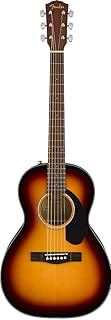
The Fender CP-60S is a compact parlor acoustic with a solid spruce top and laminated mahogany back and sides. Its listed scale length is 24.75 inches, and its mahogany neck has a 20-fret walnut fingerboard. These details make the CP-60S useful for buyers comparing scale length, tonewood construction, and fretboard specifications.
The product information does not identify a 12-fret-to-body neck joint. A 20-fret fingerboard alone does not establish where the neck meets the body, so shoppers with a firm 12-fret requirement should confirm the joint configuration. The guitar is a better fit for someone seeking a parlor acoustic with a solid spruce top and a familiar shorter-than-full-scale measurement.
- Best for: Players seeking a parlor guitar with a solid spruce top and a 24.75-inch scale.
- Why it stands out: The product details identify the top, back and sides, scale length, neck, fingerboard, and chrome die-cast tuners.
- Consider: The supplied features do not confirm a 12-fret neck joint, and the back and sides are laminated rather than solid.
Gretsch Jim Dandy Deltoluxe

The Gretsch Jim Dandy Deltoluxe is a short-scale parlor acoustic-electric guitar inspired by 1930s–1950s Rex guitars. Its 24-inch scale and C-shape neck are described as comfortable for beginners, players with smaller hands, and extended practice. The compact body uses X-bracing, which the product information associates with clear highs, warm mids, and woody resonance.
This is a good choice for shoppers who value a short scale and want an acoustic-electric model. It is presented as suitable for blues, folk, and other styles, but the available details do not specify the neck-to-body fret joint. Buyers seeking a true 12-fret configuration should check that detail separately rather than assuming that a compact body means a 12-fret neck.
- Best for: Beginners, smaller-handed players, or anyone prioritizing a 24-inch scale and acoustic-electric format.
- Why it stands out: It combines a compact parlor body, X-bracing, a short scale, and a C-shape neck.
- Consider: The feature list does not confirm a 12-fret-to-body joint, and its acoustic-electric format may be unnecessary for players who want a purely acoustic guitar.
Leo Jaymz Tsunami Electric

The Leo Jaymz Tsunami is not a parlor acoustic guitar and does not match a 12-fret acoustic search. It is an electric guitar with a solid mahogany body, roasted maple neck, rosewood fingerboard, and 24 frets. It is included here only for shoppers comparing compact-guitar search results who may actually be looking for an electric instrument.
Its listed electronics include an HH pickup configuration, a rail-style neck humbucker, and a tone control that splits the bridge humbucker into a single-coil voice. The product description emphasizes electric tones and extended fret access, which are different priorities from the small acoustic body and neck joint sought by most parlor-guitar buyers.
- Best for: Electric players who want humbucker tones, a 24-fret fingerboard, and a split-coil option.
- Why it stands out: Its mahogany body and roasted maple neck are paired with a flexible pickup setup.
- Consider: Avoid this if you need a parlor acoustic, a 12-fret neck joint, or an unamplified acoustic sound.
Buying Guide: How To Choose A 12-Fret Parlor Guitar
What does “12-fret” mean for a parlor guitar?
A 12-fret-to-body guitar has its neck meeting the body at the 12th fret. This is different from simply having 12 frets total: the number describes the neck joint location, not the total fret count. A guitar can have more than 12 frets while still meeting the body at the 12th fret. Check the manufacturer’s specification for “12-fret-to-body” or equivalent wording before buying.
Of the listed models, the Guild P-240 Memoir is the only one whose supplied features explicitly confirm a 12-fret-to-body neck. The Washburn, Fender, and Gretsch descriptions identify parlor or short-scale features but do not establish the neck joint. If the joint is central to your choice, verify the exact configuration for those models rather than inferring it from their body size.
Should you prioritize body size, scale length, or neck joint?
These are separate specifications. A parlor body describes a compact body style. Scale length is the distance from the nut to the bridge that affects string length and playing feel. The neck joint identifies where the neck meets the body. A short scale does not automatically mean a guitar is 12-fret, and a parlor body alone does not confirm the joint position.
- Choose by body size if a compact instrument is your main need.
- Choose by scale length if string reach and fretting feel are the main concerns. The Gretsch lists a 24-inch scale; the Fender lists 24.75 inches.
- Choose by neck joint if you specifically want the 12-fret layout. The Guild is the clearly documented match in this selection.
Which tonewood details should you compare?
Start with the top material and whether it is described as solid or laminated. The Guild and Fender list solid spruce tops. The Fender specifies laminated mahogany back and sides, while the Guild lists mahogany back and sides without the supplied feature text stating whether they are solid or laminated. The Washburn lists a spruce top and Trembesi back and sides. Do not assume construction details that are not stated.
Bracing and body materials can also help narrow a shortlist, but the provided product descriptions do not give comparable specifications for every model. The Gretsch specifically lists X-bracing and describes its intended sound as clear on top, warm through the mids, and woody. Use these descriptions as product information, not as a substitute for hearing a guitar or checking its full specification.
What neck shape or scale is better for smaller hands?
Consider the scale length and neck profile together. The Gretsch’s listed 24-inch scale and C-shape neck make it the most explicit choice here for buyers seeking a short scale or a model described as comfortable for smaller hands. The Washburn lists a soft V neck profile, which may suit players who prefer that contour. Hand comfort is personal, so those descriptions should guide comparisons rather than guarantee a particular fit.
The Guild’s supplied feature list emphasizes its 12-fret joint and tone rather than scale length or neck profile. The Fender lists a 24.75-inch scale and mahogany neck. Compare the complete measurements and profile details before selecting a guitar for a particular hand size or playing technique.
Do you need an acoustic-electric guitar?
An acoustic-electric model is worth considering if you need the option to connect to amplification or recording equipment. The Gretsch is identified as acoustic-electric, but the supplied features do not describe its specific electronics. If you only plan to play acoustically, the added electrical format may not be a deciding factor. Confirm pickup and output details directly in the full listing if amplified use matters.
The Guild, Washburn, and Fender are described as acoustic guitars in the supplied product names and features. The Leo Jaymz is a solid-body electric guitar, not an acoustic-electric parlor. It should not be considered a substitute for a 12-fret acoustic instrument.
What should you verify before ordering?
- Confirm the neck joint is 12-fret-to-body if that is a must-have feature.
- Check the scale length, neck profile, total fret count, and body dimensions in the full product specifications.
- Review whether the top, back, and sides are solid or laminated; do not infer construction from the wood name alone.
- Decide whether you need an acoustic-electric model or a standard acoustic guitar.
- Check the product listing for the finish and included equipment, since those details are not provided for every model here.
Frequently Asked Questions
Which guitar in this selection is explicitly a 12-fret parlor?
The Guild P-240 Memoir is the only listed model whose supplied product features explicitly state a 12-fret-to-body neck.
Is every parlor guitar a 12-fret guitar?
No. “Parlor” describes a compact body style, while “12-fret” describes where the neck meets the body. Confirm both specifications independently.
Is the Gretsch Jim Dandy Deltoluxe confirmed as 12-fret?
The supplied features identify it as a short-scale parlor acoustic-electric guitar, but they do not confirm a 12-fret-to-body joint. Verify that detail before purchase if it is required.
Which listed guitar has the shortest specified scale?
The Gretsch Jim Dandy Deltoluxe has the shortest scale specified in the supplied product details at 24 inches. The Fender CP-60S lists a 24.75-inch scale.
Is the Leo Jaymz Tsunami a parlor acoustic guitar?
No. It is a solid-body electric guitar with humbucker pickups and 24 frets. It does not meet the typical meaning of a 12-fret parlor acoustic guitar.
What is the best choice for a strict 12-fret requirement?
The Guild P-240 Memoir is the clearest choice in this group because its listed features explicitly identify a 12-fret-to-body neck. Confirm the full specifications before ordering.