
The Electro-Harmonix KEY9 is the clearest choice here for turning a guitar signal into electric-piano-style sounds. For players building a fuller arrangement around that tone, the MOOER GE100 adds a broad range of effects and looping, while the LEKATO and M-VAVE pedals focus on recording and layering loops. The other multi-effects options offer general guitar processing, not a stated piano-emulation feature.
| Product | Best suited for | Primary role |
|---|---|---|
| Electro-Harmonix KEY9 | Direct electric-piano emulation | Piano-style guitar sound |
| MOOER GE100 | Players wanting multiple effects and loop practice | Multi-effects and looping |
| LEKATO Multi Effects | Players seeking amp models and general effects | Multi-effects and recording support |
| LEKATO Looper | Players recording layered guitar parts | Looping and overdubbing |
| M-VAVE Looper II | Players needing loop storage and speed control | Looping and playback control |
Electro-Harmonix KEY9 Electric Piano Machine

Best for: Guitarists whose main goal is an electric-piano-style effect. The product is explicitly described as an electric piano machine that emulates sought-after electric pianos and more, making it the most directly relevant option in this selection.
Choose this if you want a pedal specifically aimed at transforming guitar into piano-like tones rather than simply adding standard distortion, delay, or reverb. It is the strongest match for piano-effect searches because its stated purpose is piano emulation.
Limitation: The available product information does not specify individual sounds, controls, guitar requirements, or whether it produces acoustic-piano tones. Check the product details for those specifics before choosing it for a particular sound or setup.
MOOER GE100 Multi-Effects Pedal

Best for: Guitarists who want a broad effects unit and built-in looping tools alongside their search for a piano-style sound. The listed features include 80 presets, 66 effects, a 180-second loop, 40 drum rhythms, an expression pedal for volume and wah, tap tempo, a headphone output, an LED screen, and a tuner.
Choose this if practice flexibility matters as much as a single effect. The loop and drum functions can support arranging or rehearsing parts around a piano-like sound made elsewhere in a signal chain.
Important distinction: The product information does not identify a piano-emulation effect. It is a multi-effects pedal, so avoid choosing it as a direct substitute for a dedicated electric-piano machine if piano conversion is the priority.
LEKATO Multi Effects With IR Loading
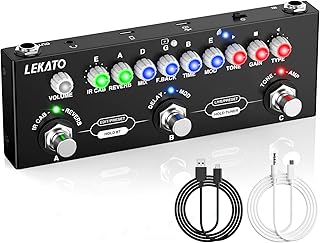
Best for: Players who want general guitar tone shaping, amp models, and recording-related features. The product name lists nine amp models, IR loading, delay, reverb, distortion, and overdrive. It also states support for recording, Bluetooth 5.0, and rechargeable operation.
This is a better fit for someone assembling a versatile guitar-processing setup than for someone who needs a dedicated piano effect. General effects may help shape a sound, but the supplied product details do not say that this pedal emulates a piano.
Limitation: Piano emulation is not listed among its stated functions. Choose it for its named amp and effects features, not as a guaranteed way to convert guitar into electric piano. Confirm the recording workflow and power details in the product listing if those are essential to your setup.
LEKATO Looper Guitar Pedal

Best for: Guitarists who want to record and layer parts while practicing or arranging. The listed specifications include nine loop slots, up to 40 minutes of recording time, unlimited overdubs, and a tuner function.
A looper does not create a piano tone by itself, but it can help build a layered part around a piano-effect signal. For example, a player can record one processed phrase and add further parts over it. This makes the pedal a practical companion for arranging, rather than a direct piano-emulation solution.
Limitation: The stated features focus on looping and tuning; no piano sounds or piano-conversion function are listed. Choose this if loop recording is the missing part of your setup, and avoid it if your only goal is a piano effect.
M-VAVE Looper II

Best for: Guitarists or bassists who want a looper with several stored locations and playback-speed adjustment. Its listed features include three storage locations, variable speed control, USB-C, and 9V DC power.
Choose this if loop management and changing playback speed are more important than a large collection of built-in effects. It can support practice or layered arrangements that include a separate piano-effect pedal, but it is not described as a piano sound generator.
Limitation: The supplied details do not state recording duration or overdub capacity. If you need a specific loop length or layering limit, verify those specifications before buying. The product is a looper, not a stated piano-emulation effect.
Buying Guide: How to Choose a Piano Effect for Guitar
Do you want a true piano-style guitar tone?
Start with the distinction between a dedicated piano emulator and a general multi-effects pedal. In this selection, the Electro-Harmonix KEY9 is the product explicitly described as emulating electric pianos. The MOOER GE100 and LEKATO multi-effects unit list broad guitar-processing features, but their supplied descriptions do not name piano emulation.
Read product specifications for the kind of piano sound you want. “Electric piano” and “acoustic piano” are not interchangeable descriptions. The KEY9 listing identifies electric-piano emulation, but the provided information does not specify every sound or preset. Confirm those details if you are seeking a particular instrument character.
Would a multi-effects pedal better suit your setup?
A multi-effects unit may be a sensible choice if you need several types of guitar processing in one device. The MOOER GE100 lists 66 effects, 80 presets, a tuner, expression control, rhythm patterns, and a long loop function. The LEKATO multi-effects pedal lists amp models, IR loading, delay, reverb, distortion, and overdrive.
These features can be useful for a flexible guitar rig, but they do not establish piano conversion. If piano tone is the central requirement, prioritize a pedal whose description explicitly names piano emulation. If your goal is general tone shaping and practice tools, compare the multi-effects features instead.
Will you record and layer parts?
Loopers are useful for building a performance one part at a time. The LEKATO Looper lists nine loop slots, 40 minutes of recording time, and unlimited overdubs. The M-VAVE Looper II lists three storage locations and variable speed control. Those stated differences can help narrow the choice based on whether you prioritize loop capacity or playback-speed adjustment.
A looper does not inherently change a guitar into a piano. It records and repeats audio, so it is most relevant as a companion to a piano-effect pedal or as a practice tool. Check the exact recording and overdubbing requirements when comparing loopers, since the available M-VAVE details do not specify those limits.
Which power and connection details should you check?
Do not assume that pedals share the same power method or connections. The M-VAVE name specifies USB-C and 9V DC power, while the LEKATO multi-effects name describes rechargeable operation and Bluetooth 5.0. The MOOER GE100 lists a headphone output. These are product-specific details, not universal features of piano effects.
Before buying, check the full listing for input and output connections, power requirements, recording connections, and any accessories you need. The product information provided here does not give a complete connection map for every pedal, so verify compatibility with the rest of your equipment directly.
How should you compare the five options?
- For direct electric-piano emulation: Choose the KEY9 because piano emulation is its stated purpose.
- For a range of effects and practice tools: Compare the MOOER GE100’s listed presets, effects, rhythms, expression control, and looping.
- For amp models and general effects: Consider the LEKATO Multi Effects, while recognizing that piano emulation is not listed.
- For loop recording and overdubs: Compare the LEKATO Looper’s stated loop slots, recording time, and overdub feature.
- For stored loops and speed adjustment: Consider the M-VAVE Looper II, and confirm unlisted recording limits.
Frequently Asked Questions
Can a guitar pedal make a guitar sound like a piano?
Some pedals are designed to emulate piano-style sounds. Of these five products, the Electro-Harmonix KEY9 is explicitly described as an electric piano machine. The other listed pedals are described as general multi-effects or loopers, not piano emulators.
Which pedal in this list is specifically for piano-style tones?
The Electro-Harmonix KEY9 is the most directly relevant option because its product description says it emulates electric pianos and more. Check its full product details for the specific sounds and controls available.
Is a looper the same as a piano effect?
No. A looper records and repeats audio, while a piano effect changes or emulates an instrument sound. A looper can help layer parts that include a piano-style effect, but it does not create that effect by itself.
Can a multi-effects pedal replace a dedicated piano emulator?
Not based on the supplied product information. The MOOER GE100 and LEKATO Multi Effects list various guitar effects, but neither description names piano emulation. Choose a dedicated piano-style pedal if that specific sound is essential.
What should I check before buying a piano effect for guitar?
Confirm whether the pedal targets electric or acoustic piano sounds, which controls and sounds it includes, how it connects, and what power it requires. Also verify that its functions match your intended use rather than relying on the broad label “multi-effects.”