
The best plug socket car charger depends on whether you need USB charging, additional 12-volt sockets, or a household-style AC outlet. The PiSFAU inverter is best for powering compatible AC devices from a vehicle socket, while the LISEN and DreamBee options are designed for charging devices through USB. The SUPERONE adds two car sockets, and the AC-to-DC converter runs a car-socket device from a household outlet.
| Product | Best For | Key Listed Feature |
|---|---|---|
| PiSFAU 200W Car Power Inverter | AC devices in a vehicle | 12V DC to 110V AC |
| AC to DC Converter 2A 24W | Using a car-plug device at home | 110–240V to 12V output |
| LISEN 69W USB-C Car Charger | USB charging in two vehicles | 69W and two-pack listing |
| DreamBee Retractable Car Charger | Multiple charging connections | 108W, six-in-one design, three cords |
| SUPERONE 180W Cigarette Lighter Splitter | Adding car sockets and USB-C | Two sockets and PD USB-C |
PiSFAU 200W Car Power Inverter
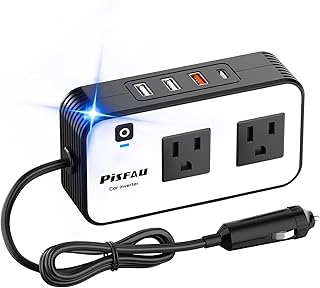
The PiSFAU is best for drivers who need a household-style AC outlet from a vehicle’s 12-volt power source. Its listed conversion is DC 12V to 110V AC, and the product name specifies a 200W car power inverter. That makes it a different type of car charger from a USB-only adapter: it is intended to provide AC power for compatible devices.
Choose this if the device you plan to power requires AC and its power needs are within the inverter’s stated limit. Check the device’s input requirements before connecting it; the 200W figure is not a guarantee that every appliance will work. Avoid this if you only need to charge a phone by USB, since a USB car charger is the more direct option.
AC to DC 12V Car Socket Converter

This adapter is best for someone who wants to power a device with a car cigarette-lighter plug from a household outlet. The listed conversion direction is 110–240V AC input to 12V output, and the name specifies 2A and 24W. It therefore solves the reverse problem from a car inverter: it supplies a 12V car-style socket using wall power.
Choose it if your device uses a 12V car plug and stays within the converter’s stated 2A, 24W output. Check the device label or manual first. It is not a car charger for use in a moving vehicle, and its 24W limit may not suit higher-power equipment.
LISEN 69W USB-C Car Charger, Two Pack

The LISEN charger is best for buyers seeking a compact USB-C charging option for a vehicle, with a two-pack listing for people who want one charger for more than one car or a spare. The product name identifies it as a 69W cigarette-lighter USB charger. Its USB-C format makes it a better fit for USB charging than for powering an AC appliance or adding another 12V socket.
Choose this if your charging setup uses USB-C and the listed 69W output suits your device and cable. Confirm the charging requirements for each device rather than assuming all devices will draw the full stated output. The listing information provided does not specify additional ports, so check the product details if you need to charge several devices from one adapter.
DreamBee 108W Retractable Car Charger

The DreamBee is best for drivers who want an all-in-one charging setup with built-in cords rather than carrying separate cables. Its product name describes a 108W, six-in-one charger with three retractable cords measuring 31.5 inches. The listing names phones and tablets among intended device types, including iPhone, iPad, and Samsung models.
Choose this if integrated cords and multiple charging connections are more useful than a simple single-port adapter. The listed total output is 108W, but the available information does not explain how power is divided when several devices are connected. Check the detailed listing and your devices’ requirements before relying on simultaneous charging at a particular speed. Retractable cords also make cable length fixed rather than fully customizable.
SUPERONE 180W Two-Socket Splitter

The SUPERONE splitter is best for drivers who need to use more than one car-plug accessory at a time and also want USB-C charging. Its name specifies two sockets, PD USB-C, and a 180W rating. Compared with a USB-only car adapter, this design is better suited to expanding the number of available car sockets.
Choose this if your vehicle has one socket but you need two sockets for compatible accessories. The 180W figure should be treated as a stated product limit, not as a promise that every connected device can operate together. Add up the requirements of connected equipment and follow the splitter’s instructions. Avoid overloading the vehicle socket.
Buying Guide: Which Type of Car Socket Charger Do You Need?
Do you need an AC outlet, a USB charger, or another car socket?
Start by identifying the plug on the device you want to power. A USB cable calls for a USB car charger, such as the LISEN or DreamBee. A device with a standard car cigarette-lighter plug may need a splitter if you want more sockets. A device that requires household AC may call for an inverter, such as the PiSFAU. These products serve different purposes and are not interchangeable.
Pay attention to conversion direction. The PiSFAU changes a vehicle’s 12V DC supply into 110V AC. The AC-to-DC converter does the reverse: it takes household AC input and supplies 12V to a car-style socket. The latter is useful for compatible car-plug devices at home, not for converting a car socket into an AC outlet.
How much power should the charger provide?
Compare the product’s stated output with the power requirements of the device. The products here list ratings of 24W, 69W, 108W, 180W, and 200W, but those numbers describe different kinds of equipment and should not be compared without considering the connection type. A 200W inverter’s AC output is not equivalent to a 200W USB-C port.
For a multi-device charger or socket splitter, check whether the listed rating applies to the total unit or to an individual connection. The supplied product information does not explain power distribution for every model. Read the manufacturer’s detailed specifications and avoid exceeding the rating of the vehicle socket, adapter, or connected device.
Are built-in cords or separate cables better?
Built-in retractable cords can reduce loose cables in the car and are convenient when their connector types and reach suit your devices. The DreamBee listing specifies three 31.5-inch cords. A charger used with separate cables offers more flexibility to select cable length and connector type, but those cables must be supplied separately if they are not included.
Before choosing, confirm that the connector you need is included and that the cable reaches the intended seat or device position. Product names alone do not identify every connector detail or the power available through each cord, so consult the full listing when those details matter.
When does a two-pack or socket splitter make sense?
A two-pack is useful when you want chargers in separate vehicles or a spare available. The LISEN listing is a two-pack, but it is a USB charger rather than a socket expander. A splitter such as the SUPERONE is the more relevant choice when the goal is to connect multiple car-plug accessories to one vehicle socket.
More sockets do not increase the vehicle’s available power. Consider the power needs of every connected device, and do not assume that adding a splitter makes a high-demand accessory safe to operate. Follow the vehicle and accessory instructions, especially when using several devices at once.
What should you check before buying?
- Connection type: Identify whether your device uses USB, a 12V car plug, or household AC.
- Power rating: Match the adapter’s stated output to the device’s requirements.
- Direction of conversion: Confirm whether the product is intended for vehicle-to-AC use or household-to-12V use.
- Number of connections: Decide whether you need one USB connection, built-in cords, or additional car sockets.
- Shared output: Check how the product handles power when multiple devices are connected.
- Physical setup: Consider cable reach, where the adapter will sit, and whether it could obstruct vehicle controls.
Frequently Asked Questions
Can I use a car socket charger in a household wall outlet?
Only with a suitable AC-to-DC converter that supplies the voltage and current the car-plug device requires. The AC-to-DC product listed here is specified as 110–240V input to 12V output, with a 2A, 24W rating. Check your device’s requirements before using it.
What is the difference between a car inverter and a car charger?
A car inverter converts a vehicle’s DC power into AC power for compatible AC devices. A USB car charger supplies power through USB connections for charging devices. A socket splitter adds car-style power sockets. Choose based on the plug and power input your device needs.
Can a 180W splitter power two 180W devices?
Do not assume so. The SUPERONE product name lists a 180W rating, but the supplied information does not specify how the available power is divided among connections. Check its detailed specifications and the power requirements of each connected device.
Is the DreamBee charger a good choice for reducing loose cables?
It may suit that need because its listing describes three retractable cords. Check the listed connector types and whether the 31.5-inch cord length reaches your intended devices before buying.
Which option is best for charging a phone by USB-C?
The LISEN is a straightforward option because its product name identifies a 69W USB-C car charger. The DreamBee is another choice if its built-in cords and listed charging connections fit your setup. Confirm the specific device’s charging requirements and the detailed product specifications.