Best Podcast Microphone and Headphones for Clear Voice
Answering the top search intent for new or improving podcasters, this guide highlights five reliable microphone and headphones setups that deliver crisp voice capture and accurate monitoring. These picks are suitable for beginners building a home studio, creators upgrading from entry models, and hobbyists seeking professional-sounding results. Below is a quick summary table of the chosen products to compare key capabilities at a glance.
| Product | Type | Best For | Notes |
|---|---|---|---|
| Zoom ZDM-1 Podcast Mic Pack | Dynamic mic + headphones | Voice-centric podcasts | Out-of-the-box starter kit |
| Zoom Zum-2 Podcast Mic Pack | USB condenser mic + headphones | Quick setup with USB | Great for beginners |
| MAONO AU-A04H | USB condenser mic + headphones (AU-A04H) | Mac/Windows streaming | Solid USB option with clarity |
| Logitech Creators Blue Yeti | USB condenser mic | Versatile recording | Multiple pickup patterns |
| FIFINE K688 | USB/XLR dynamic mic kit | Flexible setups | Includes boom arm |
Zoom ZDM-1 Podcast Mic Pack
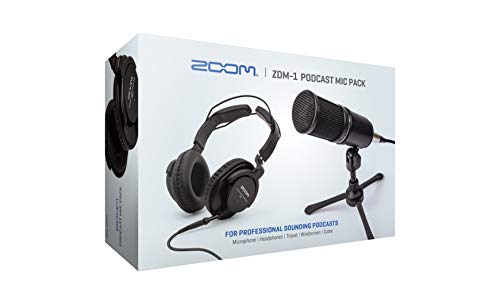
The Zoom ZDM-1 is a complete starter kit built around a dynamic microphone designed for voice. It includes a dynamic microphone, closed-back headphones, a tabletop tripod, a windscreen, and an XLR cable. This setup is best for podcasters who want plug-and-play reliability with strong vocal clarity and simple on-air monitoring. The included headphones provide isolation so you can monitor every word with confidence. Choose this if you want a ready-to-record package without sourcing separate components. A potential limitation is that it uses a dynamic mic rather than USB, which may require an interface for some recording software.
Zoom Zum-2 Podcast Mic Pack
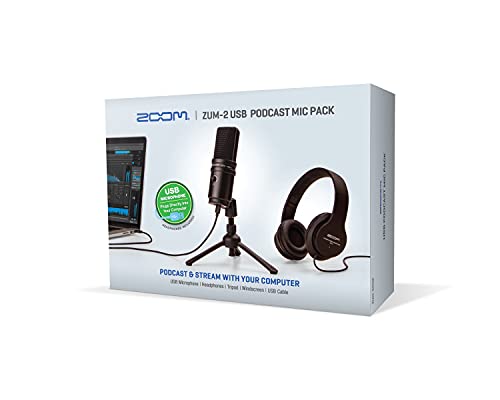
The Zum-2 kit bundles a USB condenser microphone, closed-back headphones, a tabletop tripod, a foam windscreen, and a USB-C cable. It’s designed for immediate podcasting, streaming, or voice-over work on a computer. The USB mic pattern helps reject room noise, making it a strong pick for home studios where space is limited. This option is better for creators who want minimal setup and easy portability. A caveat: USB mics may be less flexible than XLR setups for future studio expansion.
MAONO AU-A04H Microphone Set
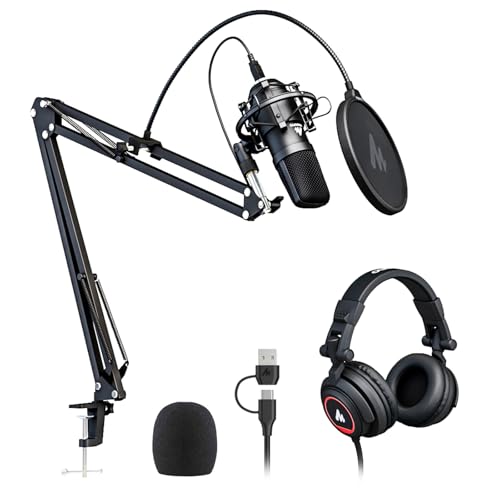
The MAONO AU-A04H offers a 192kHz/24-bit USB microphone with a studio-grade sound chipset and a 30Hz-16kHz frequency response, designed for clear speech and vocals. It’s a plug-and-play option suitable for podcasts, live streams, and YouTube videos on both Mac and Windows. The included headphones and stable USB connection aid in precise monitoring. Best for creators who want high-quality USB recording without extra gear, but note that some users may prefer XLR for larger studio setups.
Logitech Creators Blue Yeti

The Blue Yeti is a versatile USB condenser microphone with multiple pickup patterns, enabling tailored recording for podcasts, streaming, or music. Its user-friendly design makes it a popular choice for beginners and pros alike. Blue VO!CE effects can enhance vocal production in post-processing. This mic is ideal when you want flexibility in mic patterns and easy integration with most recording software. If your production requires varied mic setups or you collaborate with others, this option is compelling.
FIFINE K688 Podcast Microphone Kit

The FIFINE K688 kit combines a USB/XLR dynamic microphone, a boom arm, and a built-in mute function with a headphones jack. It provides flexible connectivity to suit USB simplicity or XLR-level studio setups. The included boom arm supports stable placement during long recording sessions. Best for creators who want an all-in-one package with adjustable hardware. A limitation: some USB features do not apply when using the XLR path, meaning you may lose built-in RGB lighting when connected via XLR.
Buying Guide: Key Purchase Considerations
- Connection type: USB mics are plug-and-play and convenient for beginners; XLR mics offer greater future-proofing and upgrade options with interfaces.
- Voice-oriented vs multi-purpose: Dynamic mics tend to handle voice with less room noise; condenser mics capture wider detail but may need treatment in untreated rooms.
- Headphones vs monitoring: Closed-back monitoring helps isolate sound and prevent bleed into the mic; look for comfortable fit for long recording sessions.
- Pickup patterns: Cardioid patterns focus on the speaker and reduce side noise; multiple patterns (as with the Blue Yeti) give flexibility for interviews or room recording.
- Accessories: Included stands, windscreens, and booms affect setup time and stability. A kit with a boom arm is beneficial for desk-mounted setups.
- Software compatibility: Ensure the mic is compatible with your recording software and operating system. USB mics rarely require drivers.
Common buyer questions
- Which mic is best for beginners? USB mics like Zum-2 or MAONO AU-A04H are typically easiest for beginners due to plug-and-play setup.
- Do I need headphones for recording? Yes. Closed-back headphones improve monitoring accuracy and prevent mic bleed.
- Is an XLR mic worth it for a home studio? XLR mics offer better sound control and upgrade paths with audio interfaces, suitable for growing setups.
- What about mic patterns? Cardioid is standard for solo podcasts; multiple patterns help when recording with guests or in varied environments.
- Can USB mics be used for professional streaming? Yes, with proper room treatment and software, USB mics can deliver broadcast-quality results.
- Are bundles better than buying separately? Bundles save setup time and may reduce total cost, but ensure the included accessories meet your needs.
Frequently Asked Questions
- What should I consider when choosing a podcast microphone? Consider connection type, pickup pattern, sound quality, and how much room treatment you have.
- Do podcast headphones need to be expensive? Not necessarily. Closed-back headphones with solid isolation and comfort are sufficient for monitoring.
- Is a boom arm essential? A boom arm improves mic position stability and reduces desk noise, especially during long sessions.
- Can I upgrade later? Yes. USB mics can be replaced with XLR mics connected to an interface without discarding your existing headphones.
- Are these kits good for YouTube or Twitch streaming? Yes. Most kits are suitable for podcasts, livestreams, and voice-overs with proper settings.
- What’s the best setup for solo recording? Start with a USB cardioid mic and closed-back headphones, then add an audio interface if you plan to expand to XLR.