
The best choice depends on what “professional” means for your cassette workflow: the Pyle dual-cassette deck is the most suitable here for stationary recording and tape-to-tape use, while the Panasonic and PROSCAN are simpler portable recorder options. The QFX and Bluetooth boombox add modern playback and recording features. These products vary considerably, so compare recording inputs, deck format, portability, and whether you need cassette recording or just playback before choosing.
| Product | Best For | Standout Listed Feature |
|---|---|---|
| Pyle Digital Dual Cassette Deck | Home tape duplication and recording | Dual decks and CrO2 selector |
| Panasonic RQ2102 | Basic portable recording | Cassette recorder format |
| PROSCAN Cassette Recorder | Simple recording with a microphone | Built-in microphone and headphone jack |
| QFX RETRO-39BT | Flexible portable playback and recording | USB-to-cassette recording and Bluetooth speaker |
| Cassette Player Boombox | Portable listening with modern connections | Record to USB and multiple power modes |
Pyle Digital Dual Cassette Deck

The Pyle is the strongest fit in this group for a fixed home setup centered on cassette recording and duplication. Its listed features include two cassette decks, RCA cables, switchable rack-mounting hardware, a CrO2 tape selector, and a three-digit counter. The product name also identifies 110V/220V operation.
Best for: People who want a dual-deck component for recording or working with cassette tapes at home. Two decks make this a more relevant option than a single portable recorder when tape-to-tape use is a priority.
Why it was selected: It has the most explicitly deck-oriented feature set in this selection, including a tape selector and counter. Limitation: It is described as a home deck with rack-mounting hardware, not a handheld recorder; choose another model if portability or an integrated microphone matters.
Panasonic RQ2102 Cassette Recorder

The Panasonic RQ2102 is a straightforward option for buyers seeking a dedicated cassette recorder rather than a feature-heavy stereo system. The supplied product information identifies it as a cassette recorder but does not list additional functions, connections, or recording controls.
Best for: Buyers who want a basic recorder and prefer a simple product description over a long list of bundled features. It may be a better fit than a boombox when the main requirement is cassette recording in a compact recorder format.
Why it was selected: Its stated recorder designation directly matches the core need for a cassette recording device. Limitation: The provided specifications do not confirm a built-in microphone, headphone jack, external input, or digital conversion. Verify those requirements before choosing it for interviews, music transfer, or studio tasks.
PROSCAN Cassette Player and Recorder

This PROSCAN combines cassette playback and recording with a microphone, headphone jack, and auxiliary input. Those listed features make it more versatile than a recorder whose supplied description only confirms cassette recording. Its black finish and portable-player style also suit personal or casual use.
Best for: Users who want a simple recorder with an onboard microphone and a headphone connection. The microphone can be useful for basic voice recording, while the auxiliary input offers another stated connection option.
Why it was selected: It provides useful recording and listening features in one product without requiring a separate microphone according to its name. Limitation: The listed information does not identify professional controls, a dual-deck mechanism, or digital transfer features. It is better understood as a basic portable recorder than a full-featured studio deck.
QFX RETRO-39BT Portable Cassette Recorder
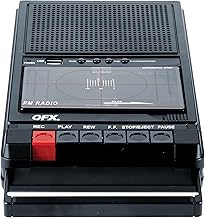
The QFX RETRO-39BT adds several modern functions to a portable cassette player and recorder. Its listed features include USB-to-cassette recording, a built-in microphone, a 3.5-inch Bluetooth speaker, FM radio, MP3 playback, line-in and line-out connections, and AC or battery power.
Best for: Buyers who want one portable unit for cassette recording, radio, MP3 playback, and Bluetooth speaker use. It is a more flexible choice than a basic recorder when listening options and multiple power methods matter.
Why it was selected: The combination of USB-to-cassette recording and line connections gives it more stated source and playback options than the simpler models here. Limitation: The listed feature is recording from USB to cassette; it does not establish cassette-to-USB digitization. Choose a dedicated transfer solution if converting tapes to digital files is the goal.
Bluetooth Cassette Player Boombox

This portable boombox combines cassette playback with Bluetooth, AM/FM/SW radio, and recording to USB. Its product name also lists 24W stereo sound and four power modes. It is oriented toward flexible listening and portability rather than the component-style tape controls associated with a dedicated dual-deck recorder.
Best for: People who want a portable cassette boombox with radio, Bluetooth, and USB recording in the same device. It is a better match for casual listening and mixed-format use than a buyer focused only on cassette-deck recording.
Why it was selected: The stated USB recording and multiple power modes make it a versatile option for music playback and recording needs. Limitation: The product name does not specify tape-to-tape duplication, a CrO2 selector, or professional deck controls. Confirm the exact recording direction and intended use before purchase.
Buying Guide: How to Choose a Cassette Tape Recorder
Do you need a recorder, a deck, or a player?
Start by identifying whether you need to record audio onto cassette, play existing tapes, copy tapes, or do all three. A cassette player may not include recording, so look for “recorder” in the product description and verify the inputs needed for your source. A component-style deck is generally the more relevant category for a stationary home setup, while a portable recorder or boombox suits mobility and built-in listening features.
For the products above, the Pyle is the clearest match for a dual-deck home setup. The Panasonic is identified as a cassette recorder, while the PROSCAN and QFX list a built-in microphone. The boombox is described as a cassette player with USB recording, so check carefully whether its recording function matches your desired workflow.
What input do you need for recording?
Choose the recording input based on what you plan to record. A built-in microphone can suit basic voice capture without a separate mic. An auxiliary or line input is relevant when connecting an external audio source, but check the exact connection type and how the input is used. USB-to-cassette recording can be useful for transferring music from a USB source onto tape; it is different from converting cassette audio into digital files.
- Voice recording: Consider models whose descriptions explicitly list a built-in microphone, such as the PROSCAN or QFX.
- External audio source: Look for a stated auxiliary or line input, as listed for the PROSCAN and QFX.
- USB source to tape: The QFX name explicitly lists USB-to-cassette recording.
- Tape duplication: A dual-cassette deck, such as the Pyle, is the most relevant listed configuration here.
Is a portable recorder or home deck better?
A portable model is easier to move and may combine recording with a speaker, radio, or battery operation. The QFX lists AC and battery power, while the Bluetooth boombox lists four power modes. These features can be useful away from a stationary setup. A home deck is a better fit when you want a dedicated component and features such as two tape bays, a counter, or rack-mounting hardware.
Portability does not automatically mean better recording control. If recording quality, source routing, or regular duplication is important, compare the inputs and deck functions rather than choosing by size or extra playback features. The supplied details for these products do not establish recording specifications such as frequency response or noise reduction, so do not assume professional-grade performance from a product label alone.
Which deck features matter for tape work?
A tape counter helps track a location within a cassette, and the Pyle’s listed three-digit counter may help with repeatable navigation. Its CrO2 selector is a stated tape-type feature. If you use particular tape formulations, confirm that the deck’s selector and instructions support your tapes. Dual decks matter when working with two cassettes, but the product information should be checked for the specific copy or recording functions you need.
Also consider whether the device has the connections you need. RCA cables are listed with the Pyle, while the QFX lists line-in and line-out. The PROSCAN lists a headphone jack and auxiliary input. These descriptions identify useful connection options, but they do not provide every detail about input levels or connection behavior.
What should buyers verify before ordering?
- Confirm whether the device records onto cassette, plays cassette, or performs both functions.
- Check that the recording input matches your source: microphone, line input, or USB.
- Verify whether you need cassette-to-cassette duplication or digital transfer.
- Review the power method and portability requirements for your intended location.
- Check the manufacturer’s full specifications for recording controls and supported tape types.
For professional or archival work, the product names alone are not enough to establish suitability. Compare detailed specifications and confirm the exact signal path before purchase. None of the supplied descriptions states performance measurements, so evaluate the device against your recording requirements rather than assuming all cassette recorders provide the same level of control.
Frequently Asked Questions
What is the best cassette recorder in this selection for home use?
The Pyle dual-cassette deck is the strongest match for a stationary home setup because its listed features include two decks, RCA cables, a tape selector, and a counter. Confirm its detailed recording functions before buying.
Which option includes a built-in microphone?
The PROSCAN cassette player and recorder and the QFX RETRO-39BT both list a built-in microphone. The QFX also lists USB-to-cassette recording and line connections.
Can the QFX convert cassette tapes to digital files?
The supplied product name lists USB-to-cassette recording, which describes recording from USB onto cassette. It does not confirm cassette-to-USB digitization.
Which product is designed for tape-to-tape work?
The Pyle is the only product in this list identified as a dual cassette deck. Its two-deck design makes it the most relevant option to investigate for tape-to-tape tasks.
Is a Bluetooth cassette boombox a professional recorder?
Not necessarily. The listed boombox features focus on portability, radio, Bluetooth, and USB recording. Buyers needing deck controls or cassette duplication should verify those functions explicitly.
What should I check for voice recording?
Look for a built-in microphone or a clearly specified microphone input. The PROSCAN and QFX list built-in microphones, but the supplied information does not detail microphone controls or recording performance.