
The best professional headphones for mixing depend on your room, monitoring equipment, and whether you need sound isolation or an open stereo presentation. The Sony MDR-7506 is a practical closed-back choice for everyday studio work, while the Audio-Technica ATH-M50x adds a detachable cable. The Sennheiser HD 480 PRO emphasizes closed-back noise control and comfort. For open-back listening, consider the beyerdynamic DT 990 Pro if you have an amplifier or suitable interface, or the DT 1990 Pro MKII if you want a 30-ohm reference option.
| Headphone | Best For | Design | Key Consideration |
|---|---|---|---|
| Sony MDR-7506 | Studio monitoring and isolation | Closed-back | Non-detachable cord |
| Audio-Technica ATH-M50x | Versatile studio listening | Studio monitor | 45 mm drivers; detachable cable |
| Sennheiser HD 480 PRO | Closed-back detail and comfort | Closed-back | Passive shielding design |
| beyerdynamic DT 990 Pro | Open-back mixing and mastering | Open-back | 250-ohm version needs an amp or interface |
| beyerdynamic DT 1990 Pro MKII | Reference listening with flexible drive needs | Open-back | 30-ohm impedance |
Sony MDR-7506

The Sony MDR-7506 is a closed-ear professional headphone with 40 mm drivers and a listed frequency range of 10 Hz to 20 kHz. Its closed design helps reduce external noise, which can make it useful for monitoring in a shared room or listening while recording. Neodymium magnets are among its listed driver features.
Best for: Buyers who want a straightforward, closed-back headphone for studio or home-audio use. Choose this model if noise reduction and a long included cable matter more than a detachable connection. Its 9.8-foot cord ends in a gold-plated plug, and a 1/4-inch adapter is included.
Limitation: The cord is not detachable. That is worth considering if you prefer replaceable cables or need a shorter lead for a compact workspace. The listed frequency range alone does not establish how a headphone will translate to every speaker system, so use familiar reference tracks and cross-check important mix decisions.
Audio-Technica ATH-M50x

The Audio-Technica ATH-M50x features proprietary 45 mm large-aperture drivers, rare-earth magnets, and copper-clad aluminum wire voice coils. Its listed strengths include clarity across an extended frequency range and deep, accurate bass response. The product information also notes recognition from audio engineers and pro-audio reviewers.
Best for: Studio users seeking a versatile monitor headphone with a detachable cable. The detachable design can be a practical advantage for storage and cable replacement compared with the fixed cord on the MDR-7506. Choose the ATH-M50x if you want a stated focus on clarity and bass response in one studio-oriented model.
Limitation: The provided product details do not specify impedance, included cable lengths, or a frequency-range figure. Confirm the exact package details if those factors matter to your setup. As with any headphone, bass heard in the earcups should be checked against other playback systems before finalizing low-frequency balance.
Sennheiser HD 480 PRO
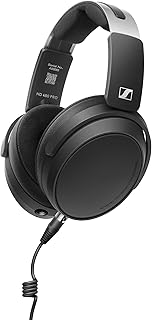
The Sennheiser HD 480 PRO is a closed-back studio headphone described as using advanced neodymium drivers and an ultralight voice coil for full-spectrum clarity. Its multi-stage passive shielding and Vibration Attenuation System are intended to reduce leakage and distortion. The design also features angled earcups and grooved pads intended to support a comfortable fit, including for people who wear glasses.
Best for: Mixers who need a closed-back option and value noise control, detail, and fit considerations. It is a suitable choice to compare with the MDR-7506 and ATH-M50x when working near other people or recording in the same room as a microphone. The listed passive shielding is a key reason to consider it for those situations.
Limitation: The provided details do not list impedance, cable type, or a numerical frequency response. Buyers who need those specifications to match an interface or confirm a particular connection should check the current product information before choosing. Closed-back headphones also provide a different listening presentation from open-back reference models.
beyerdynamic DT 990 Pro

The beyerdynamic DT 990 Pro listed here is the 250-ohm, open-back version. Its open design is described as providing a wide, natural stereo image that can help a mixer hear placement and depth. The product information positions it as a mixing and mastering reference, with velour ear pads and a 3-meter coiled cable.
Best for: Mixers working in a quiet space who want an open-back presentation for evaluating stereo placement and spatial depth. Choose this model if your audio interface or headphone amplifier can drive its 250-ohm impedance. It is less suited to situations where keeping sound from reaching people nearby is important.
Limitation: The listed version needs an audio interface or headphone amplifier for full volume and is not described as ideal for direct use from a phone. Open-back headphones also allow sound to escape and outside sound to enter. Avoid this model if you need strong isolation during recording or want to monitor in a noisy environment.
beyerdynamic DT 1990 Pro MKII

The beyerdynamic DT 1990 Pro MKII is an open-back model with a listed 30-ohm impedance and TESLA.45 driver. Its product description identifies it for reference-grade mixing and mastering detail. The listed package features include a detachable cable and carrying case, and the product is described as made in Germany.
Best for: Buyers seeking an open-back reference headphone with a lower listed impedance than the DT 990 Pro 250-ohm version. Its 30-ohm specification and stated no-amp-required design make it the more suitable of these two beyerdynamic options when a high-impedance model would be inconvenient. Choose it if a detachable cable and included case also fit your priorities.
Limitation: This is still an open-back design, so it is not the right choice when you need to prevent sound leakage or block room noise. The product information supplied does not include a numerical frequency range or further fit details. Confirm those specifications if they are central to your decision.
Buying Guide: How to Choose Mixing Headphones
Should you choose closed-back or open-back headphones?
Closed-back headphones are usually the more practical choice when you need to limit sound leakage or hear playback in a room with other people. The Sony MDR-7506, Sennheiser HD 480 PRO, and Audio-Technica ATH-M50x are the closed or isolation-focused options in this selection. They can be useful for monitoring while recording, though the product details do not establish that any model will fully block every sound.
Open-back headphones allow air and sound to pass through the earcups. The DT 990 Pro and DT 1990 Pro MKII are described as open-back options, with the DT 990 Pro specifically emphasizing a wide stereo image. They are better suited to quieter listening environments where leakage is acceptable. Consider keeping a closed-back pair available if you also record near a microphone.
Does headphone impedance matter for a studio interface?
Impedance helps determine how a headphone works with its audio source, but the available output power of the source matters too. The DT 990 Pro in this list is the 250-ohm version, and its product details say it needs an audio interface or headphone amplifier for full volume. The DT 1990 Pro MKII is listed at 30 ohms and described as not requiring an amp. The other product details do not provide impedance figures, so check their current specifications if matching equipment is a priority.
What cable features should you compare?
A fixed cable is straightforward but cannot be detached from the headphone. The MDR-7506 has a non-detachable 9.8-foot cord, while the ATH-M50x and DT 1990 Pro MKII are listed with detachable cables. A detachable lead can make replacement or storage more convenient, but check the included cable details and connector requirements before purchase. The DT 990 Pro listing specifies a 3-meter coiled cable.
How important is comfort for long mixing sessions?
Comfort affects how consistently you can work, especially when listening for extended periods. The HD 480 PRO product information specifically highlights angled earcups, pressure-point considerations, and grooved pads intended to accommodate glasses. The DT 990 Pro listing mentions velour ear pads. Because fit varies by listener, compare listed design details with your own needs and consider whether you wear glasses or prefer a particular ear-pad material.
Can headphones replace studio monitors?
Headphones are useful for detailed listening, quiet work, and checking edits, but they do not reproduce sound in the same way as speakers in a room. Room acoustics, stereo presentation, and headphone fit can all affect what you hear. For more dependable mix decisions, compare the headphone mix with familiar reference tracks and, when possible, check it on speakers and everyday playback devices. Avoid treating one headphone’s bass or stereo image as the only reference.
Which features matter most for mixing?
- Sound isolation: Favor closed-back designs if reducing leakage or room noise is important.
- Stereo presentation: Consider an open-back option if you work in a quiet room and want to assess spatial placement.
- Source compatibility: Check impedance and the output capability of your interface or amplifier.
- Cable design: Decide whether a fixed or detachable cable better suits your workflow.
- Comfort: Review earcup and pad details, particularly if you wear glasses or mix for long periods.
- Mix translation: Use more than one listening reference rather than relying on a single headphone response.
Frequently Asked Questions
Are closed-back headphones good for mixing?
Yes. Closed-back headphones can be useful for mixing and monitoring, especially when isolation matters or sound leakage could affect nearby recording. Cross-check the mix on other systems because headphone listening differs from speaker playback.
Are open-back headphones better for mixing?
Not for every situation. Open-back models may suit quiet-room listening and stereo-placement checks, but they leak sound and provide less isolation than a closed-back design. The best type depends on your environment and workflow.
Can I use the 250-ohm DT 990 Pro with a phone?
The supplied product information says the 250-ohm DT 990 Pro is not ideal straight from a phone and needs an audio interface or headphone amplifier for full volume. Check your source equipment before choosing it.
Which headphones in this list have detachable cables?
The Audio-Technica ATH-M50x and beyerdynamic DT 1990 Pro MKII are listed with detachable cables. The Sony MDR-7506 has a non-detachable cord. Cable details for the other listed model are not specified here.
Do mixing headphones need a flat frequency response?
A balanced, consistent presentation can help with mix decisions, but the supplied product details do not provide comparable response measurements for all five models. Use familiar tracks and check your mix on multiple playback systems instead of relying on a specification or headphone alone.