
Best Quarter Inch to XLR Female Cables for Clear, Balanced Audio
When choosing a quarter inch to XLR female cable, the goal is clear, noise-free signal transmission between mixers, microphones, and powered speakers. This guide highlights five reliable options suited for different setups: live sound, studio recording, and all-around stage use. Best for compact rigs, mid-size venues, and professional environments, these cables prioritize shielding, durable connectors, and stable connections. Below, each product is analyzed for its ideal user, strengths, and a practical limitation to consider.
HUALEU 2 Pack 1/4 TRS To XLR Female — Best Balanced Microphone To Mixer Cable

The HUALEU 2-pack offers a balanced 1/4 TRS male to XLR female design with 4N OFC conductors and dual shielding. Gold-plated 1/4 jacks and nickel-plated XLR connectors resist corrosion while delivering clean, low-noise signal. This setup is ideal for connecting a microphone’s XLR output to a mixer’s 1/4 TRS input, or converting a mixer’s XLR output to a 1/4 TRS input to feed a powered speaker. Best for portable studios and small venues where simple, reliable connectivity is key.
- Best for: Musicians and small venues needing a compact, balanced connection.
- Why selected: Strong shielding and durable connectors reduce hum and interference.
- Caution: Ensure the 1/4 TRS input is configured for balanced operation to avoid unbalanced results.
Cable Matters 6.35mm To XLR Cable, 6ft
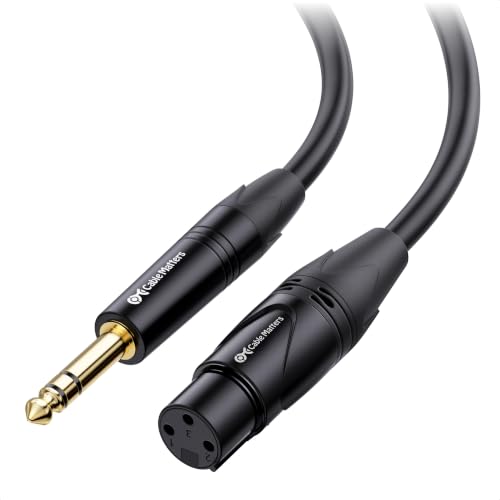
This balanced female XLR to 1/4 cable uses OFC copper with copper shielding and a 6-foot length for versatile stage or studio setups. It’s well-suited for connecting a shotgun or condenser mic with a male XLR to a balanced 1/4 inch TRS input on audio interfaces or mixers. Best for mid-length runs where pristine signal and strong EMI protection are essential.
- Best for: Medium setups needing dependable shielding and clear signal.
- Why selected: Copper shielding minimizes hum and noise across typical stage distances.
- Caution: Length may introduce minor signal loss in very long runs without active repeaters.
Tisino Female XLR To 1/4″ TS Mono Jack Cable, 6.6 Ft

The Tisino XLR to 1/4″ TS unbalanced cable uses a high-strength shell, gold-plated connectors, and 20 AWG OFC copper with shielding. It’s designed for connecting a dynamic mic to a mixing console or amplifier where a mono, unbalanced signal is acceptable. Best for simple, budget-friendly setups or live sound environments where unbalanced is sufficient and durability matters.
- Best for: Basic stage rigs or practice spaces with unbalanced needs.
- Why selected: Solid shielding and corrosion-resistant connectors at a budget-friendly price.
- Caution: Not ideal for long runs or highly noise-sensitive environments.
tisino XLR Female To 1/4 Inch TRS Cable — Balanced Or Unbalanced Flexibility

This balanced XLR to 1/4″ TRS patch cable is commonly used as speaker leads for active speakers and as signal cables for stage and studio work. It features a 20 AWG OFC core, multiple shielding layers, and gold-plated connections for low noise and stable transmission. Best for connecting a mixer’s XLR output to a speaker with a balanced TRS input.
- Best for: Active speaker setups and studio-to-speaker links.
- Why selected: Strong shielding and gold-plated contacts minimize interference.
- Caution: Ensure compatibility with your speaker’s input configuration (balanced TRS) before purchase.
BEZOKABEL XLR To 1/4 Inch TRS Cable

The BEZOKABEL XLR female to 1/4 TRS cable uses OFC conductors, aluminum alloy housing, and gold-plated connectors for hi-fi sound quality and robust interference rejection. It includes a self-locking design for secure connections and a magnetic ring to help reduce interference. Best for fixed installations where a stable, locked connection is desired.
- Best for: Fixed setups requiring reliable locking and minimal movement noise.
- Why selected: Self-locking connectors and anti-interference ring improve durability in dynamic environments.
- Caution: Self-locking is most beneficial when frequent plugging/unplugging occurs; otherwise standard connectors may suffice.
Smithok 2 Pack XLR To 1/4″ Cable — Compact, Flexible, Durable

Smithok offers two XLR female to 1/4″ TRS cables with 3-pin XLR connectors and 6.35mm TRS jacks. The metal construction provides corrosion resistance and a clear signal path. Best for compact live rigs and portable setups where quick, reliable connections are needed.
- Best for: Portable PA systems and small studio desks.
- Why selected: Durable metal housing reduces wear during frequent use.
- Caution: Shorter length options may limit placement flexibility in larger rooms.
Buying Guide
Key considerations when choosing quarter inch to XLR female cables:
- Signal type: Balanced versus unbalanced. Choose balanced cables (TRS) for microphones and line-level devices requiring noise rejection.
- Connector quality: Gold plating and corrosion resistance extend life and reduce contact noise.
- Shielding: Multiple shielding layers (foil plus braided) help minimize hum from lighting and power lines.
- Length and flexibility: Longer cables introduce more potential for signal loss and physical wear; pick a length that fits your space without excess slack.
- Application fit: Match cable type to equipment input (XLR to TRS vs XLR to TS) and intended use (studio vs live sound).
- Durability: Self-locking or locking connectors reduce accidental disconnections in dynamic environments.
FAQ
- Q: Are all quarter inch to XLR cables balanced? A: Not all; some are unbalanced (TS). Check the jack type (TRS is balanced; TS is unbalanced).
- Q: Can I use XLR to 1/4 inch cables for feedback-prone environments? A: They can pick up interference if shielding is weak; prioritize high-shielding options.
- Q: What length is best for a small stage? A: 3–6 feet often covers most small-venue setups without excess slack.
- Q: Do gold-plated connectors matter for sound quality? A: They improve corrosion resistance and contact consistency, which helps long-term reliability.
- Q: Should I prefer cables with self-locking connectors? A: Yes, for applications with movement or vibrations to avoid accidental unplugging.
- Q: Is shielding more important than conductor quality? A: Both matter; good shielding reduces external noise, while high-conductivity cores preserve signal integrity.
Summary of selected products
| Product | Best For | Key Benefit | Limit |
|---|---|---|---|
| HUALEU 2 Pack 1/4 TRS To XLR Female | Microphone to mixer or powered speaker | Strong shielding, dual connectors | Careful with input configuration |
| Cable Matters 6.35mm To XLR Cable | Mid-length runs | OF C conductors, good EMI protection | Possible signal loss over long runs |
| Tisino XLR To 1/4 Inch TS | Unbalanced setups | Durable, budget-friendly | Unbalanced limits in noisy environments |
| tisino XLR Female To 1/4 Inch TRS | Speaker links | Shielded, reliable | Check compatibility with balanced input |
| BEZOKABEL XLR To 1/4 Inch TRS | Fixed installations | Self-locking, anti-interference features | Locking design adds slight added complexity |