
The best realistic amplified dynamic microphone depends on how you connect it: the Shure SM58 is best for dependable vocal performance, while the FDUCE SL40+ suits USB or XLR podcast and streaming setups. The Pyle offers a passive XLR option with a cable included, and the FIFINE K6 and Yiowner-style wired karaoke mic are geared toward compatible karaoke or live-audio equipment. A dynamic microphone does not necessarily amplify itself; most need a compatible amplifier, mixer, audio interface, or USB connection.
| Microphone | Best For | Connection Or Notable Feature |
|---|---|---|
| Shure SM58 | Live vocals and general vocal use | XLR dynamic microphone |
| FDUCE SL40+ | Podcasting, streaming, and gaming | USB and XLR; kit includes boom arm |
| Pyle Dynamic Cardioid | Stage or studio use with XLR gear | XLR cable included; passive design |
| FIFINE K6 | Karaoke and speech with 1/4-inch inputs | 6.35 mm plug; no power required |
| Wired Karaoke Handheld | Parties and compatible audio equipment | 2.5-meter cable |
Shure SM58 Pro XLR Dynamic Vocal Microphone

Best for: Singers and speakers who want an XLR dynamic microphone designed for clear vocal reproduction. The SM58’s finely tuned frequency response includes a subtle midrange lift, which the listed features describe as helping vocals sound warm and articulate.
Its cardioid pickup pattern focuses on sound in front of the microphone while helping minimize background noise and feedback. The product information identifies it for live performance, recording, podcasting, and broadcast use, making it a versatile choice for buyers who need a vocal-focused mic across different settings.
Why it was selected: It combines a specified vocal sound profile with a cardioid pattern and broad stated use cases. Choose this if you want a conventional XLR vocal microphone and have compatible audio equipment to connect it.
Limitation: The listed details do not include a cable or a USB connection. Plan for a compatible XLR signal chain rather than expecting the microphone to connect directly to every computer or speaker.
FDUCE SL40+ USB/XLR Podcast Microphone Kit

Best for: Podcasters, streamers, and gamers who want a dynamic microphone with a choice of USB or XLR output. The kit is described as including a boom arm, and the microphone features a headphone jack, mute function, and gain control.
The cardioid pickup pattern and listed voice-isolation processing are intended to reduce unwanted environmental sound. Its dual connection options make it better suited than a single-connector model for buyers who may use a computer directly or connect through professional audio equipment.
Why it was selected: The combination of USB/XLR output, control features, and included boom arm addresses common desktop recording needs. The product listing also specifies support up to 96 kHz/24-bit and digital audio processing, including audio equalization and mute functions.
Limitation: The listing says the microphone does not add a built-in preamplifier to provide extra gain. Check your setup’s input requirements and use the appropriate connection; the claimed audio format alone does not guarantee a particular recording result.
Pyle Dynamic Cardioid Microphone With XLR Cable
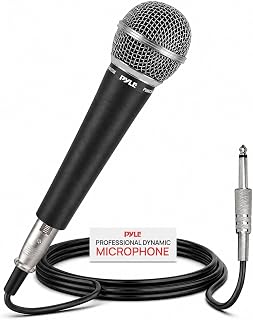
Best for: Buyers seeking a passive, wired microphone for stage or studio use who need an XLR cable in the package. The listed specifications include a dynamic mic element, unidirectional pickup, 50 Hz–15 kHz frequency range, 600-ohm impedance, and -54 dB sensitivity.
The cardioid pattern is described as isolating the source and minimizing background noise and feedback. Its zinc-alloy body and steel mesh windscreen are specified as part of its rugged construction. The package includes a 15-foot XLR cable, and the microphone requires no batteries or other power to operate.
Why it was selected: This is a straightforward choice for a buyer who already has an XLR-compatible mixer, amplifier, or other suitable input and wants a cable included. The listed features cover both basic technical specifications and physical construction.
Limitation: It is passive, so it does not amplify its own signal. You need a compatible device with a microphone input; the included cable does not make it a USB microphone.
FIFINE K6 Dynamic Karaoke Microphone

Best for: Karaoke, presentations, and live speech when the audio system has a 6.35 mm (1/4-inch) microphone input. The product features a cardioid pickup pattern intended to provide greater gain while minimizing feedback, and a stated frequency range of 50 Hz to 18 kHz.
FIFINE describes the K6 as a no-power dynamic microphone suited to vocals, spoken word, and instruments such as acoustic guitar. Its stated uses include home parties, performances, conferences, weddings, churches, interviews, and outdoor events.
Why it was selected: It offers clear connection guidance and a defined use case for buyers with 1/4-inch equipment. Choose this if you need a corded microphone for a compatible karaoke system, mixer, or other audio setup.
Limitation: The listing specifically says the microphone is not available for a 3.5 mm connection, even with an adapter. Confirm that the receiving device has the required 1/4-inch input before buying.
Wired Handheld Microphone For Karaoke

Best for: Karaoke and event buyers who need a wired handheld microphone for compatible amplifiers, mixers, DVD equipment, or outdoor audio systems. The supplied cable is 2.5 meters long, and the listing describes a dynamic vocal microphone intended to reduce background noise.
The cable is described as oxygen-free copper with shielding to reduce hum and noise. The product is presented for parties, company conferences, KTV karaoke, outdoor activities, and tour buses. Those stated applications make it a practical option when a simple wired connection is more important than USB recording features.
Why it was selected: It is aimed at common karaoke and event scenarios and identifies several categories of equipment it can be used with. Choose this if your system accepts its plug and you want a cable included.
Limitation: The supplied details do not specify the connector type, frequency range, or impedance. Verify the connector against your equipment before ordering instead of assuming it fits a particular input.
Buying Guide: How To Choose A Dynamic Microphone
What does “amplified” mean for a dynamic microphone?
A dynamic microphone converts sound into an electrical audio signal, but that does not mean it contains a speaker or boosts its own output for every setup. A passive model, such as the Pyle or FIFINE described here, needs a suitable microphone input and a device that can provide the necessary gain, such as a mixer, amplifier, or audio interface. A USB microphone connects to a compatible computer through its USB interface. Confirm what your system accepts before choosing a mic.
Which connection should you choose?
- USB: The FDUCE SL40+ offers USB output for a computer-oriented setup, alongside XLR output.
- XLR: The Shure SM58 and Pyle use an XLR-oriented approach. Check for a compatible input and any cable or equipment you still need.
- 1/4-inch: The FIFINE K6 has a 6.35 mm plug. It is not intended for a 3.5 mm connection, according to its listing.
- Unspecified connector: The wired karaoke mic lists compatible equipment categories but not its plug type in the supplied details. Confirm it with the seller or product information.
Which microphone is better for vocals or karaoke?
For vocal performance with XLR equipment, compare the Shure SM58 and Pyle. The Shure listing emphasizes its tuned vocal response and cardioid pattern; the Pyle provides listed technical specifications and includes an XLR cable. For karaoke equipment with a 1/4-inch input, the FIFINE K6 is the more explicitly specified match. The other wired karaoke mic may suit an event setup, but its connector should be verified first.
How important is the pickup pattern?
A cardioid or unidirectional pattern is intended to favor sound coming from the front of the microphone. The listed products describe this directional pickup as helping reduce background noise or feedback. Room acoustics, microphone placement, speaker position, and gain settings also affect sound. A directional pattern should not be treated as a guarantee that all surrounding noise will disappear.
What should you check before purchasing?
- Confirm the plug and input match, especially for 1/4-inch, XLR, or USB connections.
- Check whether the package includes the cable and accessories you need. The Pyle includes an XLR cable, and the FDUCE kit lists a boom arm.
- Decide whether you need a microphone for live vocals, karaoke, computer recording, or multiple uses.
- For a passive dynamic mic, check that your audio equipment provides a suitable microphone input and gain.
- Review the listed frequency range and other specifications only where available; not every product description supplies the same technical detail.
Frequently Asked Questions
Does a dynamic microphone need an amplifier?
A passive dynamic microphone usually needs a compatible microphone input with sufficient gain. That input may be on a mixer, amplifier, audio interface, or other audio device. Check the receiving equipment’s requirements.
Can I plug an XLR microphone directly into a computer?
Not necessarily. An XLR microphone generally needs a compatible audio interface or another device with an XLR microphone input. The FDUCE SL40+ also lists USB output, while the other products here do not list USB connectivity.
Which option is designed for a 1/4-inch input?
The FIFINE K6 is specified with a 6.35 mm (1/4-inch) plug. Its listing warns that it is not available for a 3.5 mm connection, even when using an adapter.
Which microphone includes an XLR cable?
The Pyle Dynamic Cardioid Microphone listing says an XLR cable is included and identifies it as 15 feet long. Check the other product packages separately if you need a cable.
Can these microphones eliminate background noise?
No microphone can be assumed to eliminate all background noise. Several products describe cardioid or unidirectional pickup as helping reduce surrounding sound, but room conditions, placement, and settings also affect the result.