
Best Realistic Wireless Microphone System for Clear Live Sound
Finding a reliable wireless microphone system for live performances, churches, classrooms, or events starts with identifying models that deliver steady signals, clear vocal reproduction, and simple setup. This guide highlights five strong options that balance range, interference management, and battery life. The best picks vary from compact two-channel kits to multi-microphone systems suitable for larger venues. Use the summary table below to compare key traits at a glance.
| Product | Best For | Range (approx.) | Channels | |
|---|---|---|---|---|
| Phenyx Pro Dual UHF Auto Scan PTU-71-2H | Dual-speaker setups, venues with potential interference | 290–328 ft | 2 | Auto Scan, 2×100 frequencies per channel |
| Aveek Wireless System 4 Pack | Multiple performers, weddings, larger gatherings | 262 ft | 4 | Long range, 40-hour battery per mic |
| JBL Wireless Two Microphone System | Simple setup, quick amplification | Not specified | 2 | Original Pro Sound, rechargeable receiver |
| ELIRIRA Dual Handheld Wireless Rechargeable RGB Lights | Entertaining performances, parties, karaoke | 200 ft | 2 | RGB lighting on mics, auto pairing |
| Phenyx Pro PTU-5000-4H | Fixed-frequency, controlled venues | up to 260 ft | 4 | Fixed frequencies, LCD display |
Phenyx Pro Dual UHF Auto Scan PTU-71-2H

Best for: small to mid-size venues needing robust interference management. Why selected: Auto Scan rapidly identifies the least-interference frequencies for both channels, enabling up to 16 transmitters when needed. A PLL frequency synthesized design reduces dropouts, and long-range line-of-sight operation supports larger rooms. The replaceable mic head offers extended lifespan. Caution: Only as reliable as the available frequency spectrum in your region; ensure interference checks before setup.
Aveek Wireless System 4 Pack

Best for: events with multiple speakers or performers who need reliable, long-range wireless with stable connections. Why selected: 262-foot range supports large venues, and each handheld mic includes a rechargeable battery with up to 40 hours of use. The 1-to-1 chip design helps maintain clean vocal reproduction. Caution: Battery life is excellent, but charging time should be planned around multi-hour events.
JBL Wireless Two Microphone System
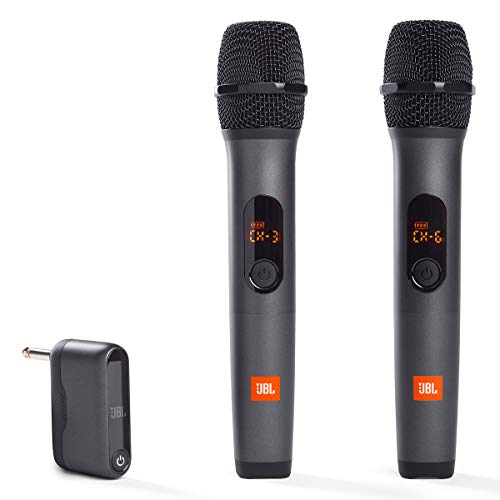
Best for: quick, “plug-and-go” solutions where setup time is critical. Why selected: JBL offers crystal-clear voice capture with Original Pro Sound, a rechargeable dual-channel receiver for simple operation, and fast setup. Caution: Range and performance can depend on room acoustics and wireless environment; avoid crowded RF spaces if possible.
ELIRIRA Dual Handheld RGB Lights Mic System

Best for: entertaining performances and parties where visual flair matters. Why selected: Built-in RGB lighting adds a party atmosphere, with on-mic volume control and DSP-powered auto pairing for quick setup. Caution: RGB functions may impact battery life; check operating time in bright lighting scenarios.
Phenyx Pro PTU-5000-4H

Best for: venues requiring a fixed-frequency multi-mic setup with stable channels. Why selected: Four fixed frequencies reduce the chance of interference and provide a dependable rack-mount solution with LCD display and individual mic controls. Caution: Less flexible than tunable UHF models if you need to add more mics in a changing environment.
Buying Guide: Key Purchase Considerations
- Range and environment: Choose models with the range you need, considering line-of-sight limitations and possible obstructions in your venue.
- Frequency strategy: Tunable vs fixed frequencies affect flexibility. Tunable systems help avoid interference in dynamic settings; fixed-frequency systems are reliable for stationary setups.
- Number of channels: Match the number of mics to your typical event size. Systems with more channels cater to larger groups without channel hopping.
- Power and battery life: Long battery life minimizes interruptions during events. Check whether units require frequent recharging or offer quick-charge options.
- Sound quality features: Look for cardioid capsules, low-latency transmission, and noise rejection to ensure vocal clarity.
- Setup and compatibility: USB-C or standard power options, compatibility with common PA systems, and quick pairing features save time.
- Build and durability: Metal receivers and rugged mics are preferable for frequent travel or heavy use.
Frequently Asked Questions
- What is the typical range for wireless microphone systems?
Ranges vary by model and environment, from about 200 ft to over 300 ft in open space with line-of-sight.
- Should I choose tunable or fixed-frequency wireless mics?
Tunable mics are better for variable interference environments; fixed-frequency sets are reliable for repeat events in stable venues.
- How many channels should I look for?
Choose based on the number of speakers or performers you expect to run simultaneously. If you have occasional multiple presenters, consider 4-channel or more.
- Are RGB light mics just for show?
RGB features add visual appeal for performances and events but may affect battery life; plan usage accordingly.
- Is setup time a factor?
Look for systems with auto-pairing and quick synchronization to minimize setup time between acts or presentations.