
The best way to record tapes to MP3 is to use a cassette-to-digital converter that matches your preferred workflow: a USB cassette player for computer recording, a standalone unit that saves to an SD card or USB drive, or an audio capture device connected to a separate cassette player. The DigitNow is suited to computer-based transfers, while ClearClick offers recording directly to a USB flash drive. SEMIER and KLIM K7 add portable playback and SD-card features; the USB capture card is better for people who already have an audio source with a compatible output.
| Product | Best for | Recording approach |
|---|---|---|
| DigitNow Cassette Tape to MP3 Converter | Transferring tapes through a computer | USB connection |
| SEMIER Small Cassette Tape Player | Portable recording to SD card | SD card, USB-C, or computer |
| KLIM K7 Cassette Tape Player | Portable cassette playback and conversion | SD card |
| ClearClick Cassette Tape to USB | Recording without a computer | USB flash drive |
| USB 2.0 Audio Capture Card | Connecting an existing audio source to a computer | RCA or 3.5 mm input to computer |
DigitNow Cassette Tape to MP3 Converter

Best for: People who want to play cassette tapes and capture audio through a laptop or desktop computer. This portable USB cassette player is described as compatible with laptops and personal computers and is intended to convert Walkman-style cassette tapes into MP3 format.
Choose this model if a computer-based transfer fits your setup and you want a cassette player and converter in one device. Its stated USB connection gives the transfer a direct computer workflow, rather than requiring a separate audio capture card and cassette deck. That makes it a relevant option for people digitizing tapes at a desk.
- Designed to convert cassette audio to MP3.
- Connects to a laptop or personal computer by USB.
- Portable cassette-player format.
Limitation: The supplied product information does not specify whether recording software is included or detail supported operating systems. Check the listing and your computer setup before choosing it, especially if you need a specific software workflow.
SEMIER Small Cassette Tape Player
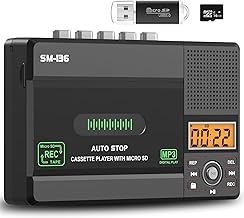
Best for: Buyers who want a compact cassette player with multiple recording destinations. The listing describes cassette-to-MP3 conversion to an SD card or computer, along with USB-C, a built-in speaker, a headphone jack, and a 16GB SD card.
Choose this if you want to record tapes without making a computer the only part of the process. The stated SD-card option supports a standalone-style workflow, while computer recording offers an alternative. Its built-in speaker and headphone jack also provide listed ways to listen to cassette audio.
- Supports cassette audio conversion to MP3 on an SD card or computer.
- Includes a 16GB SD card, according to the product name.
- Includes a built-in speaker and headphone jack.
- Described as supporting Type I tapes.
Limitation: The listing identifies Type I tapes, so buyers with other tape formulations should verify compatibility before purchasing. The product name also mentions recording to cassette, computer, or SD card via a microphone; check the detailed instructions to confirm which recording mode suits your intended use.
KLIM K7 Cassette Tape Player

Best for: People who want portable cassette playback along with cassette-to-MP3 conversion. The product name lists a built-in microphone and speaker, a rechargeable battery, earphones, and a 16GB SD card. It is identified as a portable cassette player and converter.
Choose the KLIM K7 if the included playback features and SD-card storage are a closer match for your needs than a computer-only setup. The rechargeable battery is a stated feature for portable use, and the included SD card offers a named destination for digital files. The microphone and speaker are also listed features, though buyers should consult the product details to understand their intended recording functions.
- Portable cassette player with cassette-to-MP3 conversion.
- Includes a 16GB SD card and earphones, according to the product name.
- Lists a rechargeable battery, built-in speaker, and built-in microphone.
Limitation: The provided product information does not specify computer connectivity or supported tape types. Choose a different option or verify the full listing if direct computer recording or a particular cassette formulation is essential.
ClearClick Cassette Tape to USB

Best for: Buyers who want to save cassette recordings directly to a USB flash drive. The product is described as a second-generation USB 2.0 cassette converter that creates digital MP3 audio files on a flash drive. Its listed features include a file-splitting function, instant setup, and an included 16GB USB drive.
Choose this model if avoiding a computer during the initial capture is important. Recording to a USB drive can simplify the transfer path: connect the cassette source, capture the audio, then access the files from the drive. The stated file-splitting feature may also suit people who want recordings divided into separate files, though the listing should be checked for how splitting works.
- Converts cassette audio to MP3 files on a USB flash drive.
- Includes a 16GB USB drive, according to the product name.
- Lists a file-splitting feature and instant setup.
Limitation: The provided description does not explain whether a cassette player is built in or what connections are needed for a tape source. Confirm the required hardware and setup steps before buying.
USB 2.0 Audio Capture Card

Best for: People who already have a cassette player or other audio source and want to capture its output on a computer. This audio capture card is described as a cassette-to-digital MP3 converter with stereo RCA and 3.5 mm interfaces. Its listed operating-system support includes Mac and several Windows versions.
Choose this option if you prefer to use existing playback equipment rather than buy a cassette player-converter combination. The RCA and 3.5 mm interfaces provide the stated connection choices, and computer recording makes it a better fit for a user who wants to manage capture on a desktop or laptop. It is also listed for vinyl-record audio capture, so the product is not limited to cassette transfers.
- USB 2.0 audio capture device for cassette and vinyl audio.
- Lists stereo RCA and 3.5 mm interfaces.
- Product name states support for Mac and Windows 7, 8, 10, 11, XP, and Vista.
Limitation: This is a capture card, not a cassette player. You need a playback device that can provide audio through a compatible output; verify the connections and computer software requirements before ordering.
Buying Guide: How To Choose A Tape-to-MP3 Setup
Do you want to record with or without a computer?
A computer-based setup gives you a place to manage recordings while capturing them. The DigitNow is a USB cassette player intended for computer transfers, while the USB 2.0 audio capture card connects an existing audio source to a computer. These options suit buyers who want a computer involved from the start, but the capture card also requires a separate cassette playback device.
For a workflow that saves files to removable storage, compare the ClearClick USB converter with the SEMIER and KLIM K7 players. ClearClick names a USB flash drive as its recording destination. SEMIER and KLIM K7 list SD-card features. Check the specific product instructions to understand how recordings are started, named, and accessed.
Do you already own a cassette player?
If you have a cassette deck or portable player with a suitable audio output, a capture card may be a practical choice. Match the source output to the capture device’s listed RCA or 3.5 mm interfaces. If you do not have a player, consider a product described as a cassette player and converter, such as DigitNow, SEMIER, or KLIM K7. Confirm the exact connections and supported tapes in the full listing.
Where will you store and organize the MP3 files?
Choose a recording destination that fits how you plan to work. Computer transfers can make files available for organization on the computer, while an SD card or USB flash drive can make the initial recording independent of a computer. The supplied product information lists a 16GB SD card for SEMIER and KLIM K7 and a 16GB USB drive for ClearClick. It does not establish how much recording time those capacities hold; that depends on recording settings and file details.
Before transferring a large collection, decide how you will label files. A useful file name can include the tape title, side, and track or recording date. If the converter offers file splitting, check whether it splits automatically or requires the user to mark divisions. This affects how convenient it is to separate songs or spoken sections.
What connections and computer support should you check?
For computer-based capture, verify the connection type, operating-system support, and any software requirements. The capture card’s product name lists Mac and specific Windows versions, while the DigitNow description identifies USB computer compatibility without listing operating-system details. Do not assume that every USB device works with every computer or that recording software is included.
For a standalone converter, confirm whether it has a built-in cassette mechanism or requires a separate player. Check what storage media it accepts, whether storage is included, and how files move from the device to your computer or phone. These details determine whether the advertised workflow is convenient for your existing equipment.
How important are portability and listening features?
Portability can matter if you plan to record away from a desk or listen to tapes as well as digitize them. The KLIM K7 is described as portable and lists a rechargeable battery, speaker, and earphones. SEMIER lists a built-in speaker and headphone jack. DigitNow is described as portable, while the supplied information does not list a battery or listening accessories for it.
Do not treat playback extras as proof of recording quality. The supplied descriptions do not provide enough information to compare sound quality, recording levels, noise reduction, or audio formats beyond the stated MP3 conversion. For important or irreplaceable recordings, check the full specifications and consider making a short test transfer before digitizing an entire tape.
How should you prepare tapes for conversion?
Inspect each cassette and player before recording. Use a tape that moves freely, and stop if it appears damaged or becomes stuck. Confirm that the cassette is compatible with the selected device; SEMIER specifically identifies Type I tapes, while the other supplied names do not provide equally specific tape-type information.
Capture a short sample first and listen to the resulting file. This helps identify connection problems, unexpectedly low audio, or unwanted silence before you transfer a full side. Keep the original tapes after conversion, and store copies of the resulting files in more than one location if the recordings matter to you.
Frequently Asked Questions
Can I record cassette tapes to MP3 without a computer?
Some listed products describe recording to removable storage. ClearClick is described as saving MP3 audio to a USB flash drive, while SEMIER and KLIM K7 list SD-card features. Check each product’s instructions to confirm the exact recording process and required equipment.
Do I need a cassette player to use an audio capture card?
Yes. A capture card records audio from a connected source; the listed USB 2.0 capture card is not described as having a cassette player built in. You need a cassette playback device with an output that matches its RCA or 3.5 mm interfaces.
Which option is best for transferring tapes through a computer?
The DigitNow is described as a USB cassette player for converting tapes to MP3 with a laptop or personal computer. The audio capture card is another computer-based choice if you already own a cassette player with a compatible output.
Which listed product includes USB storage?
ClearClick’s product name states that a 16GB USB drive is included and that cassette audio is saved as MP3 files on a USB flash drive. Confirm the full listing for current package details and operating instructions.
Are all cassette tapes compatible with these converters?
Compatibility depends on the device. SEMIER’s product name specifies Type I tapes, while the supplied descriptions for the other products do not give complete tape-type details. Check the full product information if your tapes use a particular formulation or format.
Will the conversion automatically separate songs into individual MP3 files?
The ClearClick listing names a file-splitting feature, but the supplied information does not explain its operation. The other product descriptions do not establish automatic song detection. Review each device’s instructions if separate track files are important.