
Best Satin Finish Guitar Neck Care and Replacement Guide
Direct answer: For satin-finish guitar necks, choose products that preserve the matte look, clean without adding gloss, and provide durable protection. This guide highlights five relevant options—maintenance cleaners, a satin-friendly lacquer, and two replacement necks—each best suited to different needs such as routine upkeep, refinishing, or upgrading instrument feel. Use the buying guide to compare finishes, compatibility, and practical trade-offs before purchasing.
| Product | Best For | Why It’s Notable |
|---|---|---|
| ColorTone Satin Nitrocellulose Lacquer Spray | Refinishing satin guitars | Low-gloss nitro finish; fast-drying; aerosol convenience |
| Martin Satin Guitar Cleaner & Protectant | Routine cleaning for satin finishes | Cleans without adding gloss; wax-based protection |
| MusicNomad Premium Guitar Cleaner | All-in-one satin-maintenance | Streak-free, safe for all finishes including satin |
| Ogdni Ib Style Neck | Direct neck replacement | Maple neck with rosewood board; compatible with Ib-style bodies |
| Fender Player II Telecaster Neck | Modern neck upgrade | Modern C profile; 9.5″ radius; rosewood board |
ColorTone Satin Nitrocellulose Guitar Lacquer Spray
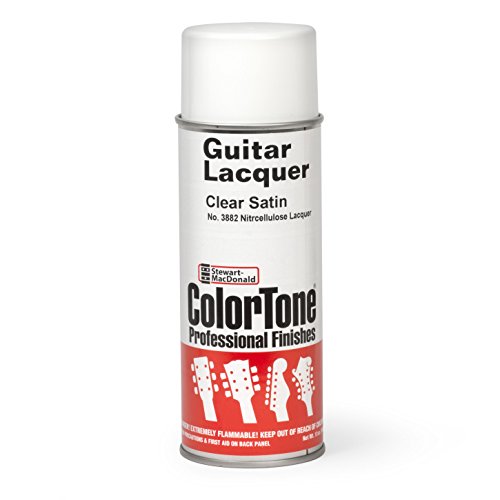
Best for refinishing satin finishes on guitars, basses, and other instruments. This traditional satin nitrocellulose lacquer dries quickly and builds with multiple coats in a day. It is alcohol- and moisture-resistant, helping preserve a low-gloss look on necks and bodies. The user-friendly aerosol format enables consistent coverage without professional spray equipment. Suitable for luthiers and hobbyists who want a durable satin result. Caution: Nitrocellulose finishes may require proper ventilation and compatible base materials.
Martin Satin Guitar Cleaner & Protectant

Best for routine satin-finish maintenance without adding gloss. This cleaner is formulated to clean satin finishes gently, remove fingerprints and grime, and guard against buildup. It uses carnauba wax to condition and shield the finish while preserving the matte look. Choose this if you want ongoing protection that won’t alter the satin character of the neck.
Best for: players who value a subtle, non-glossy appearance and easy upkeep between sessions. Limitation: wax-based formulas can accumulate if overused; follow application directions to maintain the satin feel.
MusicNomad Premium Guitar Cleaner (MN100)

Best for a general-purpose satin-friendly clean for both matte/satin and gloss finishes. This all-in-one cleaner removes fingerprints and dust with a single-step formula, suitable for electric, acoustic, and bass guitars. It is anti-static to help repel dust and is safe for all finishes, including nitro. Choose this when you want a simple, safe option for a broad range of instruments.
Limitations: while versatile, it may not provide extended protection beyond cleaning unless paired with a dedicated protective topcoat or conditioner.
Ogdni Electric Guitar Neck for Ib Style

Best for direct neck replacement on Ib-style guitars. This neck uses premium maple with a rosewood fingerboard, offering 25.5 inches on a standard scale and 24 frets for versatile playability. It is suited for players upgrading a guitar’s neck feel and stability. Selected for reliable construction and a natural wood finish. Caution: compatibility depends on hardware fitment and body routing—verify neck pocket dimensions before purchase.
Fender Player II Telecaster Neck

Best for a modern neck upgrade on a Telecaster-style guitar. It features a Modern “C” neck profile, a 9.5″ radius, and a rosewood fingerboard with 22 medium jumbo frets. This neck is designed to support fast playing, smooth bends, and a comfortable feel. Choose this if you want a ready-to-install neck with proven Fender geometry. Limitation: neck profile and fit must align with the guitar body and mounting hardware to ensure proper alignment and truss rod clearance.
Buying Guide
What should I look for in satin-finish neck care products?
Key factors include how the product preserves the matte look, how it cleans without adding shine, and whether it provides durable protection against fingerprints and oils. For refinishing, consider nitrocellulose options that are compatible with satin finishes. For maintenance, choose cleaners that are safe for nitro and polyurethane alike without increasing gloss.
Should I mix cleaners with a protective topcoat?
Yes, in some cases. Use a dedicated cleaner for routine maintenance, then apply a satin-friendly conditioner or wax if the finish requires additional protection. Avoid mixing products that add gloss or alter the finish’s texture unless you intend to refinish.
Which neck materials and profiles matter most for playability?
Maple necks with rosewood boards are common for bright, snappy feel, while roasted maple offers improved stability. Neck profiles (C, U, V) affect comfort and reach. Also consider scale length and fret count to match your playing style, from jazz to metal to flyweight riffs.
What installation considerations exist for replacement necks?
Check neck pocket dimensions, mounting screw alignment, truss rod access, and the compatibility of tuners with the guitar body. Ensure finish type matches or complements the instrument’s overall aesthetics and structural integrity.
How to assess spray finishes for satin look?
Look for lower gloss levels, alcohol and moisture resistance, and the ability to build multiple coats without turning glossy. Nitrocellulose options can yield authentic satin textures but require ventilation and proper substrate compatibility.
What about compatibility with nitrocellulose finishes?
Some products explicitly state satin nitro compatibility, which helps preserve authentic feel and tone. If your guitar already has a nitro satin finish, prioritize products designed for nitro or labeled safe for nitro to avoid glossing or chemical reactions.
FAQ
- Is satin finish hard to maintain? It requires cleaners that do not add gloss and periodic conditioning to sustain the matte appearance.
- Can I use any guitar cleaner on satin finishes? Prefer products designed for satin or matte finishes; some cleaners are finish-safe for matte or nitro surfaces.
- Do replacement necks require special tools? Basic guitar setup tools are usually sufficient, but confirm mounting screws, truss rod access, and neck pocket fit.
- Will gloss enhancers ruin satin finishes? Yes; avoid gloss-enhancing products unless you intend to change the finish intentionally.
- Are satin-neck products universal for electric and acoustic guitars? Many are compatible, but always check finish type and instrument category before use.
- Is a satin finish more sensitive to fingerprints? Satin finishes can show fingerprints and dust more readily than some gloss finishes, hence the benefit of anti-static cleaners.