
The best screw-in speaker terminals depend on your enclosure’s cutout, shape, and preferred wire connection. Facmogu’s square terminal cup is a versatile choice for banana plugs, spade terminals, or bare wire; its round version suits round openings. RuiLing is a useful option when a 75 mm cutout matches your box, while Luomorgo and Serounder offer straightforward DIY terminal options.
| Product | Best For | Key Fit or Feature |
|---|---|---|
| Facmogu 2.2-Inch Square | Flexible connection options | Square cup; banana plugs, spades, or bare wire |
| Luomorgo ABS Terminal Cup | Basic DIY replacement | ABS and copper construction |
| RuiLing 4-Inch Round | Enclosures with a matching round cutout | 75 mm cutout diameter |
| Facmogu 3-Inch Round | Round DIY installations | Spring-loaded terminals and multiple wire options |
| Serounder 2-Way Terminal | Connector versatility | Supports wire, fork terminals, and banana plugs |
Facmogu 2.2-Inch Square Terminal Cup

Best for: DIY speaker or subwoofer builders who want a square terminal cup with several front-side connection choices. It accepts 4 mm banana plugs, spade terminals, or bare wire, according to the product details.
The cup has red and black polarity indicators to help identify positive and negative connections. Its plastic mounting plate and gold-plated metal terminals are intended for speaker-box use. The rear connections require spade connectors or direct soldering, and the listing also describes quick-disconnect connections.
Why it was selected: The combination of a square plate and multiple connection methods makes it a flexible choice for users who already have banana plugs, spades, or bare speaker wire.
Limitation: The product name describes a 2.2-inch terminal cup, but the supplied details do not specify a cutout measurement. Confirm the actual dimensions and mounting-hole spacing before cutting the enclosure.
Luomorgo ABS Two-Position Terminal Cup

Best for: Buyers seeking a simple terminal cup for a DIY speaker or subwoofer box. The listing specifies a two-position connection, with red and black markers to indicate polarity.
The terminal cup is made primarily from ABS plastic and copper. These basic material details and polarity markings are useful when replacing a worn terminal or building a box that needs a straightforward positive-and-negative connection.
Why it was selected: Its uncomplicated two-position layout suits buyers who do not need a product description centered on several plug styles or a specialized mounting shape.
Limitation: The provided product information does not give cutout dimensions, mounting-hole spacing, or details about supported plug types. Check the physical fit and connection method before ordering, especially when replacing an existing plate.
RuiLing 4-Inch Round Terminal Cup

Best for: DIY car or home audio enclosures that need a round terminal cup and have a cutout measuring 75 mm, or about 2.95 inches. The specified cutout size makes this option easier to compare with an existing opening than products without a listed measurement.
The terminal is described as a universal 4-inch binding-post subwoofer-box terminal. Its materials are ABS and copper, and red and black indicators identify positive and negative polarity.
Why it was selected: The stated cutout diameter is a practical selection detail. Buyers can measure their enclosure and compare the opening to the listed 75 mm requirement before installation.
Limitation: The 4-inch name and 75 mm cutout refer to different dimensions. Do not assume the product name is the required hole size; use the listed cutout measurement and verify the overall plate dimensions if space is limited.
Facmogu 3-Inch Round Terminal Cup
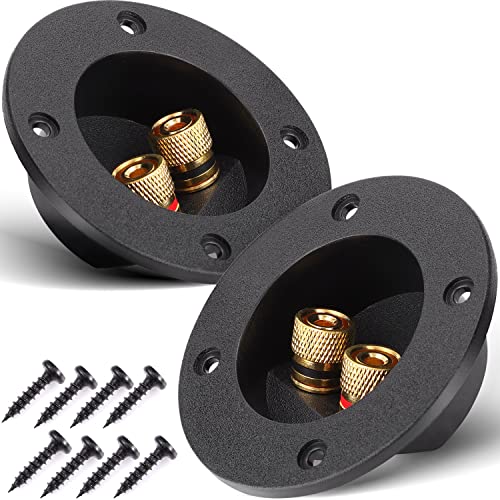
Best for: Builders who prefer a round terminal cup and need compatibility with 4 mm banana plugs, spade terminals, or bare wire. The product description identifies it as a DIY speaker and subwoofer-box terminal.
This version has a round mounting plate and spring-loaded binding-post terminals. Red and black markings help with polarity, while the product details say the rear side uses spade connectors or direct soldering. Its plastic plate and gold-plated metal terminals are described as sturdy construction.
Why it was selected: It offers a round alternative to Facmogu’s square model while retaining a range of front connection options. Choose this if the enclosure shape or available mounting area calls for a circular plate.
Limitation: The product name gives a 3-inch size, but the supplied features do not state the cutout diameter or mounting-hole spacing. Measure the box and confirm the required dimensions rather than relying on the name alone.
Serounder Two-Way Screw-In Terminal

Best for: DIY builders who want several connection styles. The product supports direct wiring, Y-fork connectors, and straight or bent banana plugs, making it suitable for different speaker-cable setups.
The terminal plate has two mounting holes and is described as a replacement for an original speaker board. The listing specifies a 3.8 mm thick base plate and pure-copper-plated wiring terminals. These details may help buyers comparing plate construction and connector choices.
Why it was selected: Its stated support for wire, fork terminals, and both straight and bent banana plugs makes it a flexible choice when connection style matters.
Limitation: The listed details do not provide the plate’s overall dimensions or the distance between mounting holes. Measure the enclosure and mounting points before purchase; a two-hole plate may not match an existing multi-hole opening.
Buying Guide: How to Choose Screw-In Speaker Terminals
What size cutout does your speaker box need?
Measure the opening in the enclosure before selecting a terminal cup. Check both the cutout diameter or width and height, along with the outer plate dimensions. A plate can have the right name or nominal size and still require a different hole than the one in your box.
For a replacement, measure the existing opening and the spacing between screw holes. For a new enclosure, use the manufacturer’s stated cutout dimensions when available. If those measurements are not listed, verify them with the seller or product packaging before cutting the panel.
Should you choose a round or square terminal plate?
Choose a round cup when the enclosure has a round opening or the available mounting area favors a circular plate. A square plate may be easier to position on a flat panel, but its corners and screw locations need enough clearance. Shape alone does not determine fit; compare the cutout and outer dimensions.
The RuiLing listing gives a 75 mm cutout diameter. The Facmogu square and round listings do not provide a cutout measurement in the supplied details, so verify their fit separately. The Serounder model lists two mounting holes, making hole spacing an important check.
Which wire connection style should you use?
- Bare wire: Choose a terminal that explicitly supports bare-wire connections if you plan to attach speaker wire directly.
- Banana plugs: Check the listed plug size. Facmogu specifies compatibility with 4 mm banana plugs, while Serounder lists straight and bent banana heads.
- Spade or fork terminals: Confirm the terminal supports the connector style you own. Product descriptions may use “spade” or “Y-fork” terminology.
- Rear-side wiring: Check whether the inside connections use spades, quick disconnects, direct soldering, or another method. The front connector type does not necessarily describe the rear connection.
How important are polarity markings?
Red and black markers help distinguish positive and negative terminals during installation. Match the polarity on the terminal cup to the speaker driver and amplifier wiring. Reversing polarity between speakers can affect how they work together, so check connections before closing the enclosure.
What materials and construction details matter?
Compare the materials named in the listing, such as ABS plastic, copper, or gold-plated metal. These details describe the product’s stated construction, but they do not replace checks for fit, terminal type, or mounting method. Also confirm whether the cup’s plate and posts suit the enclosure and wiring you intend to use.
What should you check before cutting or installing?
- Measure the cutout and the outside dimensions of the terminal plate.
- Check mounting-hole count and spacing against the box or existing plate.
- Confirm front-side plug options and rear-side connection requirements.
- Identify positive and negative markings before wiring.
- Plan how the plate will be secured and check that there is room behind the opening for connections.
Do not assume that “4-inch,” “3-inch,” or another size in a product name is the cutout diameter. Listings can describe overall product size separately from the opening needed for installation. Use a stated cutout measurement when available and verify any missing dimensions before modifying the enclosure.
Frequently Asked Questions
What is a screw-in speaker terminal cup?
It is a mounting plate with speaker-wire terminals that attaches to a speaker or subwoofer enclosure. The plate provides an accessible connection point between external speaker wiring and the wiring inside the box.
Can I use banana plugs with screw-in speaker terminals?
Some models support banana plugs, but not all do. Check the product details for the plug type and size. The Facmogu listings specify 4 mm banana plugs, and Serounder lists straight and bent banana heads.
Do all terminal cups fit the same speaker-box opening?
No. Cutout diameter, plate shape, overall dimensions, and mounting-hole spacing can vary. Measure the enclosure and compare it with the terminal’s listed dimensions before installation.
Can bare speaker wire be used instead of plugs?
Some terminals accept bare wire. Facmogu’s product details specify bare-wire support at the front, while other models may not state it. Check both the front connection method and the rear wiring requirements.
How do I identify positive and negative terminals?
Use the red marking for positive and the black marking for negative when those indicators are present. Follow the same polarity at the speaker driver and amplifier connections.