
The best semi-modular analog synth depends on whether you want a traditional sequenced voice, experimental sound design, or evolving polyrhythms. The Cre8audio East Beast suits players seeking a compact, Eurorack-compatible starting point; the Behringer CRAVE emphasizes an oscillator, ladder filter, and step sequencer; and Moog’s Labyrinth and Subharmonicon offer more unusual generative and rhythmic approaches. The Mother-32 is a strong option for hands-on sequencing and a classic analog signal path. Compare each instrument’s sound-shaping tools, sequencing approach, and patching needs before choosing.
| Product | Best For | Standout Details |
|---|---|---|
| Cre8audio East Beast | Compact modular exploration | 40HP, multimode filter, envelope generator |
| Behringer CRAVE | Sequenced analog sounds | 3340 VCO, ladder filter, 32-step sequencer |
| Moog Labyrinth | Experimental and generative textures | Dual sequencers, oscillators, wavefolder |
| Moog Subharmonicon | Polyrhythmic compositions | Subharmonic sources and four rhythm generators |
| Moog Mother-32 | Classic synthesis and live sequencing | 32-step sequencer, ladder filter, patchbay |
Cre8audio East Beast

The Cre8audio East Beast is a 40HP, East Coast-style semi-modular analog synth with a multimode filter and envelope generator. Its listed Eurorack compatibility makes it relevant to buyers planning a compact modular setup or wanting a standalone-style instrument that can also fit into a larger modular system.
Best for: Musicians who want a space-conscious entry point for patch-based synthesis. The 40HP format is a useful reference when planning rack space, while the multimode filter and envelope generator provide core tools for shaping a sound over time.
Why it stands out: Its East Coast-style design and Eurorack compatibility make the East Beast a direct fit for buyers who prioritize modular expansion alongside a semi-modular instrument.
Limitation: The supplied product details do not specify its sequencer, connectivity, or included accessories. Check the current listing for those details if they affect your setup.
Behringer CRAVE

The Behringer CRAVE is described as an analog semi-modular synthesizer with a 3340 VCO, classic ladder filter, and 32-step sequencer. Its product name also lists 16-voice Poly Chain, a feature to consider if you are comparing sequencing and multi-unit expansion options.
Best for: Buyers who want an oscillator-and-filter-centered instrument with a built-in step sequencer. A 32-step sequence can support longer patterns than a short loop, making the listed sequencer a key point of comparison with instruments that emphasize shorter or generative sequencing.
Why it stands out: The CRAVE’s specified combination of a 3340 VCO, ladder filter, and 32-step sequencer gives shoppers three clear features to compare when looking for a traditional analog synthesis workflow.
Limitation: No separate feature list was supplied beyond the product name. Confirm the controls, patch connections, and any setup requirements in the current listing before deciding.
Moog Labyrinth

The Moog Labyrinth is designed for exploratory and generative sound-making. Its listed features include dual sequencers, dual oscillators, a voltage-controlled wavefolder, a voltage-controlled filter, and a patch bay. The product description highlights low-harmonic oscillators, metallic frequency-modulation sounds, wavefolding textures, ring modulation, and variable-tone noise.
Best for: Sound designers and performers who want evolving textures and less conventional timbres. The wavefolder, ring modulation, and noise generator point toward a broader range of experimental tones than a setup centered only on basic oscillator and filter shaping.
Why it stands out: Its dual-sequencer design and collection of sound-shaping features make it a distinct choice for adding movement and unusual color to a pattern or sustained musical backdrop.
Limitation: The product is explicitly oriented toward adventurous sonic exploration. Choose another option if your priority is a straightforward, conventional step-sequenced workflow rather than experimental sound design.
Moog Subharmonicon

The Moog Subharmonicon is a semi-modular analog instrument built around polyrhythmic sequencing. It has two voltage-controlled oscillators, each with two subharmonic generators, for six listed tonal sources. Four rhythm generators can drive either sequencer or both, and each four-step sequencer can control combinations of its associated oscillator and subharmonic generators.
Best for: Musicians who want rhythm and pitch relationships to be central to a performance. Its four rhythm generators and two sequencers make it the most rhythm-focused choice in this group.
Why it stands out: The combination of subharmonic sources and multiple rhythm generators supports layered, polyrhythmic patterns. The listing also specifies MIDI and a patch bay, useful considerations when fitting it into a broader electronic music setup.
Limitation: Each sequencer is described as four-step, so this is not the clearest match for buyers seeking a conventional long step sequence. Its unusual rhythmic approach may require a different workflow than a standard pattern sequencer.
Moog Mother-32
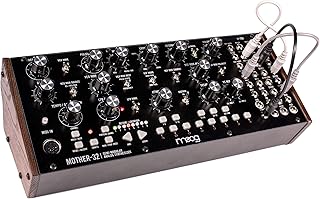
The Moog Mother-32 combines an analog voltage-controlled oscillator, white-noise generator, Moog ladder filter, external audio input, and extended patchbay. Its 32-step sequencer offers two modes and can store up to 64 onboard sequences, according to the product details.
Best for: Buyers who want hands-on sequencing, a recognizable analog signal path, and room to explore patching. The listing says no cables are required for basic music creation, while the patchbay opens up additional sound-processing possibilities.
Why it stands out: The Mother-32 balances a built-in sequencer with a patchbay and external audio input. That combination makes it a versatile choice for users who want both immediate operation and more involved sound processing.
Limitation: The product details describe one voltage-controlled oscillator. Buyers who specifically want multiple oscillators or a long sequence should compare its listed configuration with alternatives before choosing.
Buying Guide: How To Choose A Semi-Modular Analog Synth
A semi-modular synth typically provides a preconfigured signal path that can be used without patch cables, while patch connections allow users to change or extend how its components interact. The exact tools differ by instrument, so compare the stated features rather than assuming every model includes the same functions.
Which synth fits your sound-design goals?
- For modular expansion: Consider the East Beast, which is listed as Eurorack compatible and uses a 40HP format.
- For a sequenced oscillator-and-filter setup: Compare the CRAVE’s 3340 VCO, ladder filter, and 32-step sequencer with the Mother-32’s 32-step sequencer and analog signal-path features.
- For experimental textures: The Labyrinth lists a wavefolder, ring modulation, variable-tone noise, and dual sequencers.
- For polyrhythms: The Subharmonicon’s four rhythm generators and subharmonic sources make rhythm the central distinction.
How important is the sequencer?
Sequencers influence how a synth creates repeating or evolving musical ideas. The CRAVE and Mother-32 are listed with 32-step sequencers. The Mother-32 also specifies two sequencer modes and storage for up to 64 sequences. The Subharmonicon instead emphasizes two four-step sequencers linked to rhythm generators. The Labyrinth lists dual sequencers, but the supplied details do not specify their step length.
What should you check before integrating a synth?
Check the product listing for the exact patch connections and external control options you need. If you are adding a synth to a modular rack, confirm its format and space requirements; the East Beast is listed as 40HP and Eurorack compatible. For a mixed hardware setup, verify the connections you need on the instrument itself. MIDI is specified for the Subharmonicon, while the Mother-32 lists MIDI In.
Should a beginner choose a semi-modular model?
A preconfigured signal path can provide a starting point without requiring every sound to be built from scratch. Patch connections add flexibility but also create more choices to learn. Buyers new to synthesis can compare how much emphasis each product places on sequencing, patching, or experimental sound design. Start with the workflow that matches your musical goals rather than choosing only by the number of features.
How do size and expansion affect the decision?
Measure the available desk or rack space before choosing. A listed rack format can help with planning, but verify the complete physical requirements in the current product listing. If future modular expansion matters, confirm both the instrument’s compatibility and the connections required for your intended setup. A synth’s patchbay does not by itself establish compatibility with every external device.
Frequently Asked Questions
What does semi-modular mean in a synthesizer?
A semi-modular synth has an established signal path and patch connections that let users alter or extend signal routing. This can make basic operation more direct than building a complete modular system from individual modules.
Which synth in this list has a 32-step sequencer?
The Behringer CRAVE and Moog Mother-32 are both listed with 32-step sequencers. The Mother-32 also specifies two sequencer modes and up to 64 onboard sequences.
Which model is designed for polyrhythms?
The Moog Subharmonicon is explicitly described as a polyrhythmic synthesizer. It has four rhythm generators and two sequencers that can be driven by those rhythmic sources.
Which option is listed as Eurorack compatible?
The Cre8audio East Beast is listed as Eurorack compatible and has a 40HP format. Check the product listing and your rack plans to confirm that its size and connections suit your setup.
Which synth is best for experimental textures?
The Moog Labyrinth is the most directly focused on experimental textures in this selection. Its listed features include low-harmonic oscillators, a voltage-controlled wavefolder, ring modulation, and a variable-tone noise generator.
Do semi-modular synths require patch cables to make sound?
Not necessarily. The Mother-32 listing says it can be used without cables for basic music creation. Patch cables are used to explore additional routing, but the exact operation depends on the instrument.