
A shielded USB cable can help reduce electromagnetic interference in an audio setup, but the right choice depends on connector type, length, and the shielding details listed by the manufacturer. The TODN cable is a short USB-A-to-B option with stated braided shielding; the YYTCG is a longer USB 3.0 choice with multiple shielding layers; and the Tripp Lite is a compact USB 2.0 cable with ferrite chokes. The AGVEE adds a ferrite core, while RUHTXOW emphasizes OFC conductors and a braided jacket.
| Product | Best suited for | Notable listed feature |
|---|---|---|
| TODN 3ft USB A to B | Short DAC connections | Tinned copper braided shielding |
| YYTCG USB 3.0, 9.84ft | Longer audio-device connections | Multi-shielding and ferrite cores |
| Tripp Lite USB 2.0, 3ft | Short, general-purpose connections | Double shielding and ferrite chokes |
| AGVEE USB-A to B, 10ft | MIDI equipment and longer runs | Ferrite magnetic core |
| RUHTXOW USB A to B | Flexible desk or live-rig use | OFC conductors and braided jacket |
TODN 3ft USB A to B Shielded Audio Cable
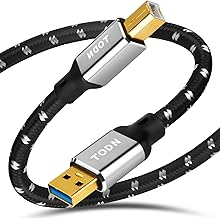
Best for: A short connection between a computer and a DAC or sound card when both devices use USB-A and USB-B ports. Its listed 3-foot length can suit equipment placed close together, while its tinned-copper braided shielding is specifically described as reducing EMI, RFI, and crosstalk.
The cable uses four-core OFC conductors, according to the listing. It supports data rates up to 480 Mbps and is described as backward compatible with USB 1.1 and USB 1.0 devices. Those specifications make the cable relevant to audio connections as well as compatible printers, cameras, and scanners.
Why it was selected: Among these options, it gives the clearest combination of a short audio-oriented format and explicitly stated braided shielding. The listing also identifies DAC and sound-card connections as intended uses.
Limitation: At 3 feet, it is a poor fit if your computer and audio device are farther apart. The claimed sound characteristics and burn-in benefit are manufacturer statements, not independently established outcomes.
YYTCG 9.84ft USB 3.0 HiFi Audio Cable

Best for: Buyers who need a longer USB-A-to-B cable for a sound card, mixer, synthesizer, or other listed audio equipment. At 9.84 feet, it provides more reach than the 3-foot options in this selection.
The product is described as a USB 3.0 cable with 4N OFC conductors. Its multi-shielding construction includes a tinned-copper braid, double-layer PVC shielding, and ferrite cores, which the manufacturer says are intended to limit EMI and RFI. The product listing also mentions use as a subwoofer cable in certain setups; confirm that the actual device has the matching USB-B connection before buying.
Why it was selected: It pairs the longest stated length in this group with multiple identified shielding components and a stated range of audio applications. Choose it if reach and USB 3.0 are priorities, subject to the ports and requirements of your equipment.
Limitation: The listing’s “10x faster” comparison is a manufacturer claim and does not establish that a connected audio device will use USB 3.0 speeds. The cable is not the best match for a setup that only needs a short run.
Tripp Lite 3ft USB 2.0 A/B Cable

Best for: A short USB-A-to-B connection where a USB 2.0 cable with specified shielding and ferrite chokes fits the equipment. The listing states that the cable is USB 2.0 certified and supports low- and high-speed devices, including multimedia applications.
Its construction includes a tinned-copper braid and aluminum Mylar foil for double shielding, plus ferrite chokes. The stated transfer-rate range is 1.5 to 480 Mbps. This makes it a straightforward option to consider for compatible audio gear that does not require a USB 3.0 cable.
Why it was selected: The listing provides concrete construction details rather than relying only on general claims about sound. Its short length can also help keep a nearby computer and audio device connected without extra cable slack.
Limitation: The 3-foot length restricts placement flexibility, and USB 2.0 is the stated standard. Check whether your device’s connection and data requirements match before choosing it.
AGVEE 10ft USB-A to B MIDI Cable

Best for: Buyers connecting a computer to compatible MIDI equipment with a USB-B interface who need a longer cable. The listing also names printers as a use, but its MIDI support makes it relevant to music-production setups.
The 10-foot cable has a built-in ferrite magnetic core. AGVEE says the core filters electronic noise from nearby devices, including Wi-Fi routers. A ferrite core is a useful listed feature for shoppers seeking interference management, although the product details do not specify a braided or foil shield construction.
Why it was selected: It offers the longest stated reach in this group, along with an explicitly identified ferrite component and stated MIDI use. Choose it if those details match your layout and equipment.
Limitation: A ferrite core is not the same as a detailed specification for full cable shielding. The listing does not state a USB version or transfer rate, so do not assume those specifications without checking the product information and your device requirements.
RUHTXOW OFC Braided USB A to B Cable

Best for: Buyers who prioritize a flexible, abrasion-resistant exterior for a crowded desk or live-rig arrangement. The listing describes a dual-PVC and braided-nylon jacket and 5N OFC copper conductors.
The cable has USB-A and USB-B connectors with listed 24K gold plating. RUHTXOW says the plating resists corrosion and that the jacket is designed to resist bending and tangling. These features describe the connectors and exterior, but the listing does not give a cable length or identify a braid or foil layer used specifically as electrical shielding.
Why it was selected: It is an audio-oriented USB-A-to-B option with detailed conductor and jacket descriptions. It may suit buyers who need a durable-feeling exterior and a cable intended for DAC use.
Limitation: The provided product details do not specify shielding construction, USB version, or length. Verify those details if interference protection, data-rate requirements, or exact reach are essential to your purchase.
Buying Guide: How to Choose a Shielded USB Audio Cable
Which connectors does your audio equipment use?
Check both ends of the connection before comparing cable materials. These five products are USB-A-to-B cables. A computer, DAC, sound card, or MIDI device must have compatible ports, or you will need a different cable type. Do not assume a product fits simply because its listing describes it as an audio cable.
How much cable length do you need?
Measure the route between devices, including any space needed to connect and arrange the cable. The TODN and Tripp Lite models are listed at 3 feet, while the AGVEE is 10 feet and the YYTCG is 9.84 feet. The supplied details do not give a length for RUHTXOW, so check its listing before ordering. A shorter cable can reduce excess slack; a longer one allows more flexible placement.
What kind of shielding is specified?
Look for construction details, not just broad terms such as “clean signal.” TODN lists a tinned-copper braided shield. YYTCG lists a tinned-copper braid, double-layer PVC shielding, and ferrite cores. Tripp Lite specifies a tinned-copper braid, aluminum Mylar foil, and ferrite chokes. AGVEE lists a ferrite core but does not describe braid or foil shielding. RUHTXOW describes its jacket and conductors but does not specify electrical shielding in the provided details.
Do you need USB 2.0 or USB 3.0?
Match the cable to the device’s port and requirements. Tripp Lite is identified as USB 2.0, and TODN lists transfer rates up to 480 Mbps with backward compatibility. YYTCG is described as USB 3.0, but a faster cable does not make a device operate at a higher rate than it supports. The supplied AGVEE and RUHTXOW details do not identify a USB version.
Are conductor material and jacket important to you?
OFC is listed for RUHTXOW, TODN, and YYTCG. Those descriptions may help distinguish product construction, but they do not establish that one cable will produce an audible improvement in every setup. A braided exterior, such as RUHTXOW’s nylon jacket, concerns handling and wear; it is not a substitute for an explicitly specified electrical shield.
What is the difference between shielding and a ferrite core?
Shielding generally refers to conductive material around cable conductors, such as braid or foil. A ferrite core or choke is a separate component used to address electromagnetic interference. Some products list both types of features. If your priority is documented cable shielding, compare the specific braid or foil details rather than treating a ferrite core alone as proof of full cable shielding.
Frequently Asked Questions
Does a shielded USB cable improve audio quality?
Shielding is intended to help limit interference, but the listed specifications do not prove an audible improvement in every system. Results depend on the equipment, connection, and surrounding electrical noise.
Is a ferrite core the same as a shielded cable?
No. A ferrite core is a component used to filter certain interference, while braid or foil can form conductive shielding around cable conductors. A product may include one or both.
Can I use a USB-A-to-B cable with any DAC?
No. The DAC and the connected computer or source must have compatible ports and support the connection. Check the device documentation and cable connector type before buying.
Should I choose a USB 3.0 cable for audio?
Choose USB 3.0 when your devices and use case call for it. A USB 3.0 cable does not increase the capabilities of a device limited to an earlier standard.
Which option is best for a longer connection?
The AGVEE is listed at 10 feet, and the YYTCG is listed at 9.84 feet. Compare their connector fit and stated construction, and verify the exact route length you need.