
The JOYO Vibe Cube BA-30 is the clearest fit for recording because it includes a Type-C OTG audio interface for connecting to a phone or computer. The Fender Rumble 15 is a straightforward choice for home practice, while the Ktaxon 40W offers a larger speaker and more output for practice and performance. The two JOYO color options have the same listed features, so choose between them by appearance. The mini guitar amp is less suited to bass because its features are guitar-focused.
| Product | Best suited for | Recording connection listed |
|---|---|---|
| JOYO Vibe Cube BA-30, Black | Direct phone or computer recording | Type-C OTG |
| JOYO Vibe Cube BA-30, White | Direct recording in a light finish | Type-C OTG |
| Fender Rumble 15 V3 | Compact home practice | No direct recording connection specified |
| Ktaxon 40W Bass Amplifier | Practice with a larger speaker | No direct recording connection specified |
| Flatsons 10W Mini Guitar Amp | Portable guitar practice, not bass recording | No direct recording connection specified |
JOYO Vibe Cube BA-30 Black

Best for: Bassists who want a compact amp with a stated direct connection for recording to a phone or computer. Its Type-C OTG audio interface is the standout feature for this use, and the product description says recording has independent volume control.
The BA-30 is rated at 30 watts and uses a 4-inch full-range speaker with a 113-by-113-millimeter low-frequency radiator. Its controls include Bass, Mid, and Treble, plus a Mid Frequency control spanning 200Hz to 2000Hz. A built-in compressor is intended to smooth attack and bring out quieter notes. Bluetooth 5.1 supports streaming backing tracks, while a headphone feature is listed for practice.
Why it was selected: Of these options, it has the most explicit recording feature set. The combination of OTG connectivity, tone shaping, and a compact format makes it especially relevant to home demos and livestream setups.
Limitation: Its speaker is only 4 inches, so it is a small-format practice and recording tool rather than a substitute for a larger bass cabinet. Confirm that your phone or computer supports the required Type-C connection and recording workflow.
JOYO Vibe Cube BA-30 White
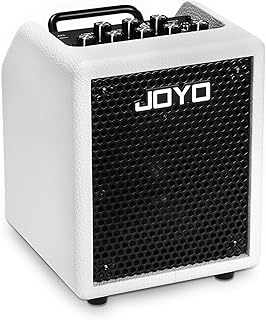
Best for: Buyers who want the BA-30’s listed recording and practice features in a white finish. The product details match the black version: 30-watt dynamic power, a 4-inch full-range speaker, a low-frequency radiator, Bluetooth 5.1, and Type-C OTG direct recording.
For tone adjustment, it provides Bass, Mid, and Treble controls along with a Mid Frequency knob that covers 200Hz to 2000Hz. The built-in compressor is designed to smooth the sound’s attack and help quiet notes stand out. Bluetooth can stream backing tracks, and the OTG connection is described for recording to phones or PCs with independent volume control.
Why it was selected: It offers the same recording-focused feature set as the black BA-30, making it a comparable alternative when finish matters. It is a better match than the other listed products for someone prioritizing a direct phone or computer recording path.
Limitation: The supplied specifications do not distinguish its performance from the black model, and its small speaker may not suit players seeking substantial room volume. Choose between the two JOYO versions based on finish rather than expecting different listed functions.
Fender Rumble 15 V3

Best for: Bass players seeking a compact, conventional practice combo from a familiar amplifier line. The listed specifications include 15 watts and an 8-inch Fender Special Design speaker, which is larger than the 4-inch speaker in the JOYO BA-30.
The Rumble 15 V3 has a 3-band EQ for basic tone shaping. Its top-mounted control panel uses soft-touch knobs. The product name also lists an auxiliary input and headphone output, which can support practice with external audio and quiet listening. However, the supplied details do not identify a USB or OTG recording interface.
Why it was selected: This is a useful comparison for buyers who value an 8-inch speaker and simple practice features over built-in direct recording. Choose it if the main goal is playing through a small bass combo and recording can be handled separately.
Limitation: No direct recording connection is specified in the supplied product details. For a simple connection from amp to phone or computer, the JOYO BA-30 is the stronger match based on listed features.
Ktaxon 40W Bass Amplifier

Best for: Bassists who want a portable practice amp with a larger speaker and more stated output than the 15-watt Fender. The Ktaxon is rated at 40 watts and has an 8-inch speaker. Its listed dimensions are 14 inches long, 7.3 inches wide, and 13.4 inches high.
The control panel includes Gain, Volume, Treble, Middle, and Bass controls. A retractable handle is provided for carrying, and the product description notes protective corner pieces and feet. An auxiliary input is listed, which can be useful for playing along with an external audio source.
Why it was selected: It is a practical alternative for players who want a bass-specific amp with an 8-inch speaker and more output for practice or performance. The carrying handle and straightforward controls may also suit users who move their amp between rooms or locations.
Limitation: The supplied features do not specify a USB, OTG, or other direct recording output. Choose this for its speaker, power rating, and carrying features—not as a dedicated recording interface.
Flatsons 10W Mini Guitar Amp

Best for: Guitarists who want a small rechargeable practice amp with clean and drive modes. Its listed features include 10 watts of output, up to six hours of operation, a 3.5mm headphone jack, and an AUX input with its own volume control.
This product is not described as a bass amplifier. Its stated frequency response is 100Hz to 20kHz, and its Clean and Drive modes, Gain control, and Tone control are presented for guitar use. Those details make it a less suitable choice for bass recording than the bass-specific combos in this list.
Why it was selected: It provides a portable reference point for shoppers comparing small amps, especially if they also play guitar. Its headphone and AUX features support practice flexibility, but the JOYO BA-30 is the better fit when bass recording is the priority.
Limitation: The listing describes a guitar amp, not a bass amp, and does not specify direct recording connectivity. Avoid choosing it as the primary bass recording solution based on the information provided.
Buying Guide: How to Choose a Small Bass Amp for Recording
Do you need a direct recording connection?
Start by deciding whether you want to record the amp directly into a phone or computer. Among these five products, the JOYO BA-30 models explicitly list a Type-C OTG audio interface for direct recording. The Fender, Ktaxon, and Flatsons details do not identify a comparable recording interface. An auxiliary input is for bringing audio into an amp; it does not, by itself, indicate that the amp sends your bass signal to a recording device.
If you plan to record through a separate audio interface or microphone, an amp without a stated OTG feature may still be part of your setup. Check the exact outputs and connection method you need before buying. Do not assume that a headphone jack, Bluetooth connection, or AUX input serves as a recording output.
How much speaker size and power do you need?
A small speaker cabinet can save space, but speaker size and wattage are not interchangeable measures of sound quality or recording suitability. The JOYO BA-30 pairs 30 watts of dynamic power with a 4-inch full-range speaker and a low-frequency radiator. The Fender lists 15 watts and an 8-inch speaker, while the Ktaxon lists 40 watts and an 8-inch speaker.
For quiet home practice or capturing a direct signal, portability and connection options may matter more than maximum room volume. If you expect to play alongside other musicians or want a larger speaker, compare the amp’s stated power and speaker dimensions. The supplied details do not give comparable measured loudness figures, so wattage alone cannot establish which amp will be loudest in every setting.
Which controls help shape a recorded bass tone?
EQ lets you adjust the tonal balance before a signal reaches a recording device or speaker. The JOYO has Bass, Mid, and Treble controls plus a Mid Frequency control, giving it a listed way to target a range of mid frequencies. The Ktaxon also lists Bass, Middle, and Treble adjustments. The Fender lists a 3-band EQ.
These controls can help tailor a sound, but the product information does not specify exact EQ ranges for every model. A built-in compressor is listed on the JOYO BA-30 and is intended to smooth attack and quiet notes. Decide whether that onboard processing is useful to your workflow or whether you prefer to shape dynamics later in recording software.
Would Bluetooth, AUX, or headphones help your workflow?
Bluetooth on the JOYO BA-30 is described as a way to stream backing tracks, not as the stated direct recording connection. The Ktaxon lists an auxiliary input, and the Fender product name lists an AUX input and headphone output. The Flatsons amp lists an AUX input and headphone jack for its guitar-practice use.
Headphone outputs are useful for quiet practice, but the listed products do not all provide one according to the supplied details. Check the specific model’s connections if silent monitoring is essential. For recording, distinguish between monitoring audio, playing along with a source, and sending a recorded instrument signal to a device; those are different functions.
How portable does the amp need to be?
Consider where the amp will be used and how often it will be carried. The JOYO is described as a compact portable bass amp. The Ktaxon lists a retractable handle and dimensions, while the Flatsons is described as rechargeable and intended for travel. The Fender’s listed dimensions provide a reference for planning a practice-space footprint.
Portability can involve more than size. Check whether a product’s features meet your needs for power, connections, and quiet practice as well as carrying. The Flatsons’ rechargeable feature is listed, but it is a guitar amp; that makes it a less appropriate bass choice even if its portable design is appealing.
Is a guitar mini amp suitable for bass recording?
A guitar amp may not be the right choice simply because it is small. The Flatsons is explicitly described as a mini guitar amp and lists guitar-focused Clean and Drive modes. For bass, the bass-specific JOYO, Fender, and Ktaxon models are more relevant based on the supplied product descriptions. If considering a guitar amp for bass, verify the manufacturer’s intended use and connection specifications rather than assuming suitability.
Frequently Asked Questions
Which listed amp is best for recording bass directly to a phone?
The JOYO Vibe Cube BA-30 is the only listed model that explicitly describes a Type-C OTG audio interface for direct recording to phones or PCs. Check that your device and recording software support the connection you plan to use.
Do both JOYO BA-30 colors have the same listed features?
Yes. The black and white versions list the same 30-watt dynamic power, 4-inch speaker, Bluetooth 5.1, Type-C OTG recording, 3-band EQ, Mid Frequency control, and compressor.
Does Bluetooth record bass from the amp?
The JOYO product details describe Bluetooth 5.1 for streaming backing tracks. They separately identify Type-C OTG as the direct recording feature, so Bluetooth should not be treated as the stated recording connection.
Which option has the largest listed speaker?
The Fender Rumble 15 V3 and Ktaxon 40W each list an 8-inch speaker. The JOYO BA-30 lists a 4-inch full-range speaker, while the Flatsons listing does not provide a speaker size in the supplied features.
Is the Flatsons mini amp a good bass recording choice?
It is not the strongest match based on the available information. It is described as a guitar amp and does not list a direct recording connection. The JOYO BA-30 is more clearly suited to bass recording because it identifies both bass-amp features and Type-C OTG recording.