
The best small guitar multi-effects pedal depends on whether you prioritize simple practice tools, flexible live control, amp and cabinet modeling, or a broad collection of sounds. The Zoom G1X Four is best for practice with its looper and rhythm patterns, while the MOOER GE150 Pro offers more presets and footswitch control. LEKATO and Flatsons are options for players seeking amp models and cabinet simulation in a pedal format.
| Product | Best For | Notable Features |
|---|---|---|
| MOOER GE100 | Building and saving tones | 66 effects, expression pedal |
| MOOER GE150 Pro | Preset variety and live control | 200 factory presets, four footswitches |
| Zoom G1X Four | Practice and songwriting | Looper, rhythm patterns, expression pedal |
| LEKATO Cube Baby | IR cabinet options | 9 amp models, 8 IR cabinets |
| Flatsons KMF-1 | Practice features and tone variety | 77 effects, tuner, looper, drum rhythms |
MOOER GE100 Multi-Effects Pedal

Best for: Guitarists who want a broad set of built-in effects, user-saveable tones, and expression control in one unit. The GE100 provides 66 effect types across eight effect modules, giving players a range of sounds to explore without assembling separate pedals.
It includes 80 factory preset patches and 80 user patches. Players can save preferred tones with the Save button, making it useful for people who want to build a personal collection of sounds and recall them later. Six assignable expression pedal parameters offer additional control over tone settings.
The adjustable output mode includes a line-out setting intended to provide a usable tone when playing without an amp. This can suit practice setups where an amplifier is not being used. Its selection of effects and user patches also makes it a flexible option for learning how different effects shape a guitar sound.
- Why it was selected: It combines many effect types, user patch storage, and an expression pedal.
- Consider: The listed features do not specify a looper or rhythm patterns, so choose another option if those practice tools are essential.
MOOER GE150 Pro Multi-Effects Processor

Best for: Players who want many presets, footswitch-based control, and amp and cabinet modeling options. The GE150 Pro has 200 factory presets, 55 amp preamps, and 26 cabinet simulations. Its four multi-purpose footswitches are designed for browsing presets and triggering functions, making it a stronger fit for players who need hands-on control.
The processor supports MNRS sample files, and its AMP and CAB modules support loading samples. It provides 20 slots for amp samples and 20 cabinet slots. An expression pedal can control parameters or output volume, offering an additional way to adjust the sound while playing.
The product information describes two editions: a standard mains-powered version and a GE150 Pro Li version with an integrated battery stated to provide up to nine hours of use. Check which edition is being considered rather than assuming the battery feature applies to every version.
- Why it was selected: Its preset count, four footswitches, expression control, and modeling features suit players who want a more configurable setup.
- Consider: The listed feature set is extensive, so it may be more than a player needs for basic practice with a few effects.
Zoom G1X Four With Expression Pedal

Best for: Guitarists who want a multi-effects unit with built-in practice and songwriting tools. The G1X Four features 71 effects and 13 amp models, covering a range from clean sounds to high-gain distortion, according to its listed features. An expression pedal is included.
The 30-second looper lets players record and layer short musical phrases in real time. This can help with solo practice, developing riffs, and experimenting with parts. The unit also includes 68 rhythm patterns, which provide backing patterns for practicing timing or playing along.
Compared with the MOOER GE150 Pro, the Zoom’s listed strengths are its looper and rhythm patterns rather than a large factory preset count or sample-loading options. It is a practical match for home practice and idea development when those features matter more than extensive cabinet-modeling flexibility.
- Why it was selected: It combines a substantial effect selection with an expression pedal, looper, and rhythm patterns.
- Consider: Its listed amp-model count is 13, so players seeking a larger stated range of amp and cabinet options may prefer another model in this list.
LEKATO Multi-Effects Pedal With IR Loading

Best for: Players looking for amp and cabinet choices, including support for third-party impulse response files. The LEKATO pedal lists nine amp models and eight IR cabinet models, and it supports importing third-party IR files through USB using the manufacturer’s Cube-Suite software.
Its listed effects include distortion, overdrive, delay, and reverb. Preset, Edit, and Live modes let players work with an effects chain, save presets, and switch among three preset positions. The product description identifies Lead, Rhythm, and Clean as preset examples, which users can replace with their own saved sounds.
IR loading can be useful for players who want to try cabinet simulations beyond the built-in options. However, using third-party IR files involves a computer and the specified software, so this feature is less convenient for someone seeking an entirely self-contained setup.
- Why it was selected: It provides amp models, built-in IR cabinets, third-party IR support, and editable presets.
- Consider: The listed information does not specify a looper or rhythm patterns; prioritize a different pedal if those tools are important.
Flatsons KMF-1 Multi-Effects Pedal
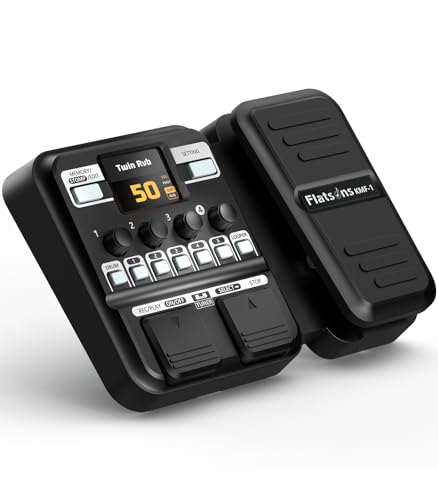
Best for: Guitarists who want a wide range of listed effects plus practice features in one unit. The KMF-1 includes 77 effects across eight modules: amplifier, cabinet, drive, modulation, delay, dynamics, reverb, and filter. It also lists 18 amp models and 18 cabinet simulators.
Its 50 preset patches offer starting points for players who would rather select a sound than build every effect chain from scratch. For practice and idea development, it includes a tuner, a 30-second looper, 42 drum rhythms, and an AUX IN for connecting a phone to play along with backing tracks.
The product description states that it uses DSP simulation, 512-point IR sampling, and 32-bit signal processing. These are listed design features, not a guarantee that its sound or controls will suit every player. Compare the feature set with your intended setup and preferred workflow.
- Why it was selected: It pairs a large stated effect selection with a tuner, looper, rhythm patterns, and AUX IN.
- Consider: Players seeking the specific expression-pedal control listed for the MOOER and Zoom options should check their control requirements before choosing this unit.
Buying Guide: How To Choose A Small Guitar Multi-Effects Pedal
Which features matter most for your playing?
Start by deciding whether the pedal is mainly for practice, songwriting, recording, or live use. A looper can help with layering parts and rehearsing alone. Built-in rhythm patterns or drum rhythms provide a backing beat. If you mainly need effects for shaping tones, compare the effects list and the number of effect modules instead.
Do not choose solely by the largest effect count. A pedal’s usefulness also depends on whether you can select, edit, and save sounds in a way that fits your routine. Presets are helpful when you want ready-made starting points, while user patch storage matters if you plan to create and recall your own tones.
Do you need an expression pedal or multiple footswitches?
An expression pedal can change assigned parameters or control volume while playing. The MOOER GE100 lists six assignable expression parameters, the GE150 Pro supports parameter and output-volume control, and the Zoom G1X Four includes an expression pedal. The Flatsons feature list does not mention one.
Footswitches matter when you need to change presets or trigger functions without reaching down to turn a control. The GE150 Pro specifically lists four multi-purpose footswitches. If you play standing up or need to switch sounds quickly, compare the available controls and how the product describes their functions.
When should you prioritize amp models and cabinet simulation?
Amp models and cabinet simulations can be important when you want a range of amplifier-style tones or intend to use a modeled setup. The GE150 Pro lists 55 amp preamps and 26 cabinet simulations. LEKATO lists nine amp models and eight IR cabinets, with support for third-party IR files. Flatsons lists 18 amp models and 18 cabinet simulators.
Check whether you want built-in models, the ability to load samples, or both. Sample and IR support can add options, but importing files may involve extra setup. Match the feature to your actual workflow instead of treating more model slots as automatically better.
Will you play through an amp or without one?
Consider how the pedal will connect to the rest of your setup. The GE100 lists an adjustable output mode, including a line-out mode intended to provide a usable tone without an amp. Other products may have different output and recording options, so verify the connections and intended use in the product details before buying.
For recording, look for features that specifically support your preferred method. The LEKATO and M-VAVE descriptions mention recording support, while the GE150 Pro listing mentions USB OTG recording. Check the exact connection requirements and software needs for the edition and setup you plan to use.
How should you compare practice tools?
For structured practice, compare loop length, rhythm selection, tuner availability, and ways to connect backing tracks. The Zoom lists a 30-second looper and 68 rhythm patterns. Flatsons lists a 30-second looper, 42 drum rhythms, a tuner, and AUX IN. These details make the practice features easier to compare than a general claim that a pedal is suitable for practice.
Frequently Asked Questions
What is a guitar multi-effects pedal?
A guitar multi-effects pedal combines multiple effect types in one unit. Depending on the model, it may also include amp or cabinet simulations, saved presets, an expression pedal, a looper, or rhythm patterns.
Which pedal in this list is best for looping?
The Zoom G1X Four and Flatsons KMF-1 both list a 30-second looper. The Zoom also lists 68 rhythm patterns, while Flatsons lists 42 drum rhythms, a tuner, and AUX IN.
Which option has the most factory presets?
The MOOER GE150 Pro lists 200 factory preset tones. The MOOER GE100 lists 80 factory patches and 80 user patches, so its listed factory and user counts should be considered separately.
Which pedals support cabinet or IR options?
The GE150 Pro lists cabinet simulations and support for MNRS cabinet samples. LEKATO lists eight IR cabinets and support for third-party IR files. Flatsons lists 18 cabinet simulators.
What should beginners look for in a small multi-effects pedal?
Beginners can compare preset availability, ease of changing sounds, and practice tools such as a tuner, looper, or rhythm patterns. A pedal with saved presets can provide a starting point, while adjustable effects and user storage can support learning and experimentation over time.