
If you want a small, portable pipe organ for display, the Wooden Miniature Pipe Organ with Case is the only supplied listing that matches: it is a compact wooden replica, not a playable instrument. The other supplied products are tobacco pipes, so they are not suitable alternatives to an organ model. This guide focuses on what the matching miniature offers and what to check before choosing a small decorative organ.
| Product | Best For | Important Detail |
|---|---|---|
| Wooden Miniature Pipe Organ with Case | Collectors and music-themed displays | Decorative replica; not playable |
Wooden Miniature Pipe Organ with Case
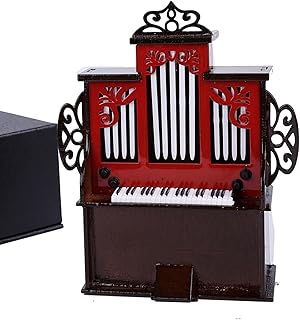
This miniature is best for a collector, music teacher, or gift buyer seeking a pipe-organ-themed ornament rather than a functioning instrument. It measures about 4.65 by 3.91 by 1.51 inches (11.8 by 9.9 by 3.8 centimeters), making it small enough for a shelf, desk, or compact display area. Its wood construction and polished surface give it a finished decorative appearance.
The listed set includes one miniature organ and one black case. The case is intended to store and protect the replica when it is not on display. Those details make this a more practical choice for someone who wants a small model that can be put away or transported, rather than a larger fixed display piece.
- Best for: Decorative displays, music-themed gifts, and miniature-instrument collections.
- Why it fits: The listed dimensions are compact, and a storage case is included.
- Important limitation: The seller describes it as a simulated, non-playable instrument. It should not be chosen for making music or learning organ technique.
Choose this model if appearance, small size, and storage matter more than sound or operation. Avoid it if you need working keys, pipes, an air supply, or any other functional organ mechanism; the product information does not describe those features.
Buying Guide: How to Choose a Small Portable Pipe Organ
The phrase “small portable pipe organ” can describe very different things: a working musical instrument, a miniature replica, or a decorative object inspired by an organ. Decide which meaning applies before comparing listings. Product names can use musical terms even when an item is only a model, so read the feature description for explicit statements about playability.
Do you need a playable instrument or a display model?
This is the first and most important question. A playable organ needs a mechanism that produces notes, and its listing should explain how it is played and what is included. A decorative miniature may resemble an organ without producing sound. The matching product here is expressly described as non-playable, so it belongs in the model and ornament category.
If your goal is music-making, do not treat a miniature replica as a substitute for an instrument. Look for clear details about the keyboard or other controls, sound production, power or air requirements, and setup. If a listing does not state that the item plays, ask the seller or choose a product whose musical function is clearly documented.
How small is small enough for your space?
Compare the listed dimensions with the shelf, desk, cabinet, or display case where the model will go. The featured replica measures approximately 4.65 inches long, 3.91 inches high, and 1.51 inches deep. Checking all three measurements helps prevent a common buying mistake: judging size from a product photo without a reliable scale.
Also consider how the object will be displayed. A narrow surface may require a shallow model, while a collection cabinet may have limits on height. If the item will be placed near other ornaments, leave enough room to handle it without knocking over nearby objects.
Does portability mean easy storage?
For a decorative model, portability usually means that it is small enough to move and that it can be stored between displays. A case is useful when the item needs to be put away, transported, or kept separate from dust and other objects. The included black case is a specific feature of the featured product; do not assume other miniatures include one unless their listings say so.
Check what “case included” means in the product details. Confirm whether the case is part of the set and whether it is described as storage, display packaging, or both. Avoid assuming that a case is padded or protective unless the listing provides that information.
What materials and finish should you compare?
Material can affect appearance and how a model fits into a collection. The featured miniature is described as wooden and polished. That information can help buyers seeking a wood-finish ornament, but it does not establish the exact wood species, finish ingredients, or resistance to damage. Look for those details only when the seller supplies them.
Photos can help you assess the visible style, but they do not replace written specifications. If color, grain, or decorative details are essential, inspect all available listing images and descriptions. For a gift, consider whether the recipient prefers a realistic-looking miniature, a simple ornament, or a functional instrument.
Is the item a good fit for a gift?
A small organ replica may suit someone who collects miniatures, enjoys music-themed décor, or wants an unusual desk ornament. Its stated size and included case can make it easier to display or store than a full-size instrument. The key is to explain that it is a non-playable model so the recipient does not expect a working organ.
For a gift intended for a musician, confirm whether the recipient wants decoration or an instrument before buying. A display piece can be a thoughtful keepsake, but it will not meet a request for something to practice or perform on. Clear expectations matter more than the product’s musical appearance.
How should you compare listings with different names?
Read the features, not just the title. A relevant miniature organ listing should identify an organ replica or model, provide dimensions, and state whether it plays. Details about included accessories, material, and storage help you compare like with like. A product that happens to include the word “pipe” may refer to a completely different object.
The supplied product list contains several tobacco pipes. Those are smoking accessories, not pipe-organ models, so they should not be compared as alternatives for an organ-related purchase. When shopping, check the item category, intended use, and description to avoid confusing products that share a search term.
What details should you verify before ordering?
- Confirm that the listing describes an organ model or instrument, not an unrelated item with “pipe” in its name.
- Check whether the item is playable or decorative; do not infer function from appearance.
- Compare the listed height, width, and depth with the available display or storage space.
- Check which accessories are included, such as a case, and what the seller says they are for.
- Review the stated material and finish without assuming details that are not provided.
- For a working instrument, look for clear operating and setup information before purchasing.
Frequently Asked Questions
Is the featured miniature pipe organ playable?
No. Its product details describe it as a simulated, non-playable instrument intended for decoration. It is not presented as a working organ.
How large is the wooden miniature organ?
The listed size is about 4.65 by 3.91 by 1.51 inches, or 11.8 by 9.9 by 3.8 centimeters. Check the measurements against your planned display space.
Does the miniature come with a case?
Yes. The listing says the set includes one miniature pipe organ and one black case. It describes the case as a way to keep and store the replica.
Can this model be used to learn organ playing?
No. Because it is identified as non-playable, it is not suitable for learning technique or practicing music. Choose a clearly functional instrument for those purposes.
Are the tobacco pipe products suitable alternatives?
No. The other supplied listings are tobacco-smoking pipes, not pipe organs or organ replicas. They serve a different purpose and are not relevant substitutes.
Who is this miniature best suited for?
It is best suited to buyers seeking a compact music-themed ornament, a miniature instrument for a collection, or a decorative gift. It is not suited to buyers who need sound or musical functionality.