
Best Soft Clipping Overdrive Pedals for Warm, Musical Tone
Soft clipping overdrive pedals deliver smooth, warm gain with less harsh edge than harder clipping styles. This article helps American players choose five top options that excel in musicality, dynamic response, and portability. Ideal buyers include blues players seeking creamy crunch, classic rock players chasing touch-sensitive warmth, and travelers who want reliable, studio-like tone on stage. The table below highlights each pick and its standout strength to guide quick comparisons.
| Product | Best For | Key Benefit |
|---|---|---|
| BOSS SD-1 SUPER Overdrive | Classic overdrive lovers | Rich, musical OD with a long heritage |
| JOYO Dual-Channel Overdrive (King of Kings) | Players needing versatile channels | Two independent channels with four clipping voicings |
| JOYO Vintage Overdrive (JF-01) | Blues and classic rock tones | Smooth, RC4558-inspired vintage drive |
| Keeley Blues Disorder | Dual-drive flexibility | Hard and soft clipping together for hybrids |
| SHAEVLE Overdrive TS-Style | Budget-friendly classic overdrive | All-analog, simple three-knob control |
BOSS SD-1 Super Overdrive Pedal

The BOSS SD-1 Super Overdrive is a legendary, compact overdrive with a long history in concert and studio settings. It provides rich, musical tones and a responsive feel that suits players who want immediate touch sensitivity. Best for players who value a proven, widely compatible overdrive that remains distinct in a crowded pedalboard.
Best for: Players who want a classic, widely compatible overdrive with steady, reliable performance.
Why selected: This pedal has shaped guitar tones for decades and remains a dependable workhorse for many genres.
Caution: As a vintage-flavored pedal, it may feel slightly darker than some modern digital simulations at lower gain settings.
JOYO Dual-Channel Overdrive (King of Kings)

This JOYO pedal offers two independent overdrive channels with four distinct clipping voicings per channel, enabling a broad palette from warm blues to saturated leads. Its analog path preserves natural dynamics, and the A→B stacking lets players craft cascading tones without extra pedals.
Best for: Players who want flexible gain structure and the option to stack drives for expressive solos.
Why selected: The independent channels and clipping options provide a wide tonal range in a single pedal, reducing the need for extra gear.
Caution: At high gain, clipping can become noticeably aggressive; use volume and gain carefully to maintain musical balance.
JOYO Vintage Overdrive (JF-01)
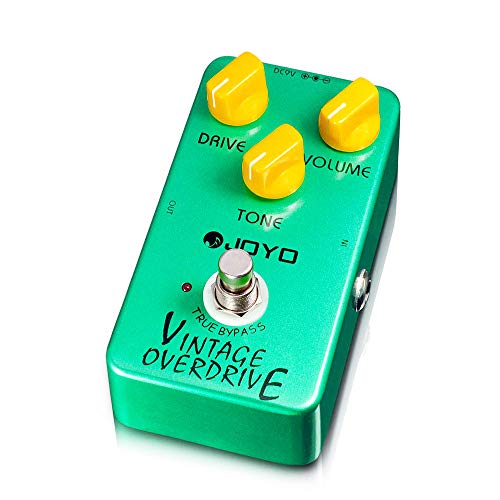
The JOYO JF-01 uses an RC4558-inspired circuit to deliver a smooth, vintage-style overdrive with a warm midrange. It shifts naturally from pristine clean boosts to singing crunch, aligning well with both humbucker and single-coil guitars for a broad tonal range.
Best for: Blues, classic rock, and country players seeking an approachable, vintage-voiced drive.
Why selected: The circuit yields a classic warmth at a budget-friendly price, making it a strong value pick.
Caution: The tone may be slightly mid-forward; players seeking a flat, modern OD should pair it with a bright amp or EQ tweak.
Keeley Blues Disorder Overdrive

The Blues Disorder from Keeley offers two complete analog drive circuits—one hard-clipping and one soft-clipping—allowing users to mix and match tones. It supports true bypass or buffered bypass, letting players preserve signal integrity when engaging a treble-rich drive.”
Best for: Players who want to blend drive flavors or create hybrid tones without swapping pedals.
Why selected: The dual-drive design expands tonal options beyond a single-voicing pedal, aiding versatility on complex rigs.
Caution: The complexity of two independent circuits may require more setup time to dial in exact tones.
SHAEVLE TS-Style Overdrive

This all-analog pedal aims to emulate classic tube-like distortion with straightforward controls: Volume, Tone, and Gain. The TS-style design is compact and affordable, making it a practical option for players who want a simple, deliverable overdrive with authentic character.
Best for: Budget-conscious players who want a simple, all-analog drive with a classic edge.
Why selected: The straightforward control set reduces setup time and offers dependable, familiar tone for rhythm and lead work.
Caution: Fewer tonal sculpting options mean it may lack the wider EQ flexibility of higher-end rivals.
Buying Guide: Soft Clipping Overdrive Pedals
What should you consider when selecting soft clipping overdrives?
- Look for pedals that respond to picking dynamics, guitar volume, and touch to preserve expressiveness.
- Soft clipping yields smoother saturation, while the presence of hard clipping or mixed modes adds bite—choose based on your preferred feel.
- Analog circuits typically provide more natural response and dynamic nuance, especially at lower gain.
- True bypass minimizes tone coloration when off; buffered paths can help preserve tone in long chains.
- Dual- or multi-voicing pedals offer flexibility for varying genres and performance setups.
- Consider pedal size, build quality, and reliability for stage use or travel gigs.
Frequently Asked Questions
- What is soft clipping in guitar pedals? Soft clipping refers to a gentler, rounded form of signal saturation that preserves more of the guitar’s natural dynamics than hard clipping.
- How many clipping options should I look for? At least one soft-clipping option is ideal; dual-channel or hybrid pedals offer more tonal variety.
- Is analog better than digital for overdrive? Many players prefer analog for its touch sensitivity and perceived warmth, though digital options can offer precise control and presets.
- Should I buy a pedal with true bypass? True bypass helps preserve tone when the pedal is off, but some players prefer buffered paths for long chains in certain setups.
- How important is tone shaping on stage? A pedal with a clear volume, gain, and tone control helps quickly adapt to different amps, rooms, and backing tracks.
- Can I stack soft clipping pedals? Yes; stacking can yield richer harmonics and broader texture, but be mindful of volume balancing between pedals.