
Best Sound Bar With Optical Input for Clear Dialogue and Flexible Setup
The answer to your search is straightforward: choose a sound bar that includes an optical input for reliable, high-quality digital audio from your TV or media player. This guide highlights five solid options that support optical connections, along with practical notes on who they’re best for. Ideal buyers include small living rooms seeking compact yet powerful sound, home theater fans who want easy TV integration, and users who prioritize clear dialogue and simple setup. Below is a quick summary of the top picks and their strengths.
| Product | Best For | Key Benefit | Optical Input |
|---|---|---|---|
Saiyin 11.7-Inch Sound Bar: Small Size, Big Power
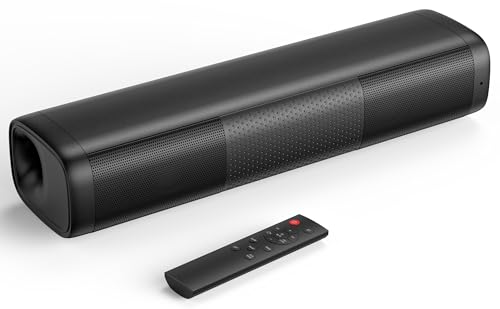
Best for compact spaces and TV setups, this Saiyin model delivers balanced audio with 48W peak power and tuned bass and treble. Its 11.7″ length fits under most screens, making it ideal for bedrooms or small living rooms. It offers optical input alongside Bluetooth and 3.5mm AUX, plus a dedicated sub out for a powered subwoofer to boost bass when desired. Choose this if you need a space-saving bar without sacrificing clarity or mid/high detail.
Who it’s for: TV watchers in tight spaces who want better sound without a bulky soundbar. Why selected: strongest combination of compact design and an optical input at this size. Caution: bass may feel lean without a subwoofer in very large rooms.
Assistrust Sound Bar for Smart TV

Best for versatile placements, this 2-in-1 detachable soundbar supports multiple layouts with a focus on room-filling sound. It features 80W total output and four high-performance drivers to deliver rich details from dialogue to dynamic effects. It provides optical input along with ARC and AUX options, plus a tailored 3-mode EQ set (movie, music, news). Choose this if you want a flexible, high-output option that adapts to different viewing environments. Caution: the 4-driver setup may be more than necessary for very small rooms unless you connect a subwoofer.
Samsung B-Series HW B400F

Best for Samsung TV owners and those seeking seamless control, this 2.0-channel bar includes a built-in woofer and works with your Samsung TV remote for basic functions. It spreads sound across the room to create a more immersive experience and emphasizes balanced playback with clear dialogue. Choose this if you want simple setup and cohesive integration with Samsung devices. Limitation: specific mention of optical input is not provided in the data, so verify connectivity if optical is a must-have.
Bose TV Speaker

Best for dialogue-focused listening in compact rooms, this Bose model emphasizes clear speech and natural sound with two angled drivers. It supports Bluetooth and HDMI-ARC, delivering simple setup and straightforward control with compatible TVs. Choose this if your priority is crisp vocal clarity and a minimal setup. Caution: optical input is not specified in the listed features; confirm available inputs if optical is required.
RIOWOIS 17″ Sound Bar

Best for mid-sized rooms seeking a larger visual footprint with enhanced dialogue, this 17″ sound bar highlights DSP processing and three sound modes to optimize movies, music, or news. It offers a compact height that fits most TV stands and wall mounting possibilities. The data does not confirm an optical input, so check compatibility if you must have optical connectivity. Choose this for a noticeable upgrade in room-filling sound without a separate speaker system.
Buying Guide: Optical Input Sound Bars
What matters most for optical input sound bars is how you balance input flexibility, room size, and content type. Here are practical considerations to help you decide:
- Input options: If optical input is essential, confirm that the model explicitly lists Optical In in its specifications. Some models rely on HDMI-ARC or Bluetooth for TV audio.
- Room size: Smaller rooms benefit from compact bars with efficient digital signal processing. Larger spaces may need higher power or a subwoofer for full-range sound.
- Dialogue clarity: Look for bars with dedicated dialogue modes or drivers designed to emphasize midrange frequencies where human speech resides.
- Placement and design: Wall-mountable or compact bars reduce obstruction and keep the TV center aligned with the speaker array.
- Subwoofer options: A separate subwoofer can dramatically improve bass for movies and music, especially in open-plan spaces.
- Smart features and controls: Remote compatibility, TV-brand integration, and EQ presets can simplify daily use.
Key Comparisons
- Best overall compact option: Saiyin 11.7-Inch Sound Bar — strongest balance of size, power, and optical input in a small form.
- Best flexible placement: Assistrust Sound Bar — multiple placements and high output with three EQ modes.
- Best for Samsung ecosystems: Samsung B400F — straightforward control with Samsung TVs (verify optical input).
- Best for dialogue clarity in a tight space: Bose TV Speaker — focused voice clarity, compact design (opt/ARC inputs should be verified).
- Best for mid-sized rooms: RioWOIS 17″ Sound Bar — larger chassis with DSP modes for different content.
FAQ
- Do all sound bars have an optical input?
- Not all; some offer optical input, ARC, or Bluetooth instead. Always check the inputs listed in the product details.
- Is a subwoofer necessary for better sound?
- A subwoofer enhances bass for movies and music, but many sound bars perform well without one in small rooms.
- Can I use a sound bar with any TV?
- Yes, most bars connect via HDMI-ARC, optical, or auxiliary input. Ensure your TV supports the chosen connection.
- Which sound bar is easiest to set up?
- Models with HDMI-ARC and remote control from the TV tend to offer the simplest setup and syncing.