
The best sound equipment for theatre depends on the room and production: a 5.1-channel system suits playback, a multi-microphone receiver supports spoken events, and acoustic panels can help manage reflections. The Yamaha system is best for a home-theatre-style setup, while Sound Town is better for events that need several microphones. Rockville combines surround playback with karaoke inputs; the acoustic panels are intended for room treatment, not sound reinforcement.
| Product | Best For | Main Use |
|---|---|---|
| Yamaha YHT-4950U | Surround playback | 5.1-channel home theater |
| Sound Town SWM16-4MEGA | Multiple microphone users | Wireless and wired microphones |
| Rockville HTS56 | Playback and karaoke | 5.1-channel audio with mic inputs |
| TDHLYJHF acoustic panels | Room acoustics | Sound absorption |
| GRITTZ XLR/DMX connection end | Audio or lighting connections | Three-pin connector termination |
Yamaha YHT-4950U 5.1-Channel Home Theater System
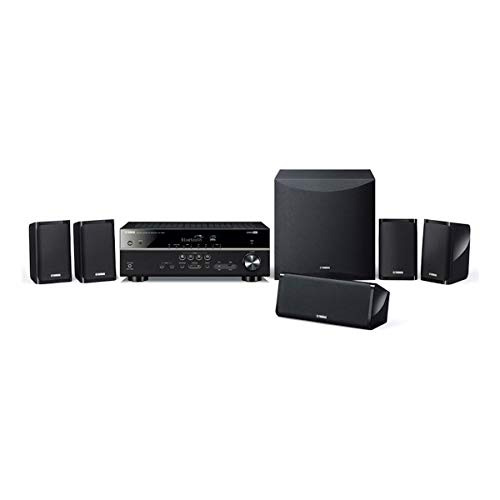
The Yamaha YHT-4950U is a speaker-and-receiver package for theatre playback where surround sound is a priority. The listed package includes an AV receiver, five speakers, a subwoofer, and speaker wire. Its four HDMI connections and Bluetooth provide options for connecting playback devices and streaming audio.
Best for: A small home theatre or presentation room that needs a complete 5.1-channel speaker package. It was selected because the listing specifies the core components together, rather than requiring buyers to source each speaker separately.
- Receiver dimensions: 17 inches wide, 6 inches high, and 12 inches deep.
- Includes four speakers, a center speaker, and a subwoofer.
- Listed frequency response is 28 Hz to 25 kHz.
Limitation: The product is not waterproof, and the provided details do not establish suitability for a large auditorium or professional touring use. Check room size, speaker placement, and the venue’s connection needs before choosing it.
Sound Town SWM16-4MEGA Wireless Microphone Mixer

The Sound Town SWM16-4MEGA is a microphone receiver and mixer supplied with four metal handheld microphones. It supports wireless and wired microphones, with separate volume controls for each channel. The receiver includes 3.5 mm and optical inputs, plus 3.5 mm, quarter-inch, and optical outputs, giving buyers several connection choices for supported audio equipment.
Best for: School events, small stages, conferences, and other productions that need multiple handheld microphones. It was selected for theatre use because speech and group participation can require more microphone channels than a basic single-mic system offers.
- Uses UHF frequencies in the listed 550–590 MHz range.
- Provides 50 selectable frequencies for each of four microphones.
- Includes controls for echo, tone, and microphone volume.
Limitation: This is a microphone system, not a complete speaker or public-address system. Buyers need to confirm that the venue’s mixer, receiver, or speakers accept one of its listed output connections. Wireless performance can also depend on the venue and other equipment.
Rockville HTS56 5.1-Channel Bluetooth Theater System
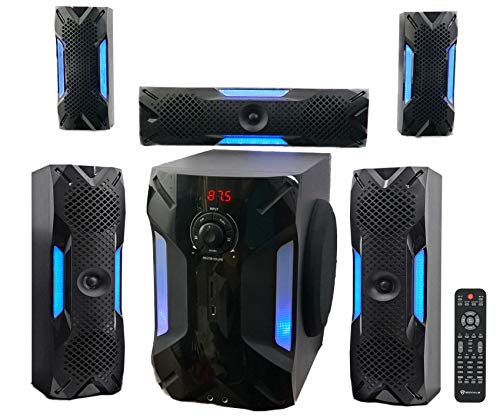
The Rockville HTS56 combines five satellite speakers with an 8-inch subwoofer. Its listed features include Bluetooth, USB, SD, RCA, and optical inputs, as well as two microphone inputs with echo control. A five-band EQ and FM radio are also included. These features make it a flexible option for playback and informal live-mic use in one room.
Best for: Buyers who want surround playback plus basic karaoke or microphone functions. It was selected because its inputs cover several common consumer audio sources, and the microphone inputs may serve small gatherings or rehearsal-style use.
- Five satellite speakers and one 8-inch subwoofer.
- Multiple input types for connecting listed source devices.
- Two microphone inputs and echo control.
Limitation: The manufacturer describes 1000 watts as peak power; that figure should not be treated as a measure of continuous output or proof that the system will cover a large theatre. Confirm the coverage needs of the room before relying on it for audience sound.
TDHLYJHF 52-Pack Acoustic Foam Panels

These 1-inch-thick, 12-by-12-inch wedge panels are intended to absorb sound reflections in rooms such as theatres, studios, schools, and offices. The listing describes them as a treatment for standing waves and flutter echoes, and says they can be placed on walls, ceilings, or doors.
Best for: A buyer addressing room reflections in a recording, rehearsal, or small theatre space. The 52-panel quantity makes this option relevant when a number of surfaces need treatment, subject to the room’s layout and installation plan.
- Pack includes 52 panels.
- Each panel measures 12 by 12 inches and is 1 inch thick.
- Designed for acoustic treatment on walls, ceilings, and doors.
Limitation: Absorption panels are not microphones, speakers, or soundproofing by themselves. The listing recommends combining them with corner bass traps or blocks for certain acoustic problems, but it does not provide measured performance figures. Plan placement around the room’s actual acoustic needs.
GRITTZ Professional Three-Pin XLR/DMX Connection End

The GRITTZ product is a single black, female three-pin locking connection end listed for XLR and DMX connections. It is a small component rather than a complete cable, microphone, or lighting fixture. For theatre crews, connector parts can be relevant when assembling or repairing compatible cable runs.
Best for: A technically experienced buyer who needs a female three-pin connection end for a compatible XLR or DMX application. It was selected because three-pin connectors are used in audio and lighting workflows, though the listing does not specify a full cable assembly.
- Three-pin XLR/DMX locking connection end.
- Female connector configuration.
- Black finish and a design described as sturdy.
Limitation: The listing provides few technical details and identifies one connector end, not a finished cable. Verify pin configuration, wiring requirements, and the intended audio or DMX application before purchase.
Buying Guide: How To Choose Theatre Sound Equipment
What kind of production are you equipping?
Start with the use case. A film screening or recorded presentation benefits from a playback system, while a stage play, panel, or school assembly may depend more on microphones and speech reinforcement. Rehearsal rooms may need both playback and microphones. Acoustic treatment addresses room reflections but does not create or amplify sound. List each use before comparing products so that a speaker package is not mistaken for a complete live-sound setup.
Do you need playback, live sound, or both?
For playback, compare speaker count, subwoofer inclusion, inputs, and receiver requirements. The Yamaha package includes an AV receiver, five speakers, a subwoofer, and speaker wire. The Rockville system also has five satellite speakers and a subwoofer, with Bluetooth and several other inputs. For live speech, prioritize microphone count, receiver outputs, and connection compatibility. The Sound Town system includes four handheld microphones, but it still needs an appropriate sound system to reproduce their audio.
How many microphones does the room need?
Count the performers, presenters, or participants who may need microphones at the same time. A four-microphone receiver can suit a panel or group activity better than a system with only a small number of mic inputs. Also consider whether handheld microphones fit the production. Actors may need to move freely or use other microphone formats; the supplied product information does not establish that these systems include body-worn microphones.
Which connections should you check?
Check both ends of every connection before ordering. The Sound Town receiver lists optical and 3.5 mm inputs, along with optical, 3.5 mm, and quarter-inch outputs. Yamaha lists four HDMI connections. Rockville lists Bluetooth, USB, SD, RCA, and optical inputs. Match those options to the source device, mixer, receiver, and speakers already in the room. Do not assume that similar-looking connections are interchangeable.
How should you think about room size and coverage?
A product’s speaker count or peak-power figure alone cannot determine whether it will cover a theatre. Room dimensions, seating, speaker placement, background noise, and the need for even coverage all matter. A compact system may serve a small room but may not be the right choice for a large auditorium. For larger venues, assess the complete sound system and consult a qualified audio professional when the coverage requirements are unclear.
Will acoustic panels solve the room’s sound problems?
Foam panels can be considered when reflections or flutter echoes are a concern. They are a form of acoustic treatment, not a substitute for speakers or microphones, and the listed panels do not provide measured absorption specifications. Identify the problem first: reflections, low-frequency buildup, outside noise, or insufficient sound level may call for different solutions. Do not assume that adding panels will soundproof a room.
What should a theatre crew plan beyond the equipment?
Plan for setup, cable routing, connection checks, and operation during the performance. Confirm where the receiver or mixer will sit, how microphones will be assigned, and how playback sources will connect. Keep cables and equipment arranged to avoid obstructing performers and audience pathways. If a connector or cable component is being used for a repair, verify its wiring and application before putting it into service.
Frequently Asked Questions
What sound equipment is essential for a small theatre?
It depends on the production. A basic setup may require microphones, a compatible mixer or receiver, speakers, and the cables needed to connect them. Recorded playback may also need a source device. Assess the room and performance before deciding which components are essential.
Is a home theater system suitable for live theatre?
A home theater system can be useful for recorded playback or a small room, but that does not automatically make it suitable for live performance. Check microphone support, coverage, connection options, and venue size. The Yamaha package, for example, is listed as a 5.1-channel home theater system.
Can acoustic foam make a theatre soundproof?
No. The listed foam panels are intended to absorb sound reflections and reduce issues such as flutter echo. The product information does not describe them as soundproofing, and acoustic treatment is different from blocking sound from entering or leaving a room.
Is the Sound Town system a complete public-address system?
No. It includes a receiver and four handheld microphones, but it is not described as a complete speaker system. Confirm that it can connect to the audio equipment being used in the venue.
What should I verify before buying a three-pin XLR/DMX connector?
Check that the female connector, pin arrangement, wiring, and intended use match the equipment and cable project. The listed GRITTZ item is a connection end, not a complete cable, and the listing provides limited technical specifications.