
Best Speaker Impedance Matching Devices for Home Audio Enthusiasts and DIY Setups
When choosing an impedance matching speaker volume control, look for robust power handling, easy installation, and clear impedance protection. This guide highlights five reliable options that suit different home audio needs—from outdoor entertainment to multi-room setups. The top picks are best for owners who want simple wall-mounted controls, reliable protection for amps, and flexible multi-speaker configurations.
| Product | Power Handling | Best For |
|---|---|---|
| 100W | Large homes and outdoor areas needing wall-mounted access | |
| OSD Audio SVC100 | 100W | Independent room zones with impedance protection |
| Monoprice 100W Rotary Impedance Matching | 100W | Multi-room systems with multiple pairs |
| Monoprice 50W Rotary Impedance Matching | 50W | Compact home theaters or smaller rooms |
| Monoprice SSVC-4.1 | 100W/channel | Four-zone, multi-speaker setups with control |
Note: The featured products emphasize impedance matching, multi-speaker connectivity, and easy installation. Each option has distinct advantages depending on room size, amplifier power, and the number of speaker zones you want to manage.
STUDIOFINIX 100W In-Wall Volume Control with Impedance Matching

The ST-VC100 model provides a high-power passive design that handles up to 100 watts per channel. It supports connecting up to eight speaker pairs, offering broad compatibility for large home theaters or outdoor listening areas. The device installs discreetly in-wall, delivering a simple, centralized control point for volume and impedance. Best for homeowners or event spaces that require robust power and flexible, multi-speaker distribution. A potential limitation is the fixed passive design, which does not require external power but may limit feature expansion for future upgrades.
OSD Audio 100W In-Wall Volume Control with Impedance Matching
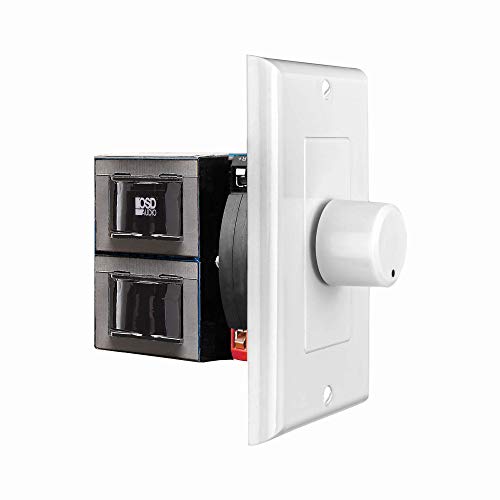
The SVC100 is designed for high power with minimal bass roll-off and independent volume control for a group of speakers. It includes jumpers to connect up to eight pairs of 8-ohm speakers, making it suitable for multi-zone homes. A good choice for users who want solid impedance protection to prevent amp stress. Limitation to consider: small adjustments on a wall plate can be less precise for fine-tuning in acoustically challenging rooms.
Monoprice 100W Rotary Impedance Matching with Color Kit

This Monoprice option enables connecting multiple speaker pairs to a single amplifier and increases the impedance presented to the amp to protect it. It supports up to 100 watts and includes a color kit for easy installation. It’s best for users who want a straightforward, robust impedance solution with clear visual cues. Better for larger rooms or setups where multiple zones need simple, reliable control. A limitation is that configuration is manual and requires careful balance if several zones are used simultaneously.
Monoprice 50W Rotary Impedance Matching with Color Kit
The 50W version caters to smaller rooms or compact home theaters while still offering impedance control across multiple speaker pairs. It’s a practical choice when amplifier power is limited or when space is at a premium. Best for apartments or medium-sized living areas. Limitation: lower wattage may not meet the needs of high-power outdoor setups or very large listening rooms.
Monoprice SSVC-4.1 Four-Channel Speaker Selector
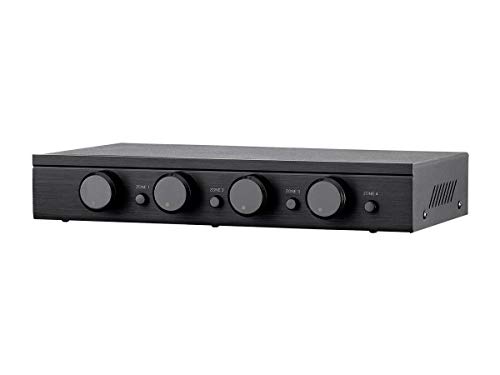
This four-channel selector supports individual zone on/off controls and volume for each zone. It includes automatic impedance protection and handles up to 100 watts per channel. Best for dedicated multi-room systems where independent control for each zone is essential. A potential limitation is the fixed channel count; larger or more complex systems may require an 8-channel option for scalability.
Monoprice 108230 8-Channel Speaker Selector

Designed to spread audio across eight speaker zones with built-in impedance matching, this model ensures the amplifier load remains within safe levels while providing broad distribution. It is best for larger homes or small business environments needing multiple listening areas. Limitation: mounting and wiring eight zones can be more complex than smaller setups.
Buying Guide
How to choose the right impedance matching device?
- Power handling: Match the device to your amplifier’s per-channel power. Higher wattage supports louder, more dynamic playback and outdoor use.
- Number of zones: Count how many speaker pairs or rooms you plan to control. Choose a model that scales to your needs without overpaying for unused channels.
- Impedance protection: Look for devices with built-in protection to prevent amplifier stress when multiple speakers are connected.
- Installation style: In-wall volume controls save space and provide a clean look. Desktop or rack-mounted options are easier for temporary setups.
- Cable compatibility: Ensure the device supports the speaker wire gauge you use (commonly 14-16 AWG) and 4-8 ohm impedance ranges.
- Independent control: If you want different rooms to play different sources or volumes, prioritize models with individual zone controls.
Practical tips for setup
- Plan speaker layout and cable runs before mounting. Label zones to simplify operation.
- Test impedance with the amp at low volume during initial setup to avoid surprises.
- Use balanced cable routing to minimize interference in longer runs, especially for outdoor installations.
FAQ
- What is impedance matching, and why is it important? It keeps the amplifier from seeing an excessively low load, reducing heat and potential damage while preserving sound quality.
- Can I mix different impedance speakers with one impedance matching device? Yes, but confirm the device supports the range and the amp’s minimum impedance.
- Do wall-mounted volume controls require power? Most are passive and do not need an external power source, though some high-power models provide enhanced features.
- What if my amp is underpowered for the number of speakers? Use devices with higher wattage ratings and fewer parallel connections to stay within safe limits.
- Is impedance protection necessary for small rooms? It helps prevent amp stress when many speakers are connected, even in smaller spaces, and is worth considering for longevity.
- Do these devices affect audio quality? Properly matched impedance minimizes distortion and ensures consistent volume across zones when configured correctly.