
None of the five listed sets is a steel-string set: they use synthetic gut, fluorocarbon, or nylon, including one set with a wound low-G string. If you need replacement strings for a tenor ukulele, choose by tuning, tone, and string-end style rather than assuming steel is appropriate. Aquila Super Nylgut is best for low-G players seeking tuning stability; D’Addario EJ99T is best for standard GCEA tuning; Martin is a warm, clear-toned option; Aquila Red emphasizes volume; and Ernie Ball offers a ball-end low-G setup.
| Product | Best For | Material or Style |
|---|---|---|
| Aquila Super Nylgut AQ-107 | Low-G players seeking stable tuning | Synthetic gut, low G |
| Martin Fluorocarbon Tenor | Warm, clear tone and easy feel | Fluorocarbon |
| D’Addario EJ99T | Standard GCEA tuning | Fluorocarbon |
| Aquila Red Series AQ-88 | Fuller volume with low G | Composite, low G |
| Ernie Ball P02327 | Players needing a ball-end low G | Nylon with wound low G |
Aquila Super Nylgut AQ-107 Low-G Set

This four-string set is designed for tenor ukuleles and uses Aquila’s Super Nylgut synthetic material. The listed features highlight a smooth playing surface, reduced stretch, and tuning stability. Its low-G configuration is the main reason to choose it over standard high-G sets.
Best for: Tenor players who want low-G tuning and prioritize a comfortable feel and reduced retuning. The pearl-colored strings also offer a distinct appearance. Choose this set if you want the low-G arrangement identified in the product name.
Limitation: These are synthetic-gut strings, not steel strings. Confirm that low-G tuning matches your intended setup before ordering.
Martin Fluorocarbon Tenor Strings

Martin’s four-string tenor set uses fluorocarbon. The stated characteristics are a warm, clear tone, an easy playing feel, and excellent tuning stability. These features make it a straightforward option for a player comparing tone and handling rather than looking for a steel-string construction.
Best for: Tenor players seeking a balance of warmth and clarity, with tuning stability as a stated benefit. It is a useful choice when those tone descriptions matter more than a listed low-G configuration.
Limitation: The provided product information does not specify whether this set is low G or high G. Check the intended tuning and string arrangement before purchase if that distinction matters.
D’Addario EJ99T Fluorocarbon Tenor Set

The EJ99T is a four-string fluorocarbon set optimized for tenor ukuleles tuned to standard GCEA. Its listed features include precise intonation, a bright modern tone, and corrosion-resistant packaging intended to help keep the strings fresh. The product description identifies the strings as non-ball-end.
Best for: Players who use standard GCEA tuning and want a bright tone with an explicit tenor designation. Choose this set when standard tuning and non-ball-end strings fit your instrument and setup.
Limitation: The product details do not identify it as a low-G set. It is fluorocarbon rather than steel, and the non-ball-end construction may not suit a ukulele that requires ball ends.
Aquila Red Series AQ-88 Low-G Strings
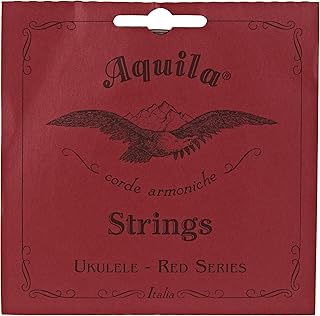
Aquila’s Red Series AQ-88 is a four-string low-G set for tenor ukulele. The listed features emphasize louder, fuller sound, brightness, clarity, responsiveness, and tonal balance. The product description also says its moisture-resistant construction is intended to help reduce pitch changes under varying conditions.
Best for: Low-G players who want a fuller, more prominent sound and value the stated moisture resistance. It is a useful comparison with the Super Nylgut set: both identify low G, while the Red Series description focuses especially on volume and brightness.
Limitation: The set is made from proprietary composite materials, not steel. The features do not provide detailed string gauges or specify a particular feel beyond comfortable playing.
Ernie Ball Nylon Ball-End Low-G Set

This Ernie Ball set is listed for concert and tenor ukuleles. It combines black nylon monofilament plain strings with an 80/20 brass-wound low-G string and uses ball ends. That construction differs from the all-synthetic-gut or fluorocarbon choices above, but it is still not a steel-string ukulele set.
Best for: Tenor players who want a wound low G and need ball-end strings. Choose it when both the low-G configuration and ball-end design match your instrument.
Limitation: The set is also described for concert ukuleles, so check that its intended fit and string arrangement suit your tenor. Its wound low-G string may feel and sound different from an unwound synthetic low G.
Buying Guide: How to Choose Tenor Ukulele Strings
Are these steel strings?
No. The five products here are described as synthetic gut, fluorocarbon, composite, or nylon. The Ernie Ball set has a brass-wound low-G string, but that does not make the complete set a steel-string set. If you specifically require steel, verify the material and instrument-maker guidance before buying; none of these listings is identified as a steel-string set.
Should you choose low G or standard GCEA?
Standard GCEA is explicitly identified for the D’Addario EJ99T. Aquila Super Nylgut AQ-107, Aquila Red AQ-88, and Ernie Ball P02327 are identified as low-G options. Low G uses a lower-pitched fourth string, while high G has a higher-pitched fourth string. Match the set to your preferred tuning and current setup rather than choosing by brand alone.
Which material and tone description should guide your choice?
- Fluorocarbon: Martin is described as warm and clear; D’Addario is described as bright and modern.
- Synthetic gut: Aquila Super Nylgut emphasizes a smooth surface and reduced stretch.
- Composite: Aquila Red emphasizes fullness, volume, clarity, and moisture resistance.
- Nylon with a wound low G: Ernie Ball combines nylon monofilament strings with a brass-wound low G.
Tone descriptions are product claims, not guarantees of how every ukulele will sound. The instrument, setup, and player can also affect the result.
Do you need ball-end or non-ball-end strings?
String ends affect how strings attach to the instrument. D’Addario EJ99T is explicitly listed as non-ball-end, and Ernie Ball P02327 is described as ball-end. The other product details supplied here do not specify an end style. Check your ukulele’s bridge and current strings before ordering, and do not assume that every tenor model uses the same attachment method.
What should you verify before ordering?
- Confirm that the package is intended for a tenor ukulele.
- Match the string set to low-G or high-G tuning.
- Check whether your bridge requires ball-end or tie-end strings.
- Confirm the material if you have a specific preference or need to avoid a particular string type.
- Review the product listing for details not provided here, such as gauges or exact tuning configuration.
Frequently Asked Questions
Can I put steel strings on a tenor ukulele?
None of the products in this list is identified as a steel-string set. Check your ukulele maker’s guidance before using a string material that is not specified for your instrument.
Which listed set is explicitly for standard GCEA tuning?
D’Addario EJ99T is the set whose features explicitly state that it is optimized for tenor ukuleles tuned to standard GCEA.
Which options are listed as low-G sets?
Aquila Super Nylgut AQ-107, Aquila Red Series AQ-88, and Ernie Ball P02327 are identified as low-G options in their product names or features.
Which set has a wound low-G string?
Ernie Ball P02327 is described as nylon monofilament plain strings with an 80/20 brass-wound low G.
Which product is listed as non-ball-end?
D’Addario EJ99T is explicitly described as non-ball-end. Ernie Ball P02327 is described as ball-end.