Best Studio-Quality Sound Cards for Clear, Professional PC Audio
Looking for studio-grade sound on a PC? These high-fidelity PCIe sound cards deliver clean, detailed audio for music production, gaming, and media playback. They are best suited for audiophiles, home studios, gamers seeking immersive sound, and editors needing low-latency, high-SNR performance. Below, find five top options with concise reasons to choose each one, plus practical buying guidance.
| Product | Best For | Why It Stands Out |
|---|---|---|
| Creative Sound Blaster AE-7 Hi-Res PCIe Gaming Sound Card and ACM | Audiophiles and gamers who demand pristine audio and powerful headphone output | 127 dB DNR, ESS SABRE-class DAC, discrete headphone bi-amp, convenient control module |
| Creative Sound Blaster AE-X Hi-Res PCIe Sound Card for PC | Producers and editors seeking reference-grade DAC performance | ESS ES9039Q2M DAC, up to 130 dB SNR, ASIO 2.3, low-latency |
| Creative Sound Blaster Audigy FX Pro Hi-Res PCIe Sound Card | Budget-conscious users needing solid multi-channel output | 32-bit/384 kHz, up to 120 dB SNR, 7.1-channel support |
| Optimal Shop PCIe Sound Card for PC Windows | Compact builds needing 5.1 surround and a low-profile bracket | 5.1 stereo output, low-profile bracket, 2U chassis-friendly |
| EBTOOLS 5.1 PCIe Sound Card for PC | Space-constrained setups wanting 5.1 surround with solid coverage | 5.1 3D stereo surround, low-profile bracket, 24-bit/48 kHz |
Each option below is described with who it is best for, why it was selected, and a brief caution if applicable. Use these sections to compare features side by side and pick the right card for your workflow.
Creative Sound Blaster AE-7 Hi-Res PCIe Gaming Sound Card
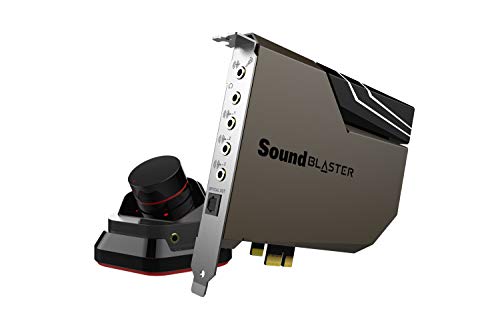
Best for audiophiles who also game, AE-7 combines pristine audio with substantial headroom. It features a high-quality DAC, 5.1/7.1 surround options, and a dedicated control module for quick access to inputs and monitors. The discrete headphone bi-amp supports demanding headphones, giving clear, powerful playback. Caution: larger PCIe cards may require adequate space in compact cases.
Creative Sound Blaster AE-X Hi-Res PCIe Sound Card for PC

Best for professionals who require reference-grade DAC performance. The AE-X uses ESS ES9039Q2M DAC with up to 130 dB SNR and supports ASIO 2.3 for low latency in music production and gaming. It suits studios and editors seeking ultra-clean audio. Limitation: higher-end DACs may be overkill for casual listening.
Creative Sound Blaster Audigy FX Pro Hi-Res PCIe Sound Card

Best for budget-conscious users needing solid multi-channel output. Audigy FX Pro offers 32-bit/384 kHz playback and 7.1-channel support for immersive listening and modest production tasks. Caution: compared to premium models, it may have lower dynamic range and fewer advanced features.
Optimal Shop PCIe Sound Card for PC Windows

Best for compact builds needing 5.1 surround in a low-profile form. This card provides 5.1 stereo output with a space-saving bracket, ideal for 2U chassis and desktop towers where height is restricted. Limitation: basic feature set compared to high-end Creative models.
EBTOOLS 5.1 PCIe Sound Card for PC

Best for budget-friendly builds needing a complete 5.1 surround solution. EBTOOLS highlights 24-bit/48 kHz performance and a low-profile bracket for space-limited cases. Caution: 24-bit/48 kHz may not meet higher-resolution needs for some producers.
Buying Guide: How to Choose Your Studio-Quality PCIe Sound Card
What matters most when selecting a PCIe sound card for studio use? Consider these factors to match your workflow and equipment:
- DAC quality and SNR: Higher dB SNR and better DACs reduce hiss and improve dynamic range, especially for critical listening and mastering.
- Headphone and line outputs: Ensure the card provides enough outputs and supports the headphones you own, including impedance and bi-amping options if needed.
- Latency and ASIO support: For music production and live tracking, low latency and ASIO compatibility are essential.
- Surround and virtual surround: Decide if you need 5.1/7.1 physical output or rely on virtual surround for headphones.
- Form factor and case compatibility: Check low-profile brackets if you have a compact PC or a 2U rack-style build.
- Software control: Look for a robust control panel to manage input levels, EQ, mic preamps, and virtual surround features.
Frequently Asked Questions
- What is the advantage of a PCIe sound card over onboard audio?
PCIe sound cards typically offer higher SNR, better DACs, discrete headphone amps, and more advanced surround processing, which improves studio monitoring and gaming audio accuracy. - Do I need ASIO support for music production?
ASIO provides low-latency audio routing for professional software, making it preferable for recording and mixing tasks. - Is a low-profile bracket important for desktops?
Yes, if your case has limited vertical space, a low-profile bracket ensures the card fits without spacing issues or obstruction from other components. - Can I use these sound cards for both music and games?
Yes, most models support 5.1/7.1 surround and virtual surround for games, while high-end DACs benefit music production and critical listening as well.