
Best Sound Baffles for Recording Studio: Top Picks for Noise Control and Clarity
When choosing sound baffles for a recording studio, the goal is clear, dry sound with minimal reflections, echo, and ambient noise. These five options cover wall panels, portable isolation booths, and ceiling treatments to suit different space sizes and budgets. Best for professional studios, home setups, or compact workspaces, each product is selected for treating reflections, reducing reverb, and improving monitoring accuracy. Below you’ll find concise, practical details to help you decide which setup fits your needs.
| Product | Best For | Key Benefit | Type |
|---|---|---|---|
| TroyStudio Thick Acoustic Foam Panels (52 pcs) | Medium-to-large rooms | High absorption, wall/ceiling coverage | Acoustic foam panels |
| TroyStudio Portable Vocal Booth | On-the-go recording | Dry, isolated sound in small spaces | Foldable isolation booth |
| Dmsky Microphone Isolation Shield | Voiceovers, podcasts | 3-layer noise reduction around mic | Isolation shield with stand |
| Arrowzoom Acoustic Ceiling Panels | Ceiling treatment | Reduce ceiling reflections | Ceiling panels |
| AUSLET Pyramid Acoustic Foam Panels (36 pcs) | Budget-friendly rooms | Dense foam for deep absorption | Pyramid foam panels |
TroyStudio 52-Piece Thick Acoustic Foam Panels
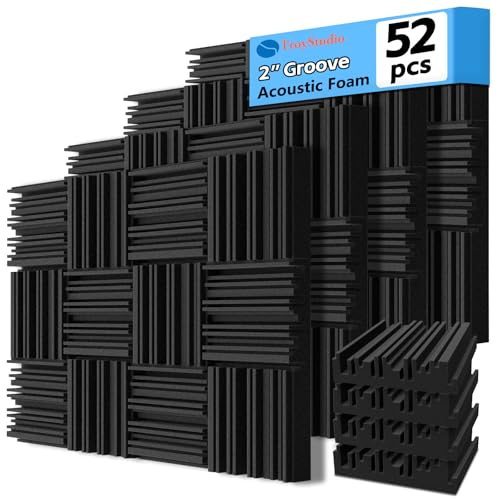
Best for: mid-to-large recording spaces needing broad coverage. These 12″ x 12″ x 2″ tiles provide dense foam and a groove pattern that enhances aesthetics while boosting absorption. NRC around 0.8, with an average absorption around 0.77, helping dampen reverb and standing waves. The high-density foam is flame retardant and odorless, making it suitable for in-wall or ceiling applications. Choose this if you want substantial noise reduction across walls and ceilings.
Limitations: a higher panel count can require more installation time and space. Not ideal for very small studios with limited surface area.
TroyStudio Portable Vocal Booth

Best for: vocalists, podcasters, or voiceover artists needing a compact, transportable treatment. The box-like design uses 2″ dense foam on all interior surfaces to reduce room reflections, resulting in a dry, focused vocal sound. The booth folds for storage and includes a sturdy backing panel to prevent sagging, with holes to feed cables and mic stands. Choose this if you need a temporary or mobile isolation solution for varied locations.
Limitations: smaller interior space can constrain larger microphone rigs or loud dynamic mics; not a full-room treatment solution for larger studios.
Dmsky Microphone Isolation Shield

Best for: professional voice work, podcasts, and streaming where minimal room noise is essential. This shield uses triple-layer insulation with a reflective layer, a filter layer, and an absorbing layer, combined with a steel stand for stability. It reduces ambient noise and echoes around the mic while providing adjustable positioning. Opt for this if you want high portability with solid isolation around a single microphone setup.
Limitations: like other shield-based solutions, it’s most effective for close-mic scenarios and may not substitute full-room acoustic treatment in larger spaces.
Arrowzoom Acoustic Ceiling Panels

Best for: reducing ceiling reflections and addressing upstairs noise issues in studios or home theaters. Each panel measures 23″ x 23″ and uses dense polyester fiberboard for effective sound absorption with minimal weight. Ceiling tiles help create a more controlled acoustic environment by dampening flutter echoes and high-frequency reflections. Consider these when you need a discrete yet effective ceiling treatment.
Limitations: ceiling mounting requires some structural consideration and may not cover large ceiling areas as quickly as wall treatment in a big room.
AUSLET Pyramid Acoustic Foam Panels

Best for: budget-conscious studios needing practical coverage. The 36-pack provides 36 square feet of treatment with 12″ x 12″ x 2″ panels, designed with a pyramid profile for deep low-frequency absorption. The foam density of 30 kg/m³ helps maintain shape and effectiveness over time, while a flame-retardant formulation adds safety-friendly attributes. Choose this if you want a solid start on acoustic treatment without overspending.
Limitations: pyramid foam can be less effective in reducing very high-frequency reflections compared to denser auras in some setups; plan to pair with other treatments if high-frequency clarity is critical.
Buying Guide: Key Considerations For Sound Baffle Selection
What space are you treating?
Wall panels work best for mid-to-large rooms with flat surfaces. Ceiling panels help with flutter echoes. Portable booths are ideal for small rooms or on-the-go work. Consider combining treatments across walls, ceilings, and a portable shield for flexible control.
What frequencies matter most?
For most studios, mid and high frequencies dominate reflections. Choose panels with 0.7–0.8 NRC ratings for broad coverage. If deep bass control is needed, pair with bass traps or thicker foam in key corners.
Installation and future flexibility
Modular panels offer easy reconfiguration. Foldable isolation booths provide mobility. For long-term setups, fixed wall or ceiling panels may deliver better permanence and lower maintenance.
Material safety and durability
Look for flame retardant, odorless, and non-toxic foams. Durable designs resist compression and sag over time, preserving acoustic performance in busy studios.
Budget vs. coverage balance
Dense foam with higher NRC delivers better absorption per panel, but total coverage matters. Plan coverage goals by square footage and listen for where reflections occur in your space to maximize impact per dollar.
FAQ
- What is NRC and why does it matter? NRC (Noise Reduction Coefficient) indicates how much sound a panel absorbs. A higher NRC means better absorption, reducing reflections and echo.
- Can I mix different brands and types? Yes. Mixing wall panels, ceiling tiles, and portable shields can create a balanced acoustic treatment tailored to your room.
- Do I need bass traps as well? For rooms with noticeable low-frequency buildup, add bass traps in corners to complement mid/high-frequency foam panels.
- How many panels do I need? Start with a plan based on room size, surface area, and reflection points. Aim for even distribution across critical surfaces for the most noticeable improvement.
- Are portable shields sufficient for professional work? They are effective for close-mic scenarios and small studios, but they should be part of a broader treatment strategy rather than a sole solution.
- Is ceiling treatment essential? Ceiling reflections can significantly impact monitoring accuracy. In rooms with high ceilings or hard surfaces, ceiling panels can offer meaningful improvement.